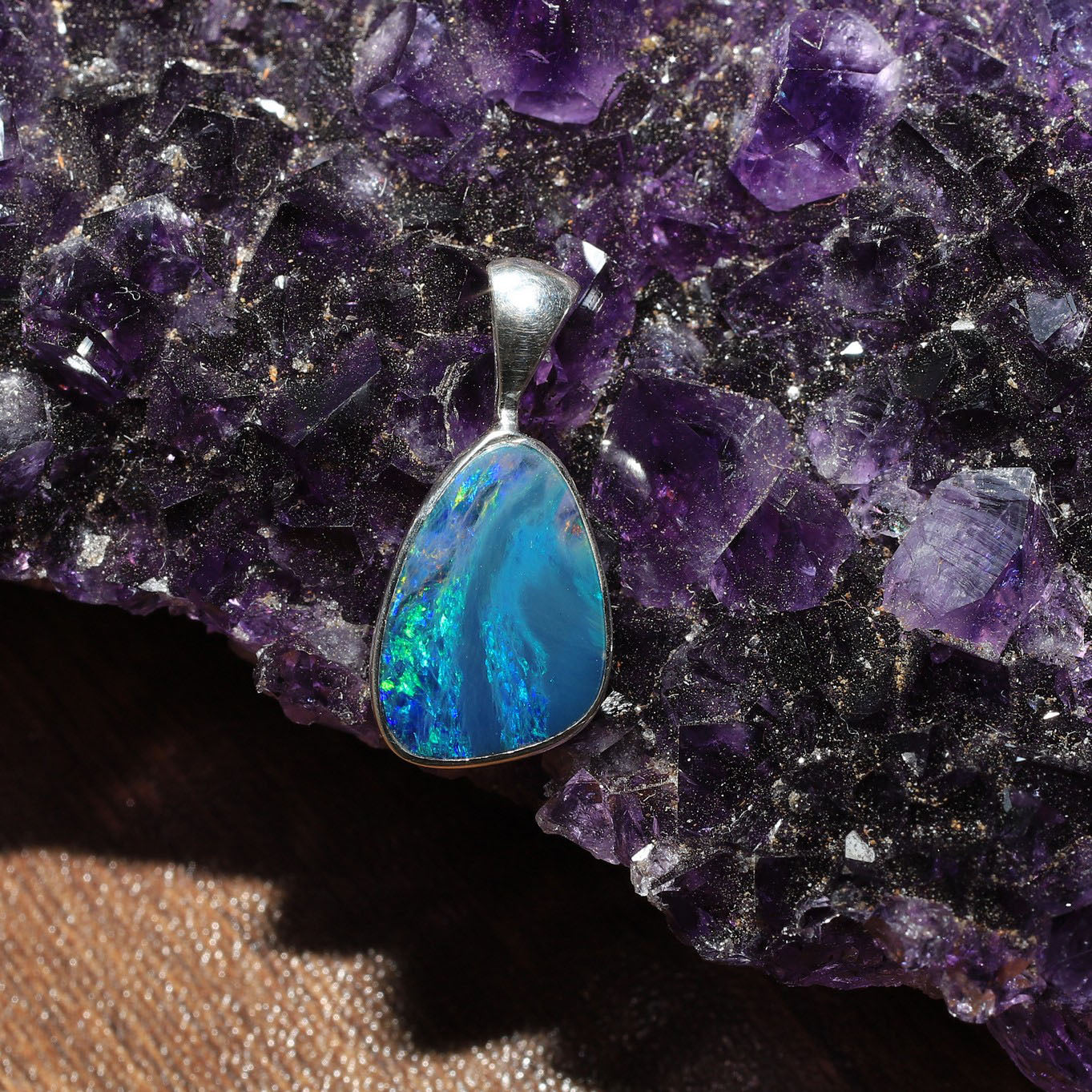

Factory Direct vs. Imported: The Hidden Cost of Overseas Jewelry Suppliers
Factory Direct vs. Imported: The Hidden Cost of Overseas Jewelry Suppliers
Factory direct jewelry vs imported wholesale — compare shipping, customs, quality control, returns, and hidden costs across US-based and overseas suppliers.
Choosing factory direct jewelry vs imported wholesale is not just a sourcing preference — it is a margin decision that compounds across every reorder, return, and delayed shipment for the life of your business. Many retailers discover the true cost of overseas suppliers only after their first container clears customs six weeks late, their quality inspection reveals a 15% defect rate, or their return request disappears into a timezone gap. This guide breaks down exactly where that money goes, so you can make the comparison with full visibility.
Why Does the Source of Your Jewelry Inventory Matter So Much?
The sticker price on a wholesale line sheet tells less than half the story. Two suppliers can quote identical per-piece costs, yet the total landed cost — what you actually pay by the time goods are sellable on your shelf — can differ by 30% or more depending on where and how those pieces were manufactured and shipped.
That gap comes from costs that never appear on the original invoice: import duties, brokerage fees, shipping surcharges, quality failures, return logistics, and the revenue you lose while waiting for delayed stock. Understanding these hidden costs is what separates retailers who scale profitably from those who wonder why their margins keep shrinking.
How Do the Three Main Sourcing Models Compare?
Not all "wholesale" is equal. Jewelry retailers typically source from one of three models: a US-based factory-direct manufacturer, an overseas middleman (distributor or trading company), or an overseas factory they work with directly. Each carries a different cost and risk profile.
| Factor | US-Based Factory Direct | Overseas Middleman / Distributor | Overseas Factory Direct |
|---|---|---|---|
| Shipping time (to US buyer) | 1–3 business days | 3–8 weeks (sea) / 1–2 weeks (air) | 3–8 weeks (sea) / 1–2 weeks (air) |
| Customs & duties | None for US buyers | 5–13% duty + brokerage fees | 5–13% duty + brokerage fees |
| Quality control | Inspected at source before shipping | Variable — QC happens overseas, verified on arrival | Inspected at source, but no recourse until next order |
| Returns & exchanges | Domestic return, resolved in days | Complex international return or credit-only | Expensive international shipping, weeks to resolve |
| Communication | Same timezone, same business hours | Often 8–12 hour timezone gap | Often 8–12 hour timezone gap |
| Minimum order quantity | Moderate ($200–$500 typical) | Low–moderate ($100–$500) | High ($1,000–$5,000+ typical) |
| Customization | Full custom capability | Catalog-only in most cases | Available, but requires large MOQs and long lead times |
| Payment terms | Net terms available for qualified buyers | Wire transfer upfront common | Wire transfer or LC upfront |
| IP / design protection | US legal protections apply | Difficult to enforce across borders | Difficult to enforce across borders |
This table is worth bookmarking. Every column represents real dollars — and real headaches — that you either absorb or avoid depending on which model you choose.
What Are the Hidden Costs of Importing Jewelry From Overseas?
The word "hidden" is doing heavy lifting here, because these costs are not actually secret. They are just easy to overlook when a per-piece quote from an overseas supplier looks attractively low. Here is where the money goes.
How Much Do Customs Duties and Import Fees Really Add?
Sterling silver jewelry imported into the United States faces duties that typically range from 5% to 13.5%, depending on classification. But the duty itself is only the beginning. You will also pay:
- Customs brokerage fees — $150–$500+ per shipment for a licensed broker to clear your goods
- Merchandise Processing Fee (MPF) — 0.3464% of the declared value, with a minimum of $31.67
- Harbor Maintenance Fee — 0.125% on ocean shipments
- Bond costs — A continuous customs bond runs $300–$600 per year
On a $5,000 shipment at a 6.5% duty rate, your added cost before the jewelry even reaches your door: roughly $550–$850. That is 11–17% on top of the invoice price, and it recurs with every single import.
A US-based factory-direct supplier eliminates this entire cost category for domestic buyers. When your manufacturer operates from, say, a 60,000 square foot factory, your order ships via standard domestic carriers with no customs paperwork, no brokerage fees, and no duty payments.
How Much Revenue Do Shipping Delays Actually Cost?
Ocean freight from South and Southeast Asia to the US West Coast averages 25–35 days in transit — and that is before port congestion, which added 2–4 weeks during recent supply chain disruptions. Air freight cuts transit time but triples or quadruples shipping cost.
The math that most retailers miss is the opportunity cost. If your bestselling collection arrives three weeks late, you are not just waiting — you are losing sales every day that inventory is unavailable. For a retailer doing $500/day in silver jewelry sales, a 21-day delay represents $10,500 in potential lost revenue. Even if you recover half of those sales later, you have left thousands on the table.
Compare that to a domestic manufacturer that offers same-day shipping on orders placed before 2 PM PST. Your restock arrives in one to three business days instead of one to three months. That speed is not a convenience — it is a competitive weapon that lets you run leaner inventory with lower carrying costs and fewer stockouts.
Why Is Quality Inconsistency the Most Expensive Hidden Cost?
A defective piece from a domestic supplier gets returned and replaced in days. A defective piece from an overseas supplier triggers a cascade of expensive problems:
- Discovery delay — You may not find defects until goods clear customs and you unbox, weeks after production
- Documentation burden — Photographing, cataloging, and reporting defects across language barriers
- Return shipping cost — International return freight on rejected goods can cost more than the pieces themselves on small orders
- Credit vs. replacement — Many overseas suppliers offer credit toward your next order rather than refunds, locking you into continued purchasing
- Production correction lag — Fixes to quality issues take effect on the next production run, which may be months away
When a manufacturer runs quality control at the source — especially one with German state-of-the-art machinery and a trained workforce of 500+ artisans — defects are caught and corrected before pieces leave the facility. The difference between a 2% defect rate and a 10% defect rate on a 1,000-piece order is 80 pieces. At an average wholesale cost of $15 per piece, that is $1,200 in product you cannot sell, plus hours of your time managing the problem.
What Happens When Communication Breaks Down?
An 8–12 hour timezone difference means your urgent email sent at 10 AM reaches your supplier's inbox at 10 PM their time. Their response arrives while you sleep. A question that would take one phone call to resolve domestically can stretch across three or four days of asynchronous back-and-forth.
This is manageable for routine reorders. It becomes genuinely costly when you need to:
- Rush a custom order for a retail client's deadline
- Resolve a quality dispute before a trade show
- Modify an order that is already in production
- Get real-time updates on a delayed shipment
Language barriers add another layer. Even when both parties speak English, nuances around gemstone grades, finish types, setting specifications, and packaging requirements frequently get lost in translation — resulting in goods that do not match expectations.
Why Are Overseas Returns a Retailer's Worst Nightmare?
Domestic returns are straightforward: print a label, ship it back, receive a replacement or refund. International returns involve:
- Export paperwork for the return shipment
- International shipping costs that often exceed the value of the goods on small quantities
- Customs clearance in the supplier's country (with potential duties there too)
- Weeks of transit time before the supplier even receives the return
- Dispute resolution across different legal jurisdictions if the supplier disagrees on fault
Many retailers learn this lesson once and simply eat the loss on defective imported pieces rather than attempt a return. That is money directly off your bottom line.
What Does a True Factory-Direct Operation Look Like?
Understanding what "factory direct" actually means helps you distinguish genuine manufacturers from trading companies that call themselves factories. A real factory-direct supplier:
- Owns and operates production equipment — casting machines, setting stations, polishing lines
- Employs skilled artisans on staff, not contracted out
- Controls raw material sourcing — ideally including an in-house lapidary that buys rough gemstones and cuts them on-site
- Offers genuine customization — not just selecting from a catalog, but creating new designs from your specifications
- Handles quality control internally at multiple production stages
Natural Creations 925 checks every one of these boxes from their Las Vegas Manufacturer Direct Warehouse. Their in-house lapidary sources rough stones from mines across Africa, South America, Asia, and the Middle East, then cuts and polishes them on-site — giving them control over gemstone quality that imported-and-resold stones simply cannot match. With 75% of their 500+ artisan workforce being women, they have built a production culture rooted in precision handwork alongside German-engineered machinery.
The practical impact for buyers: when you order from a facility like this, your jewelry is manufactured, quality-checked, and shipped from the same building. There is no handoff between a factory in one country, a trading company in another, and a shipping agent in a third.
How Should You Calculate True Landed Cost?
Before committing to any supplier, run this calculation on a sample order:
True landed cost = Invoice price + Shipping + Duties + Brokerage + Insurance + Defect losses + Delay costs + Return costs + Communication overhead
For a domestic factory-direct supplier, most of those line items are zero or negligible. For an overseas supplier, they can add 15–35% to the invoice price depending on order size, defect rates, and shipping method.
Run the numbers on your last three overseas orders honestly. Include the time you spent on customs paperwork, the pieces you could not sell due to quality issues, and the sales you missed during shipping delays. Most retailers who do this exercise are surprised by the gap.
When Does Importing From Overseas Actually Make Sense?
This article is not arguing that overseas sourcing is never viable. It can work well when:
- Your order volumes are large enough (typically $10,000+) to absorb fixed costs like brokerage and duties across more units
- You have an established relationship with a specific overseas factory you have personally visited and vetted
- The product category you need is not manufactured domestically at competitive quality
- You have staff or a sourcing agent dedicated to managing international logistics
- Your lead times are long enough to absorb 4–8 week shipping windows
For most small to mid-size retailers, especially those selling 925 sterling silver and natural gemstone jewelry, these conditions do not apply. The product category is well-served by US-based manufacturers, order sizes are moderate, and the business depends on fast restocking and reliable quality.
### Is factory direct jewelry always cheaper than imported wholesale?
On invoice price alone, not always — some overseas factories quote lower per-piece costs. But when you add customs duties (5–13%), international shipping, brokerage fees, defect losses, and delay costs, the total landed cost of imported jewelry is almost always higher than buying from a US-based factory-direct supplier. Run the full landed-cost calculation on any order before comparing.
How can I tell if a supplier is truly factory direct or just a middleman?
Ask for a virtual or in-person factory tour. Request photos and video of the production floor, casting equipment, and artisan workstations. A genuine manufacturer can show you every stage of production — from raw silver and rough gemstones to finished pieces. Trading companies that rebrand overseas goods typically cannot provide this level of transparency. Natural Creations 925, for example, operates a 60,000 sq ft solar-powered factory where buyers can see the entire process from rough stone cutting to final polish.
What customs duties apply to imported sterling silver jewelry?
US import duties on sterling silver jewelry generally range from 5% to 13.5% depending on the specific HTS classification, gemstone content, and country of origin. You will also pay a Merchandise Processing Fee, potential Harbor Maintenance Fees on ocean shipments, and customs brokerage fees of $150–$500+ per entry. These costs apply to every import shipment.
Can I get custom designs from overseas suppliers?
Yes, but with significant caveats. Most overseas factories require high MOQs (often 500–1,000+ pieces per design) for custom work, lead times of 4–12 weeks for sampling and production, and communication challenges around design specifications. A US-based manufacturer with custom programs — like Natural Creations 925's "Curated for You" and "Designed by You" tracks — can turn custom work with lower minimums, faster timelines, and real-time collaboration in the same timezone.
What is the biggest risk of switching from a domestic to an overseas supplier to save money?
Cash flow disruption. When you shift from 1–3 day domestic delivery to 4–8 week international shipping, you must carry significantly more inventory to avoid stockouts. That means more capital tied up in stock, more warehouse space, and more risk of holding styles that do not sell. Many retailers who switch to overseas sourcing to save on unit cost end up spending more overall because of increased inventory carrying costs and slower inventory turns. --- ## Ready to Compare the Numbers on Your Next Order? If you are currently importing silver jewelry or evaluating overseas suppliers, run the landed-cost calculation above on your most recent order. Then request a wholesale quote from [Natural Creations 925](https://naturalcreations925.com) for the same pieces. Compare the true total — not just the line-sheet price. With same-day shipping from our Las Vegas Manufacturer Direct Warehouse, zero customs costs for US buyers, in-house quality control, and the ability to restock in days instead of months, the math usually speaks for itself. [Browse the full collection and apply for a wholesale account at naturalcreations925.com](https://naturalcreations925.com)
Open Your Wholesale Account Today
500+ artisans. In-house lapidary. 100% solar-powered. Same-day shipping on orders before 2 PM PST. Just your business license to get started.