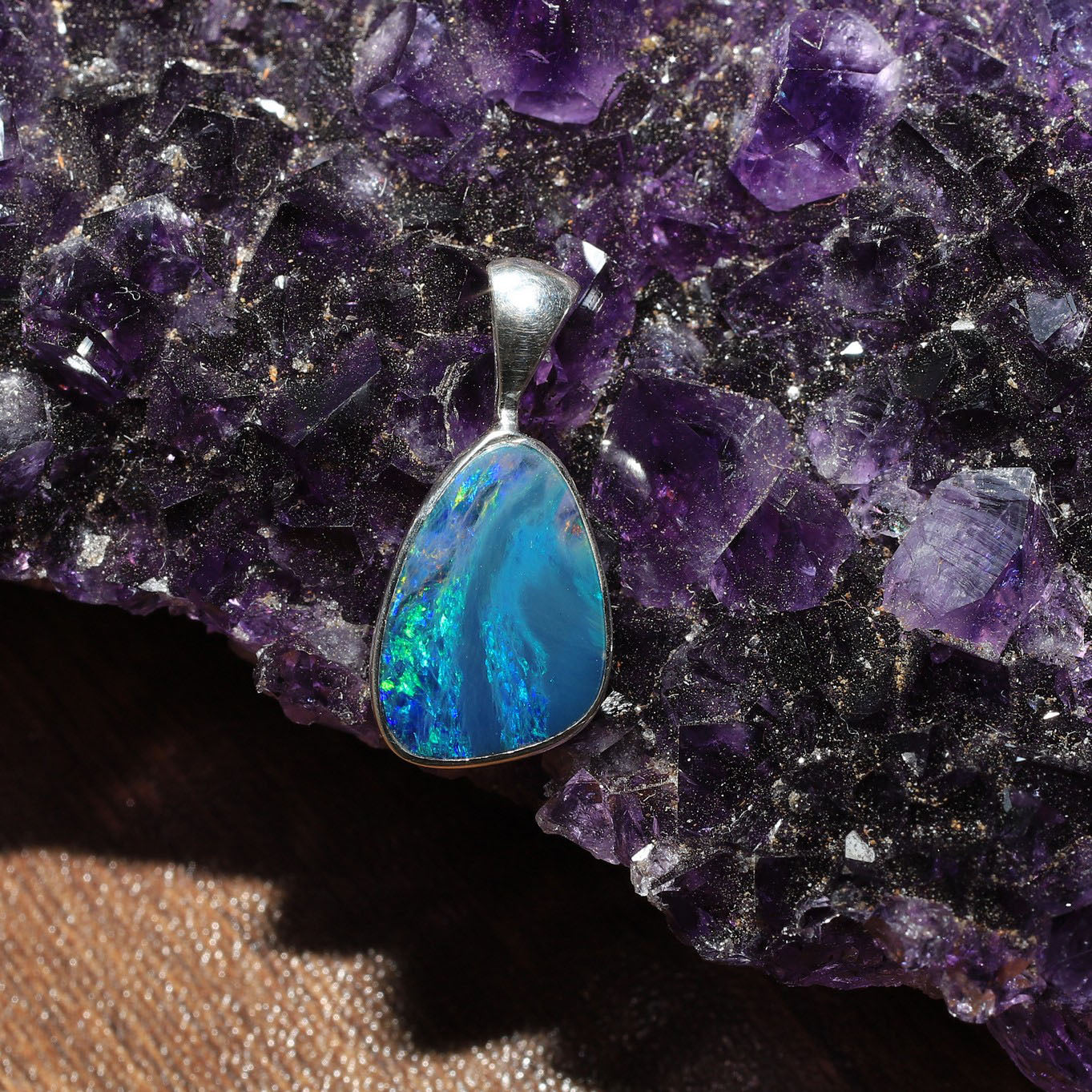

Tourmaline Gemstone Guide: The Rainbow Stone for Wholesale Jewelry Collections
Tourmaline Gemstone Guide: The Rainbow Stone for Wholesale Jewelry Collections
Complete tourmaline gemstone guide — all color varieties, quality grading, Paraiba and rubellite explained, and why tourmaline is a must-stock wholesale jewelry
Tourmaline is a complex boron silicate mineral group with a Mohs hardness of 7–7.5, occurring in a wider range of colors than any other gemstone family — from neon electric blue (Paraiba) to deep red (Rubellite) to watermelon pink-and-green — making it the most chromatically diverse gemstone in the world.
No single gemstone offers a wholesale buyer as many distinct color markets as tourmaline. A single stone family — and therefore a single supplier relationship — gives you access to pink, green, blue, yellow, orange, red, black, watermelon, and color-shifting varieties. Each has its own market, its own story, and its own customer.


The Tourmaline Group: Chemistry and Formation
Tourmaline is not a single mineral but a group of related boron silicate minerals sharing the same crystal structure (trigonal). The dominant jewelry varieties belong to the elbaite subgroup.
General formula: Complex borosilicate (XY₃Z₆[T₆O₁₈][BO₃]₃V₃W) Crystal system: Trigonal Mohs hardness: 7–7.5 Specific gravity: 2.9–3.3 (varies by variety) Refractive index: 1.614–1.666 Luster: Vitreous
The extraordinary color range results from variations in chemical composition — different elements (copper, iron, manganese, chrome) substituting into the crystal structure in different combinations produce different colors.
The Major Tourmaline Color Varieties
Paraiba Tourmaline
Color: Neon electric blue to vivid turquoise-blue, caused by copper and manganese Origin: Originally discovered in Paraíba, Brazil (1980s); also found in Nigeria and Mozambique Characteristics: The world's most expensive per-carat colored gemstone at fine quality; the copper-caused neon glow is unlike any other gemstone Wholesale tier: Fine quality Paraiba is luxury/collector territory; commercial grade Brazilian/Nigerian Paraiba in sterling silver occupies a premium wholesale tier
Rubellite
Color: Deep red to hot pink/raspberry; caused by manganese Origin: Brazil, Mozambique, Nigeria, Afghanistan Characteristics: The "ruby" of tourmaline; finest rubellite rivals fine ruby in color intensity. The distinction from pink tourmaline: rubellite retains its vivid red color under incandescent light. Wholesale tier: Mid-premium; strong gift and statement jewelry market
Chrome Tourmaline
Color: Vivid emerald green; caused by chromium (the same element that makes emeralds green) Origin: Tanzania, Kenya Characteristics: The color rivals fine Colombian emerald at a fraction of the price; increasingly sought after as a sustainable emerald alternative Wholesale tier: Premium; growing market among informed buyers
Indicolite
Color: Blue to blue-green; caused by iron Origin: Brazil, Afghanistan, Mozambique Characteristics: Fine indicolite is one of the rarest tourmaline colors; teal and deep ocean blue varieties have strong contemporary market appeal Wholesale tier: Mid-premium to premium depending on color quality
Verdelite (Green Tourmaline)
Color: Yellowish-green to mid-green to deep green; caused by iron Origin: Brazil (primary), Namibia, Tanzania Characteristics: Most commercially available green tourmaline; more affordable than chrome tourmaline; covers the "nature" green aesthetic market Wholesale tier: Accessible to mid-range
Watermelon Tourmaline
Color: Pink center with green outer zone — exactly like the fruit Origin: Brazil, Afghanistan, Nigeria Characteristics: Natural bicolor zoning caused by chemical changes during crystal growth; typically sliced as flat cross-sections to show the zoning Wholesale tier: Mid-range; strong novelty and storytelling value
Pink Tourmaline
Color: Light pink to vivid hot pink; caused by manganese Origin: Brazil, Afghanistan, Pakistan, Mozambique Characteristics: The most accessible, commercially important tourmaline color; ranges from baby pink to saturated hot pink; the October birthstone Wholesale tier: Accessible; excellent volume category
Yellow/Golden Tourmaline
Color: Canary yellow to golden orange; caused by manganese plus iron Origin: Malawi, Tanzania Characteristics: Less common; fills the "yellow gemstone" category alongside citrine and yellow sapphire Wholesale tier: Accessible
Black Tourmaline (Schorl)
Color: Opaque black Origin: Worldwide (most common tourmaline variety) Characteristics: Not typically used as a gemstone but important in the metaphysical/crystal healing market; sold as rough specimens and occasionally as polished pieces Wholesale tier: Very accessible; strong metaphysical market
Quality Grading for Tourmaline
Color: The primary quality factor across all tourmaline varieties
- Hue: Pure, saturated hue of the variety (electric blue for Paraiba, vivid red for Rubellite)
- Saturation: Higher saturation = higher quality and value
- Tone: Medium to medium-dark is optimal for most varieties; very dark tourmaline appears blackish; very light lacks visual impact
Clarity: Tourmaline is often eye-clean (no visible inclusions to the naked eye). Inclusions that affect the stone's visual quality reduce value. "Needles" and growth tubes are common in tourmaline and are characteristic rather than defects.
Cut: Precision cutting maximizes color and brilliance. Tourmaline's strong pleochroism (different colors seen from different crystal axes) requires expert cutting to show the best color.
| Grade | Characteristics | Retail Application |
|---|---|---|
| AAA | Vivid, saturated color; eye-clean; precision cut | Fine jewelry, premium wholesale |
| AA | Good color; eye-clean to near-eye-clean | Commercial quality wholesale |
| A | Moderate color; minor visible inclusions | Entry wholesale |
Tourmaline as the October Birthstone
Pink tourmaline is the modern October birthstone (alongside opal). This is a significant commercial designation — October buyers seeking alternatives to opal (which can be pricier at premium quality) embrace pink tourmaline as a more accessible, durable alternative.
Pink tourmaline in 925 sterling silver is one of the strongest October birthstone sellers in the commercial wholesale market.
Tourmaline Color Spectrum: Quick Reference
| Trade Name | Color | Rarity | Key Markets |
|---|---|---|---|
| Paraiba | Neon blue | Very rare | Collectors, fine jewelry |
| Rubellite | Deep red-pink | Rare | Luxury gift buyers |
| Chrome | Vivid emerald green | Rare | Emerald alternative buyers |
| Indicolite | Blue | Rare-uncommon | Fashion, fine jewelry |
| Watermelon | Pink + green bicolor | Uncommon | Novelty, storytelling |
| Pink | Pink to hot pink | Common | October birthstone, gift |
| Green (Verdelite) | Green | Common | Nature aesthetic |
| Yellow | Yellow-golden | Uncommon | Color variety |
| Black (Schorl) | Black | Very common | Metaphysical |
Tourmaline Care
- Hardness: Mohs 7–7.5 — durable for all jewelry types
- Cleaning: Warm soapy water and soft brush; safe for most varieties
- Ultrasonic: Generally safe for tourmaline without significant inclusions
- Steam: Avoid for heavily included pieces; fine for clean specimens
- Heat: Sensitive to rapid temperature changes — avoid steam cleaning and high heat
- Chemicals: Resistant to most household chemicals


What is tourmaline?
Tourmaline is a complex boron silicate mineral group occurring in a wider range of colors than any other gemstone family. It includes neon blue Paraiba tourmaline, deep red Rubellite, vivid green Chrome tourmaline, pink tourmaline (October birthstone), and many more.
What makes Paraiba tourmaline so valuable?
Paraiba tourmaline's extraordinary neon electric blue-to-turquoise color is caused by copper and manganese — a combination found in only three locations in the world (Paraíba Brazil, Nigeria, and Mozambique). The intensity of the color — sometimes described as glowing from within — has no equal in the gemstone world.
Is pink tourmaline the October birthstone?
Yes — pink tourmaline is the modern October birthstone, alongside opal (the traditional birthstone).
What is the difference between rubellite and pink tourmaline?
Rubellite is a trade name for deep red to vivid raspberry-red tourmaline — the most intensely colored end of the pink-red tourmaline spectrum. Pink tourmaline is lighter and more commercially accessible. Rubellite must retain its vivid red color under incandescent light; stones that turn pink-brown under warm light are simply pink tourmaline.
What is watermelon tourmaline?
Watermelon tourmaline is a naturally occurring bicolor tourmaline with a pink interior zone and green outer zone — exactly resembling the cross-section of a watermelon. This bicolor pattern develops naturally during crystal growth when the chemical environment in the growing crystal changes over time.
Open Your Wholesale Account Today
500+ artisans. In-house lapidary. 100% solar-powered. Same-day shipping on orders before 2 PM PST. Just your business license to get started.