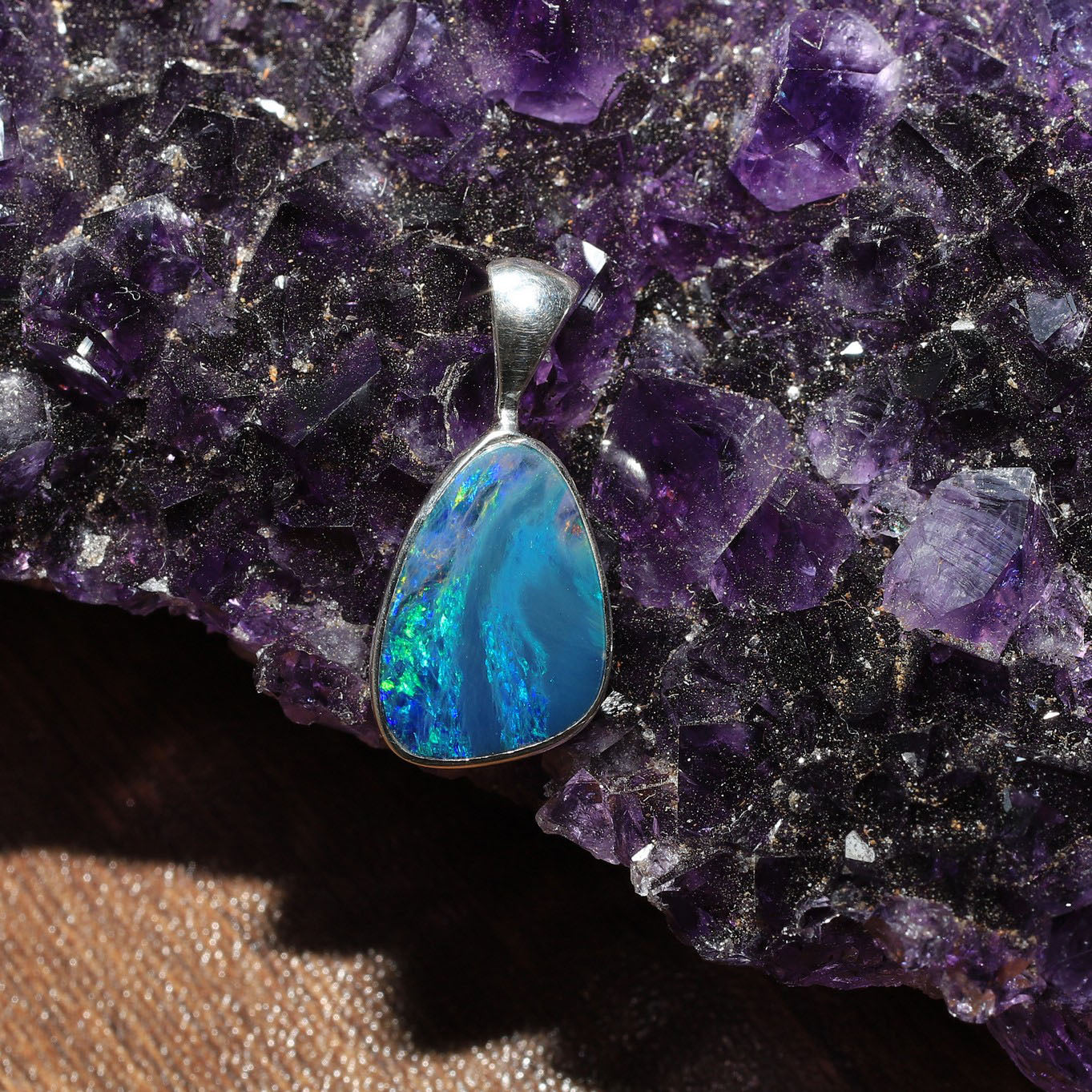

Thulite Gemstone Wholesale Guide: The Norwegian Pink Stone of Joy
Thulite Gemstone Wholesale Guide: The Norwegian Pink Stone of Joy
Source thulite gemstone jewelry wholesale — covering pink zoisite mineralogy, Norwegian national stone status, healing properties, Heart chakra connection, and
Thulite gemstone jewelry wholesale offers one of the most distinctive and underappreciated pink gemstones in the sterling silver market — a manganese-rich variety of zoisite that displays vivid pink to rose-red hues, shares a mineral family with tanzanite, holds the distinction of being Norway's national stone, and carries powerful metaphysical associations with joy, love, and emotional healing. This guide covers the mineralogy, quality grading, healing properties, wholesale strategy, and care requirements every buyer needs to build a profitable thulite collection.


What Is Thulite?
Thulite is a pink to rose-red variety of the mineral zoisite — the same mineral family that produces tanzanite (blue-violet zoisite) and ruby zoisite (anyolite). The pink color comes from manganese replacing calcium in the zoisite crystal structure. The name "thulite" derives from Thule, the ancient mythological name for Norway and Scandinavia, reflecting the stone's strong Norwegian heritage.
First described in 1820 from specimens found in Telemark, Norway, thulite was designated Norway's national stone — a distinction that gives it significant cultural weight and a compelling origin story for the global wholesale market.
Key Mineral Profile
| Property | Detail |
|---|---|
| Mineral Family | Zoisite (same family as tanzanite and ruby zoisite/anyolite) |
| Chemical Composition | Ca₂Al₃(SiO₄)(Si₂O₇)O(OH) with Mn (manganese) substitution |
| Color | Pink, rose-red, deep pink — from manganese content |
| Mohs Hardness | 6–6.5 |
| Crystal System | Orthorhombic |
| Luster | Vitreous to slightly pearly |
| Transparency | Translucent to opaque |
| Specific Gravity | 3.10–3.38 |
| Related Stones | Tanzanite (blue zoisite), Ruby Zoisite/Anyolite (green zoisite with ruby) |
The 6–6.5 Mohs hardness makes thulite a good daily-wear stone for most jewelry types. It is comparable in hardness to tanzanite and rhodonite, handles regular wear well, and requires only moderate care — no special precautions beyond standard gemstone handling.
What Is the Relationship Between Thulite, Tanzanite, and Ruby Zoisite?
This is one of thulite's most powerful wholesale selling points: it belongs to the same mineral family as tanzanite, one of the world's most prestigious and expensive gemstones. Understanding and communicating this connection elevates thulite's perceived value.
Zoisite Family Comparison Table
| Feature | Thulite | Tanzanite | Ruby Zoisite (Anyolite) |
|---|---|---|---|
| Mineral | Zoisite | Zoisite | Zoisite with ruby inclusions |
| Color Agent | Manganese (pink) | Vanadium (blue-violet) | Chromium in ruby + base green zoisite |
| Color | Pink to rose-red | Blue to violet | Green with pink-red ruby crystals |
| Transparency | Translucent to opaque | Transparent | Opaque |
| Hardness (Mohs) | 6–6.5 | 6.5–7 | 6–7 |
| Rarity | Uncommon | Rare (single source: Tanzania) | Uncommon |
| Price Point | Moderate | High to very high | Moderate |
| Cut Style | Cabochon | Faceted | Cabochon |
| Best Known For | Norway's national stone, joy and love | World's rarest gemstone origin | Vivid pink-green contrast |
The "tanzanite's pink cousin" angle is an effective marketing hook — it positions thulite as a member of an elite mineral family, justifying premium positioning and capturing the attention of buyers who already value the zoisite name through tanzanite.
Where Does Thulite Come From?
Thulite is found in several locations worldwide, but Norway remains the most historically significant and commercially recognized source. The stone's name, national stone status, and gemological identity are all rooted in Norwegian geology.
Source Comparison Table
| Origin | Output Volume | Quality Profile | Color Character | Market Position |
|---|---|---|---|---|
| Norway (Telemark, Lom) | Moderate | Excellent — vivid pink to rose-red, good translucency | The benchmark: rich, saturated pink | Premier source; the "original" thulite |
| Australia (Western Australia) | Low to moderate | Good quality; some fine specimens | Pink, sometimes with white zoisite matrix | Secondary source; growing recognition |
| South Africa | Low to moderate | Variable — some excellent material | Pink to rose, sometimes paler | Supplementary source |
| Austria (Tyrol) | Low | Historically significant, limited current production | Pink, often in matrix | Collector and historical interest |
| USA (North Carolina, Tennessee) | Low | Variable quality | Lighter pink, sometimes mottled | Minor source; domestic interest |
Norwegian thulite sets the quality standard. For wholesale buyers, specifying Norwegian origin (when available) or equivalent-quality material ensures the rich, saturated pink that defines the gemstone's appeal and justifies its premium position.
How Is Thulite Quality Graded?
Thulite grading centers on three factors: color saturation, translucency, and uniformity. The most valuable specimens display vivid, even pink with good translucency and minimal white or grey zoning.
Wholesale Grading Guide
| Grade | Color | Translucency | Uniformity | Matrix/Inclusions | Best Use | Wholesale Tier |
|---|---|---|---|---|---|---|
| AAA (Premium) | Vivid, saturated pink to rose-red | Good translucency — light enters the stone | Even color distribution, no dead zones | Clean — minimal visible matrix | Statement rings, premium pendants, collector pieces | Top tier |
| AA (Fine) | Strong pink, good saturation | Moderate translucency | Mostly even, minor zoning | Minor matrix acceptable | Core collection rings, earrings, pendants | Mid-high tier |
| A (Commercial) | Moderate pink, lighter saturation | Semi-translucent to opaque | Some color variation or white zoning | Visible matrix zones | Volume pieces, entry-price jewelry | Mid tier |
| B (Budget) | Pale pink, washed out, or heavily mottled | Opaque | Significant zoning — white/grey areas dominant | Heavy matrix | Beaded jewelry, tumbled stones, craft | Budget tier |
Quality tip: The most prized thulite displays a color sometimes described as "Scandinavian rose" — a vivid, warm pink with enough depth to read as intentionally pink rather than pale or washed out. Achieving this in finished jewelry requires selecting rough with consistent color and cutting to avoid white or grey zones. Natural Creations 925 processes thulite through their in-house lapidary department at their 60,000 sq ft factory, with cutters orienting each stone on German precision machinery to maximize color saturation and minimize matrix intrusion.
What Are the Healing Properties and Metaphysical Meanings of Thulite?
Thulite is known in crystal healing traditions as a stone of joy, love, and emotional healing — its warm pink color and Heart chakra association make it one of the most emotionally nurturing stones available.
Chakra Connections
Thulite resonates primarily with one energy center:
- Heart Chakra (Anahata): The energy center governing love, compassion, emotional healing, and the ability to give and receive love freely. Practitioners believe thulite is among the most powerful Heart chakra stones — said to open the heart to joy, heal emotional wounds from past relationships, and cultivate deep self-love and self-acceptance.
Some practitioners also associate thulite with the Higher Heart (Thymus) chakra — the energy point between the Heart and Throat that governs compassion, forgiveness, and unconditional love.
Zodiac Alignment
Thulite is associated with two zodiac signs:
- Taurus (April 20 – May 20): Said to complement Taurus's grounding earth energy with heart-opening joy and emotional expression, helping Taurus move beyond stubbornness into loving flexibility.
- Gemini (May 21 – June 20): Thought to bring emotional depth and heart-centered awareness to Gemini's intellectual nature, encouraging joy through emotional connection rather than mental stimulation alone.
Core Healing Properties Summary
| Property | Description |
|---|---|
| Joy | The primary association — believed to stimulate genuine, lasting joy that comes from the heart rather than external circumstances |
| Love | Said to attract love, deepen existing relationships, and heal the heart after loss or betrayal |
| Emotional Healing | Thought to gently release old grief, sadness, and emotional patterns that block happiness |
| Self-Love | Associated with cultivating deep self-acceptance, self-worth, and the ability to treat oneself with compassion |
| Creativity | Believed to stimulate creative expression through the heart — art, music, writing that comes from an authentic emotional place |
| Passion and Vitality | Said to reignite passion for life, relationships, and personal pursuits, countering apathy and emotional numbness |
Norwegian Heritage Symbolism
Thulite's status as Norway's national stone adds cultural depth to its metaphysical profile. Norway — land of fjords, northern lights, and Viking heritage — represents strength, resilience, and connection to nature. Practitioners associate thulite with the Scandinavian spirit of finding warmth (the pink stone) within a beautiful but demanding landscape — a metaphor for finding joy even in difficult circumstances.
Why Does Thulite Sell Well at Wholesale?
Thulite occupies a commercially underserved position: a genuinely distinctive pink stone with strong metaphysical appeal, a prestigious mineral family connection, and national stone status — yet most retailers have never stocked it.
Commercial Advantages
- The tanzanite family connection: Being able to tell customers "this is from the same mineral family as tanzanite" immediately elevates thulite's perceived value and prestige. This connection is factual, compelling, and differentiating.
- Norway's national stone: "The national stone of Norway" is a powerful marketing hook — it carries cultural weight, geographic romance, and the implied endorsement of an entire nation.
- Underrepresented = opportunity: Most sterling silver retailers do not carry thulite, which means early adopters have a differentiation advantage. Offering a stone customers have never seen creates discovery moments that build loyalty.
- Strong pink market: Pink gemstones consistently perform well in the women's jewelry market. Thulite offers a pink that is distinct from rose quartz (more vivid), rhodonite (different pattern), and rhodochrosite (more durable) — filling a gap in the pink gemstone lineup.
- Metaphysical joy positioning: Like crazy lace agate, thulite occupies the joyful end of the metaphysical spectrum — a welcome contrast to the many protection and grounding stones that dominate the crystal market.
- Good durability: At Mohs 6–6.5, thulite is durable enough for daily-wear jewelry, unlike softer pink stones that require constant care warnings.
How Does Thulite Compare to Other Pink Gemstones?
Buyers evaluating thulite against other pink stones should understand its competitive advantages:
| Feature | Thulite | Rose Quartz | Rhodonite | Rhodochrosite | Pink Opal | Pink Tourmaline |
|---|---|---|---|---|---|---|
| Color | Vivid pink to rose-red | Pale to medium pink | Pink with black manganese veining | Banded pink and white | Soft pink, translucent | Pink to hot pink, transparent |
| Hardness (Mohs) | 6–6.5 | 7 | 5.5–6.5 | 3.5–4 | 5.5–6 | 7–7.5 |
| Mineral Family | Zoisite (tanzanite family) | Quartz | Pyroxene | Carbonate | Opal | Tourmaline |
| Rarity | Uncommon | Very common | Common | Moderate to rare | Moderate | Moderate to rare |
| National Stone? | Yes — Norway | No | No | Yes — Argentina | No | No |
| Metaphysical Draw | High (joy, heart healing) | Very high (universal love) | High (emotional balance) | High (love, compassion) | Moderate (calming, healing) | High (love, emotional healing) |
| Price Point | Moderate | Budget | Budget to moderate | Moderate to high | Moderate | Moderate to very high |
| Differentiation | High — most retailers don't carry it | Low — ubiquitous | Moderate | Moderate | Moderate | Low to moderate |
Thulite wins on the combination of vivid color, tanzanite family prestige, Norwegian national stone status, and retail differentiation opportunity.
How Should You Build a Wholesale Thulite Collection?
Thulite supports a curated, story-driven collection strategy that leverages its Norwegian heritage, tanzanite family connection, and joyful metaphysical identity.
Collection Architecture
| Category | Piece Types | Color Grade | Retail Price Range | Target Customer |
|---|---|---|---|---|
| Norwegian Rose Collection | Statement rings, premium pendants, earring sets | AAA — vivid Scandinavian rose | $55–$150 | Premium buyers, collectors, heritage jewelry lovers |
| Heart Chakra Line | Heart-shaped pendants, rose designs, paired pieces | AA and above | $35–$90 | Spiritual buyers, Heart chakra practitioners, self-love market |
| Core Collection | Medium rings, drop earrings, oval pendants | AA | $30–$75 | Broadest market; unique pink gemstone seekers |
| Joy Collection | Bright, cheerful designs — stacking rings, charm pendants | AA to A | $25–$55 | Everyday wear, joy-themed gifting |
| Discovery Pieces | Entry-price studs, small pendants, beaded bracelets | A and above | $20–$40 | New customers discovering thulite for the first time |
Customization advantage: Thulite's relative obscurity in the mainstream market means custom pieces become genuine exclusives — customers cannot find them elsewhere. Natural Creations 925 offers two custom programs: "Curated for You" (their team selects the most vivid thulite stones with optimal color saturation for your inventory) and "Designed by You" (you provide design concepts and their 500+ artisans, 75% of whom are women, manufacture your exclusive designs at their 60,000 sq ft factory using German machinery). Custom thulite pieces position your store as a destination for rare and unusual gemstones.
What Care Does Thulite Jewelry Require?
Thulite at Mohs 6–6.5 requires moderate care — similar to tanzanite and other mid-hardness gemstones.
Care Guide
| Do | Don't |
|---|---|
| Clean with warm soapy water and a soft cloth | Avoid ultrasonic and steam cleaners |
| Store in a soft pouch away from harder stones | Do not expose to harsh chemicals or bleach |
| Wear daily in earrings, pendants, and protected ring settings | Avoid extreme temperature changes |
| Dry thoroughly after cleaning | Do not store loose with harder gems (sapphire, topaz, diamond) |
| Handle with normal jewelry care | Avoid abrasive cleaners or rough cloths |
Retailer tip: Position thulite's care requirements alongside its tanzanite family connection: "Thulite, like its famous cousin tanzanite, asks for the thoughtful care befitting a member of the zoisite family." This framing reinforces the prestigious mineral family connection while naturally communicating care expectations.


Is thulite related to tanzanite?
Yes. Thulite and tanzanite are both varieties of the mineral zoisite. Tanzanite gets its blue-violet color from vanadium, while thulite gets its pink color from manganese. They share the same crystal structure, similar hardness range, and mineral classification — making thulite literally "tanzanite's pink cousin." This relationship is one of thulite's strongest marketing assets.
Why is thulite Norway's national stone?
Thulite was first described from specimens found in Telemark, Norway in 1820, and the name itself derives from "Thule" — the ancient mythological name for Norway and Scandinavia. Norway designated thulite as its national stone to honor the country's geological heritage and the stone's deep Scandinavian roots. This national stone status gives thulite cultural significance that few gemstones can claim.
Is thulite rare?
Thulite is uncommon rather than extremely rare. It is found in Norway, Australia, South Africa, and a few other locations, but high-quality specimens with vivid, saturated pink color and good translucency are genuinely limited. More importantly, thulite is rarely seen in mainstream jewelry retail, which means it functions as a rare stone from the customer's perspective — creating discovery moments and differentiation for retailers who stock it.
Can thulite be worn every day?
Yes. At Mohs 6–6.5, thulite is suitable for daily wear in most jewelry types. Earrings, pendants, and brooches can be worn without special concern. Rings benefit from protective settings (bezel or channel) to guard against scratching, but thulite handles normal daily wear well.
What is the difference between thulite and rhodonite?
Both are pink manganese-bearing stones, but they are different minerals. Thulite is a variety of zoisite (calcium aluminum silicate with manganese), while rhodonite is a manganese inosilicate. Visually, thulite displays a more uniform pink without the black manganese veining that characterizes rhodonite. Thulite is also part of the prestigious zoisite family (alongside tanzanite), which rhodonite is not.


Open Your Wholesale Account Today
500+ artisans. In-house lapidary. 100% solar-powered. Same-day shipping on orders before 2 PM PST. Just your business license to get started.