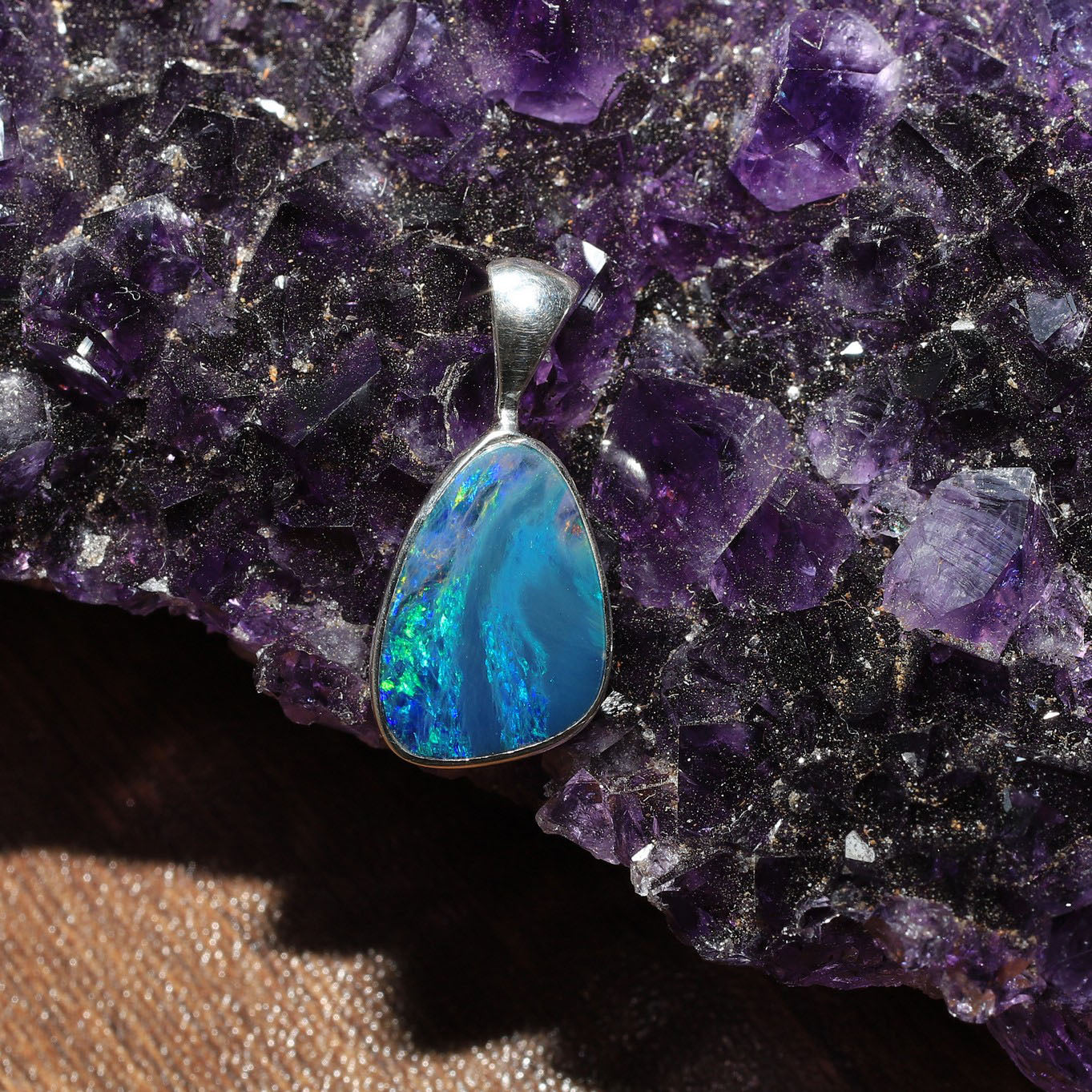

Tanzanite Gemstone Wholesale Guide: Properties, Grading, and Jewelry Value
Tanzanite Gemstone Wholesale Guide: Properties, Grading, and Jewelry Value
Tanzanite gemstone jewelry wholesale guide covering color grading, quality factors, heat treatment, pricing, and why retailers should stock this rare December b
Tanzanite is a blue-violet variety of the mineral zoisite found exclusively in a small mining area near Mount Kilimanjaro in northern Tanzania — making it roughly 1,000 times rarer than diamond by geographic source. For wholesale buyers and jewelry retailers, tanzanite represents one of the most compelling gemstones in the market: a single-source stone with strong consumer demand, excellent color saturation in sterling silver settings, and a price-per-carat that delivers real margin at retail.


What Is Tanzanite and Why Is It So Rare?
Tanzanite is a calcium aluminum silicate mineral (Ca₂Al₃(SiO₄)(Si₂O₇)O(OH)) belonging to the epidote group. It was discovered in 1967 by Maasai herders in the Merelani Hills of northern Tanzania, and Tiffany & Co. introduced it to the commercial market shortly after, naming it "tanzanite" after its country of origin.
What makes tanzanite extraordinary from a geological standpoint:
- Single source worldwide — All commercial tanzanite comes from a 4-kilometer strip in the Merelani mining district of Tanzania. No other deposit exists anywhere on Earth.
- Formation conditions — Tanzanite required a unique combination of vanadium-rich metamorphic conditions roughly 585 million years ago. Geologists consider the probability of this occurring elsewhere astronomically low.
- Finite supply — Industry estimates suggest the Merelani deposit could be exhausted within 20 to 30 years at current mining rates, driving both collector interest and long-term wholesale value.
The Tanzanian government has tightened export regulations, prioritizing in-country cutting and value-added processing. For wholesale buyers, this means supply chain reliability matters more than ever — sourcing through manufacturers with established gemstone procurement channels is critical.
Natural Creations 925 maintains direct rough-stone sourcing relationships across Africa, including the East African gem corridor. The company's in-house lapidary department processes rough tanzanite on-site using German precision cutting machinery, controlling quality from raw crystal to finished jewelry setting.
What Color Is Tanzanite and How Is It Graded?
Tanzanite displays a remarkable optical property called trichroism — it shows three different colors depending on the viewing axis: blue, violet, and burgundy-red. The most valued tanzanite appears vivid blue-to-violet in face-up position, with the blue component being the primary driver of value.
Tanzanite Color Grading Scale
The Tanzanite Foundation established a standardized color grading system that the industry widely follows:
| Grade | Color Description | Saturation | Tone | Wholesale Value |
|---|---|---|---|---|
| Exceptional (aAAA) | Vivid violetish-blue | Intense, no gray | Medium-dark | Highest — $300–$600+/ct |
| Exceptional (AAA) | Vivid blue-violet | Strong, minimal gray | Medium-dark | Very high — $200–$400/ct |
| Fine (AA) | Medium blue-violet | Moderate saturation | Medium | Strong — $100–$250/ct |
| Good (A) | Light blue-violet | Noticeable desaturation | Medium-light | Moderate — $50–$150/ct |
| Commercial (B) | Pale lavender to light blue | Weak saturation | Light | Entry-level — $20–$75/ct |
| Commercial (C) | Very pale, grayish | Low saturation | Very light | Budget — $5–$30/ct |
Note: Prices reflect per-carat rough wholesale ranges for calibrated stones and fluctuate based on market conditions, carat weight, and clarity.
For sterling silver jewelry wholesale, the sweet spot is typically A to AA grade tanzanite. These grades deliver visible color impact at price points that keep finished pieces accessible for retail, while AAA and above grades are typically reserved for gold or platinum fine jewelry.
What Are the Quality Factors for Wholesale Tanzanite?
Beyond color, three additional factors determine tanzanite's wholesale value:
Clarity
Tanzanite is a Type I gemstone on the GIA clarity scale, meaning eye-clean specimens are the norm rather than the exception. Wholesale buyers should expect:
- Eye-clean minimum — Stones with visible inclusions (without magnification) are considered below commercial grade
- Loupe-clean premium — Stones clean under 10x magnification command a 15–25% premium over eye-clean equivalents
- Common inclusions — Growth tubes, fingerprint inclusions, and small crystal inclusions are typical; heavy zoning or fractures significantly reduce value
Carat Weight
Tanzanite exhibits a pronounced price-per-carat jump at certain weight thresholds:
- Under 1 carat: Most accessible for silver jewelry wholesale
- 1–3 carats: Sweet spot for statement rings and pendants
- 3–5 carats: Collector-grade territory, significant price escalation
- 5+ carats: Investment-grade, rare in commercial jewelry
Cut Quality
Tanzanite's trichroism means cutting orientation directly determines face-up color. Skilled lapidaries orient the rough so the blue axis faces up through the table. Poorly oriented cuts show brownish or grayish tones that significantly reduce market value.
At Natural Creations 925, the in-house lapidary team — part of a workforce of over 500 artisans, 75% of whom are women — cuts tanzanite specifically to maximize blue saturation in the face-up position. This level of cutting control is only possible when a manufacturer handles both stone processing and jewelry setting under one roof.
Is Tanzanite Heat Treated?
Yes — the vast majority (estimated 95–99%) of commercial tanzanite has been heat treated. This is a universally accepted, permanent, and stable enhancement in the gemstone industry.
What wholesale buyers should know about tanzanite heating:
- Purpose — Raw tanzanite typically appears brownish or burgundy. Heating at 500–700°C permanently shifts color to blue-violet by altering vanadium's oxidation state
- Permanence — The color change is permanent and will not fade or revert under normal conditions
- Disclosure — FTC guidelines require disclosure, but the trade universally considers heated tanzanite "standard" — similar to heated sapphire
- Unheated tanzanite — Naturally blue specimens exist but are exceptionally rare, commanding significant collector premiums. Assume all commercial tanzanite is heated unless certified otherwise
Always disclose heat treatment in wholesale documentation. Transparency builds the trust that drives repeat business.
How Hard Is Tanzanite and What Care Does It Need?
Tanzanite rates 6 to 6.5 on the Mohs hardness scale, placing it below quartz (7) and well below sapphire (9). This is the most important durability fact for wholesale buyers and their retail customers.
Tanzanite Durability Comparison
| Property | Tanzanite | Sapphire | Amethyst | Topaz |
|---|---|---|---|---|
| Mohs Hardness | 6–6.5 | 9 | 7 | 8 |
| Toughness | Fair (sensitive to thermal shock) | Excellent | Good | Fair (perfect cleavage) |
| Best Setting Types | Bezel, halo, protective | Any | Any | Bezel preferred |
| Daily Wear Risk | Moderate — pendants/earrings ideal | Very low | Low | Moderate |
| Cleaning Method | Warm soapy water only | Ultrasonic safe | Warm soapy water | Warm soapy water |
| Avoid | Ultrasonic, steam, sudden temp changes | N/A | Prolonged heat | Ultrasonic, steam |
Care Guidelines for Retailers
Tanzanite is best suited for earrings, pendants, and occasion-wear rings rather than daily-wear rings. Retailers should communicate these care points to customers:
- Remove tanzanite rings before manual work, exercise, or cleaning
- Clean only with lukewarm water, mild soap, and a soft brush
- Never use ultrasonic or steam cleaners — tanzanite's sensitivity to thermal shock can cause fracturing
- Store separately from harder gemstones to prevent surface scratching
Wholesale buyers who provide care cards with tanzanite jewelry see measurably lower return rates.
What Is Tanzanite's Birthstone and Metaphysical Significance?
December Birthstone
In 2002, the American Gem Trade Association (AGTA) officially added tanzanite as a December birthstone alongside turquoise and zircon. This was the first update to the birthstone list since 1912 — a testament to tanzanite's market significance.
For wholesale buyers, December birthstone status means predictable seasonal demand. Stocking tanzanite jewelry by September ensures you capture the holiday buying window when birthstone searches peak.
Chakra Associations
Tanzanite is associated with two chakras in crystal healing traditions:
- Third Eye Chakra (Ajna) — Connected to intuition, spiritual awareness, and inner vision. Practitioners believe tanzanite stimulates psychic abilities and deepens meditation
- Throat Chakra (Vishuddha) — Linked to communication, self-expression, and truth. Tanzanite is said to help articulate spiritual insights and inner truths
Zodiac Connection
Tanzanite is traditionally linked to Sagittarius (November 22 – December 21), aligning with its December birthstone status. Sagittarius-themed marketing resonates with a significant consumer segment — astrology-influenced purchasing has grown substantially, particularly among millennial and Gen Z buyers.
Healing Properties
In metaphysical traditions, tanzanite is attributed with:
- Stress relief and calming energy — Believed to soothe anxiety and promote emotional balance
- Spiritual transformation — Considered a stone of transmutation, helping wearers shift from destructive patterns to constructive ones
- Enhanced creativity — Associated with stimulating creative thought and problem-solving
- Physical healing — Some traditions link tanzanite with supporting immune function and skin health (traditional beliefs, not medical claims)
The metaphysical market is a real and growing revenue channel. Retailers who include property cards with tanzanite jewelry tap into an audience that actively seeks stones by their energetic attributes.
What Does Tanzanite Cost at Wholesale and How Is It Priced?
Tanzanite pricing follows a supply-constrained model that differs from most colored gemstones. Because there is a single mine source with a finite timeline, prices have shown a long-term upward trend despite short-term market fluctuations.
Wholesale Pricing Factors
- Color saturation — The single largest value driver. Vivid blue-violet commands 5–10x the price of pale lavender at the same carat weight
- Carat weight — Price-per-carat increases exponentially above 2-carat and 5-carat thresholds
- Clarity — Eye-clean is the baseline; loupe-clean adds 15–25%
- Cut quality — Well-oriented cuts maximizing blue face-up color are worth 10–20% more than poorly oriented stones
- Market timing — Mining disruptions, Tanzanian export policy changes, and seasonal demand affect spot pricing
Why Tanzanite Delivers Strong Retail Margins
- Consumer awareness is high — Decades of marketing by major jewelry houses built strong name recognition
- Perceived value exceeds cost — Customers associate tanzanite with luxury, allowing healthy retail markups
- Single-source rarity story — The "only found in one place on Earth" narrative is powerful and easily understood
- Birthstone demand — December status creates reliable, repeatable annual sales cycles
- Metaphysical crossover — Appeals to both traditional jewelry buyers and the growing crystal/spiritual market
Natural Creations 925 ships tanzanite jewelry from its 60,000-square-foot solar-powered factory with same-day dispatch on orders placed before 2 PM PST. US retailers avoid customs delays entirely, while international buyers across 40+ countries benefit from established global shipping infrastructure.
Why Should Retailers Stock Tanzanite Jewelry?
Tanzanite occupies a unique position in the wholesale jewelry market. Here is how it compares to other popular colored gemstones for retail stocking decisions:
Tanzanite vs. Other Blue Gemstones for Wholesale
| Factor | Tanzanite | Blue Sapphire | Blue Topaz | Lapis Lazuli |
|---|---|---|---|---|
| Rarity | Very high (single source) | Moderate (multiple sources) | Low (abundant) | Moderate |
| Color Range | Blue-violet (unique) | Pure blue to dark blue | Light to Swiss to London blue | Deep blue with pyrite |
| Price Point (silver jewelry) | Mid-range | High | Low | Low-mid |
| Consumer Recognition | Strong | Very strong | Moderate | Moderate |
| Birthstone Month | December | September | December (alt.) | N/A |
| Rarity Narrative | Excellent ("only Tanzania") | Good | Weak | Moderate |
| Margin Potential | High | Moderate (high cost) | Low (low perceived value) | Moderate |
| Metaphysical Demand | Strong | Moderate | Moderate | Strong |
Tanzanite hits the intersection of perceived luxury, genuine rarity, accessible wholesale cost (in A–AA grades), and strong storytelling potential.
Stocking Recommendations
- Entry point: Tanzanite stud earrings and simple pendants in sterling silver — low per-unit cost, high turnover
- Mid-range: Halo-set rings and multi-stone pendants — strong gift-market performance
- Premium: Large-carat statement pieces — collector and special-occasion market
- Seasonal strategy: Build inventory by September for December birthstone demand; refresh metaphysical pieces year-round


Is tanzanite a good investment gemstone?
Tanzanite has shown long-term price appreciation due to its single-source supply and finite mining timeline. High-quality stones (AA and above, 2+ carats) have historically held or increased in value. However, tanzanite is an illiquid asset — treat it as a long-term hold rather than short-term speculation. For wholesale buyers, the investment angle is a legitimate selling point at retail.
Can tanzanite be worn every day?
Tanzanite works well for daily wear in earrings and pendants. For rings, daily wear is not recommended due to its 6–6.5 Mohs hardness — the stone can scratch or chip with impact. Position tanzanite rings as occasion wear or suggest protective bezel settings.
How can I tell if tanzanite is real or synthetic?
Natural tanzanite is identified through gemological testing: trichroism (three-color pleochroism), refractive index (1.691–1.700), and specific gravity (3.35). Lab-created tanzanite exists but is rare commercially. Purchasing from manufacturers with in-house gemological expertise — like Natural Creations 925, which processes rough stones through its own lapidary — provides built-in authenticity assurance.
What metal pairs best with tanzanite for wholesale jewelry?
Sterling silver is an excellent pairing for A–AA grade tanzanite. The cool tone of silver complements tanzanite's blue-violet hue, and silver's price point keeps finished pieces accessible for a broad retail market. For AAA+ grades, white gold or platinum is more common. Rose gold creates an on-trend contrast appealing to younger demographics.
Why is tanzanite more expensive than other blue gemstones?
Tanzanite's premium reflects genuine geological scarcity — a single 4-kilometer mining area in Tanzania with no other known deposit on Earth. Unlike blue topaz (abundant) or sapphire (mined across multiple continents), tanzanite's supply is finite and diminishing. This scarcity, combined with consumer awareness and December birthstone status, sustains higher pricing.


Open Your Wholesale Account Today
500+ artisans. In-house lapidary. 100% solar-powered. Same-day shipping on orders before 2 PM PST. Just your business license to get started.