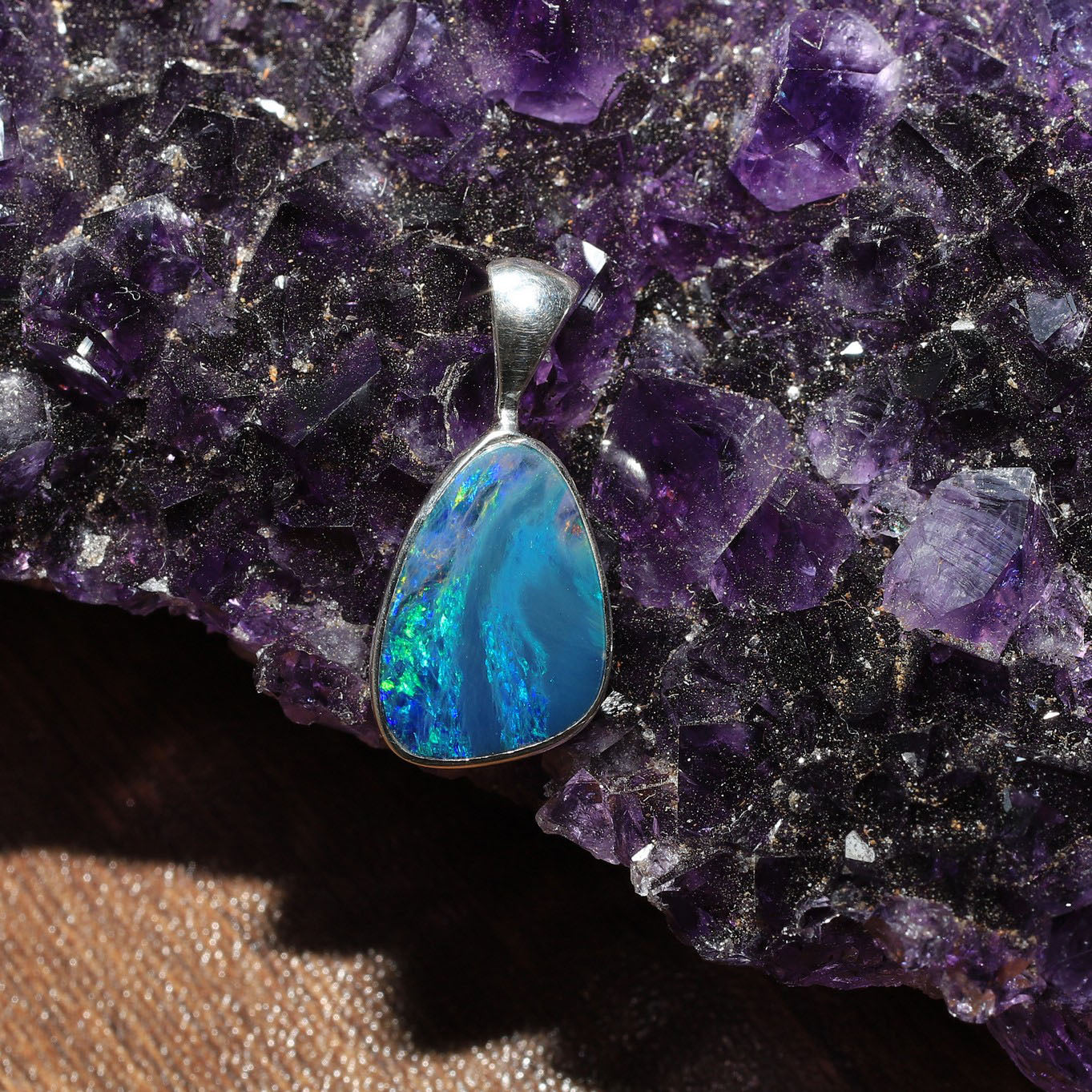

Sodalite Gemstone Wholesale Guide: The Royal Blue Stone of Logic
Sodalite Gemstone Wholesale Guide: The Royal Blue Stone of Logic
Sodalite is a rich royal-blue tectosilicate mineral with distinctive white veining that offers wholesale jewelry buyers one of the best value propositions in the blue gemstone category — delivering the deep blue aesthetic customers crave at a price point that protects healthy margins. For retailers tired of watching customers hesitate over high-priced lapis lazuli, sodalite is the answer.
This guide covers everything wholesale buyers need to source, stock, and sell sodalite gemstone jewelry profitably — from mineral science and metaphysical properties to the critical lapis lazuli comparison your customers will inevitably make.


What Is Sodalite and Why Do Buyers Love It?
Sodalite is a tectosilicate mineral belonging to the feldspathoid group, with the chemical formula Na8(Al6Si6O24)Cl2. It was first identified in 1811 in Greenland, but it did not gain significant commercial popularity until large deposits were discovered in Ontario, Canada in 1891 — reportedly during a visit by the British royal family, which sparked a wave of demand that earned it the nickname "Princess Blue."
The stone's appeal is immediate and obvious: a deep, saturated royal blue interlaced with white calcite veining that creates a naturally artistic pattern. Each piece is unique, and the blue-and-white contrast photographs exceptionally well — a significant advantage in today's social-media-driven retail environment.
What Gives Sodalite Its Deep Blue Color?
Sodalite's blue coloring comes from the sulfur radical anion (S3-) trapped within its crystal lattice during formation. The intensity of blue varies based on sulfur concentration — the best specimens display a rich, even royal blue, while lower-grade material may appear grayish or muted. White veining comes from calcite inclusions, which are a natural and expected feature of the stone.
How Hard Is Sodalite and How Does That Affect Jewelry Design?
Sodalite rates 5.5 to 6 on the Mohs hardness scale, placing it in a comfortable middle range for jewelry use. It is hard enough for most jewelry types but still benefits from thoughtful design and reasonable care expectations.
| Jewelry Type | Suitability | Design Notes |
|---|---|---|
| Pendants | Excellent | Any setting style works |
| Earrings | Excellent | Lightweight, protected position |
| Rings | Good | Bezel setting recommended for daily wear |
| Bracelets | Good | Beaded or bezel-set designs perform well |
| Cufflinks | Excellent | Low-impact wear, high visual appeal |
How Should Customers Care for Sodalite Jewelry?
- Clean with warm soapy water and a soft cloth
- Avoid ultrasonic and steam cleaners
- Store separately from harder gemstones like sapphire or diamond
- Remove before strenuous activity or contact with chemicals
- Prolonged sun exposure may fade color over time — store away from direct sunlight
Sodalite is considerably more forgiving than softer blue stones, making it a practical choice for customers who want beautiful jewelry they can actually wear regularly.
What Are the Healing Properties of Sodalite?
Sodalite is revered in metaphysical traditions as the stone of logic, truth, and inner peace. It is considered one of the most powerful stones for mental clarity and rational thinking, making it especially popular with professionals, students, and anyone seeking to quiet emotional chaos in favor of clear-headed decision-making.
Core metaphysical properties include:
- Logic and rationality: Promotes clear thinking, objectivity, and analytical ability
- Truth and authenticity: Encourages honest self-expression and the courage to speak one's truth
- Inner peace: Calms mental chatter, reduces anxiety, and brings emotional balance
- Intuition enhancement: Bridges logical thinking with intuitive insight
- Group harmony: Often recommended for workplace environments to encourage cooperation and communication
Which Chakras Does Sodalite Activate?
Sodalite works with two interconnected chakras:
- Third Eye Chakra: Enhances intuition, insight, and the ability to see beyond surface appearances
- Throat Chakra: Supports clear, truthful communication and the expression of ideas and feelings
This Third Eye and Throat combination makes sodalite the go-to recommendation for anyone who needs to think clearly and communicate effectively — a description that covers most working adults, which is precisely why the stone has such broad market appeal.
Which Zodiac Sign Connects with Sodalite?
Sodalite is primarily associated with Sagittarius (November 22 – December 21). Sagittarius energy is naturally philosophical, truth-seeking, and expansive — qualities that sodalite amplifies while also providing the grounding and focus that Sagittarius sometimes lacks.
Retailers who feature zodiac associations with their sodalite displays can expect heightened interest during Sagittarius season (late November through December), which conveniently overlaps with holiday shopping.
How Is Sodalite Different from Lapis Lazuli?
This is the comparison that defines sodalite's market position. Customers frequently confuse the two stones, and educating them on the differences is both a service and a sales opportunity.
| Feature | Sodalite | Lapis Lazuli |
|---|---|---|
| Chemical Class | Tectosilicate (feldspathoid) | Metamorphic rock (lazurite + calcite + pyrite) |
| Color | Royal blue with white veining | Deep blue with gold pyrite flecks |
| Hardness (Mohs) | 5.5–6 | 5–5.5 |
| Key Identifier | White calcite veins | Gold pyrite inclusions |
| Wholesale Price | Lower | Higher |
| Metaphysical Focus | Logic, truth, clarity | Wisdom, royalty, spiritual power |
| Market Position | Accessible, value-oriented | Premium, historically prestigious |
The simplest way to help customers distinguish the two: sodalite has white inclusions, lapis lazuli has gold (pyrite) inclusions. When both colors are present, the stone is likely a sodalite-lazurite mixture.
For wholesale buyers, sodalite's lower cost per carat means better margins on pieces that deliver comparable visual impact to lapis lazuli. Many successful retailers carry both stones at different price points, allowing customers to choose based on budget and preference.
Where Is Sodalite Sourced?
Quality sodalite comes from four major regions:
- Brazil: The largest commercial source, producing consistent deep-blue material in large volumes suitable for wholesale jewelry production
- Canada (Ontario and British Columbia): Historically significant source with excellent quality, though production is more limited
- Namibia: Produces vivid blue specimens that are highly regarded in the European market
- South Asia: Growing source of commercial-grade sodalite at competitive pricing
Natural Creations 925 maintains direct sourcing relationships with suppliers in these regions, and every sodalite stone is processed through our in-house lapidary to ensure optimal color presentation, consistent sizing, and quality polish before being set into sterling silver designs.
What Should Wholesale Buyers Look for in Quality Sodalite?
When evaluating sodalite for wholesale purchase, prioritize these factors:
- Color depth: Rich, saturated royal blue is the standard — avoid grayish, washed-out, or overly dark material
- White veining balance: Some white calcite veining adds character and authenticity; too much white reduces the blue impact
- Polish quality: Sodalite should display a smooth, consistent polish without pitting or rough spots
- Color consistency across lots: Reliable suppliers deliver uniform quality, not just cherry-picked samples
- Cut and calibration: Properly calibrated stones ensure efficient jewelry production and consistent retail presentation
Why Source Sodalite from Natural Creations 925?
Natural Creations 925 operates a 60,000-square-foot solar-powered factory where over 500 artisans — 75% women — transform raw sodalite into finished sterling silver jewelry using precision German machinery. Our in-house lapidary gives us complete control over stone selection, cutting, and polishing, which is how we maintain the color consistency wholesale buyers depend on.
We export sodalite jewelry to more than 40 countries, and every order placed before 2 PM PST ships the same day. From classic sodalite cabochon pendants to contemporary beaded bracelets and statement rings, our catalog covers the full range of what sells.
How Can Retailers Maximize Sodalite Sales?
Sodalite's greatest retail strength is versatility. It appeals to crystal enthusiasts for its metaphysical properties, fashion buyers for its striking blue color, and budget-conscious customers looking for an accessible blue gemstone.
Position sodalite as the "thinking person's stone" — display it in professional contexts, market it for graduation gifts and career milestone celebrations, and merchandise it alongside complementary stones like clear quartz (for amplified clarity) and amethyst (for intuitive balance).
The lapis lazuli comparison is an asset, not a liability. Train your team to present both stones side by side, explain the differences, and let the customer choose. Many retailers find that presenting sodalite as a knowledgeable alternative builds trust and leads to higher overall sales.


Is sodalite durable enough for everyday rings?
Sodalite's Mohs hardness of 5.5–6 makes it suitable for rings worn with reasonable care, especially in bezel settings that protect the stone's edges. It is not as hard as sapphire or topaz, so advise customers to remove sodalite rings during heavy manual work. For daily wear, pendants and earrings are the safest options.
Can sodalite fade over time?
Yes, prolonged exposure to intense direct sunlight can gradually lighten sodalite's blue color. This process is slow under normal wearing conditions, but retailers should advise customers to store sodalite jewelry in a closed box or pouch rather than leaving it on a sunny windowsill.
How can I tell if sodalite is real?
Authentic sodalite displays a deep blue color with irregular white calcite veining. It has a vitreous to greasy luster when polished. Under UV light, some sodalite specimens fluoresce orange, which is a helpful identification test. Dyed imitations typically lack natural veining patterns and may show color concentration in surface cracks.
Is sodalite a good alternative to lapis lazuli for budget-conscious buyers?
Absolutely. Sodalite delivers a comparable deep blue aesthetic at a significantly lower wholesale cost. While it lacks lapis lazuli's gold pyrite flecks and historical prestige, many customers actually prefer sodalite's blue-and-white contrast. Stocking both stones at different price points serves the broadest range of customers.
What wholesale quantities and custom options are available?
Natural Creations 925 offers flexible MOQs for sodalite gemstone jewelry, accommodating everything from large international orders to smaller boutique assortments. We also offer custom design services for retailers who want exclusive sodalite collections. Visit naturalcreations925.com for current availability, pricing, and custom design consultations.


Open Your Wholesale Account Today
500+ artisans. In-house lapidary. 100% solar-powered. Same-day shipping on orders before 2 PM PST. Just your business license to get started.