
Ring Stacking Guide: How to Style Gemstone Rings Like a Pro (For Retailers and Shoppers)
Ring Stacking Guide: How to Style Gemstone Rings Like a Pro (For Retailers and Shoppers)
Complete ring stacking guide for sterling silver gemstone rings — finger placement, mixing stones, balancing visual weight, and the best stacking formulas.
Ring stacking — wearing multiple rings simultaneously on one or more fingers — has evolved from a styling trick into a full cultural practice with its own language, philosophy, and dedicated collector community. For wholesale buyers selling 925 sterling silver gemstone rings, understanding ring stacking means understanding how to sell 3–7 rings at once instead of one at a time.
Why Ring Stacking Matters for Your Sales
The commercial case for stacking-focused selling:
- Average order value: A customer who buys three stacking rings spends 3x more than one who buys a single ring — at the same per-ring wholesale cost
- Inventory depth: Customers who stack need variety — your ring selection becomes more important, not less
- Returns come back: A stacker who finds a "home base" style with you returns regularly to add to their stack
- Social media natural: Ring stacks are among the most photographed jewelry content — flat lays of ring stacks generate enormous engagement and organic discovery
The Anatomy of a Ring Stack
A well-composed ring stack has three types of rings in deliberate proportion:
The anchor ring: One ring that is clearly the most prominent — usually the largest stone, boldest design, or most visually complex piece. Every great stack has one anchor that everything else supports.
The accent rings: Two to four rings with moderate visual weight — stone accents, thin bands with small stones, distinctive silhouettes. These support and frame the anchor without competing.
The thin bands: One to three plain or lightly textured bands with no stones that provide visual rest between more complex pieces. These are what allow the eye to "breathe" between the more active elements of the stack.
The ratio: 1 anchor + 2–3 accent + 1–2 bands = a complete and balanced stack of 4–6 rings.
Finger Placement Strategy
Different fingers read differently in a stack:
| Finger | Character | Stack Strategy |
|---|---|---|
| Index finger (pointer) | Assertive, active — moves constantly | Place your most statement piece here; it will be seen most |
| Middle finger | Balanced; most viewed from below | Classic stack location; accommodates all ring types |
| Ring finger (left) | Traditional; intimate | Stack here for personal/meaningful pieces; careful not to overwhelm an engagement/wedding ring |
| Ring finger (right) | Free from tradition; bold | Strong alternative stack location; in the UK and Germany, the right ring finger carries no traditional weight |
| Pinky | Delicate; visible in social settings | Small, fine rings; thin bands or tiny stone accents only |
| Thumb | Statement; culturally significant | Rings worn on the thumb are bold statements — works for chunky, wide pieces |
The Beginner Stack: 3 Rings
The simplest functional stack for a new stacker:
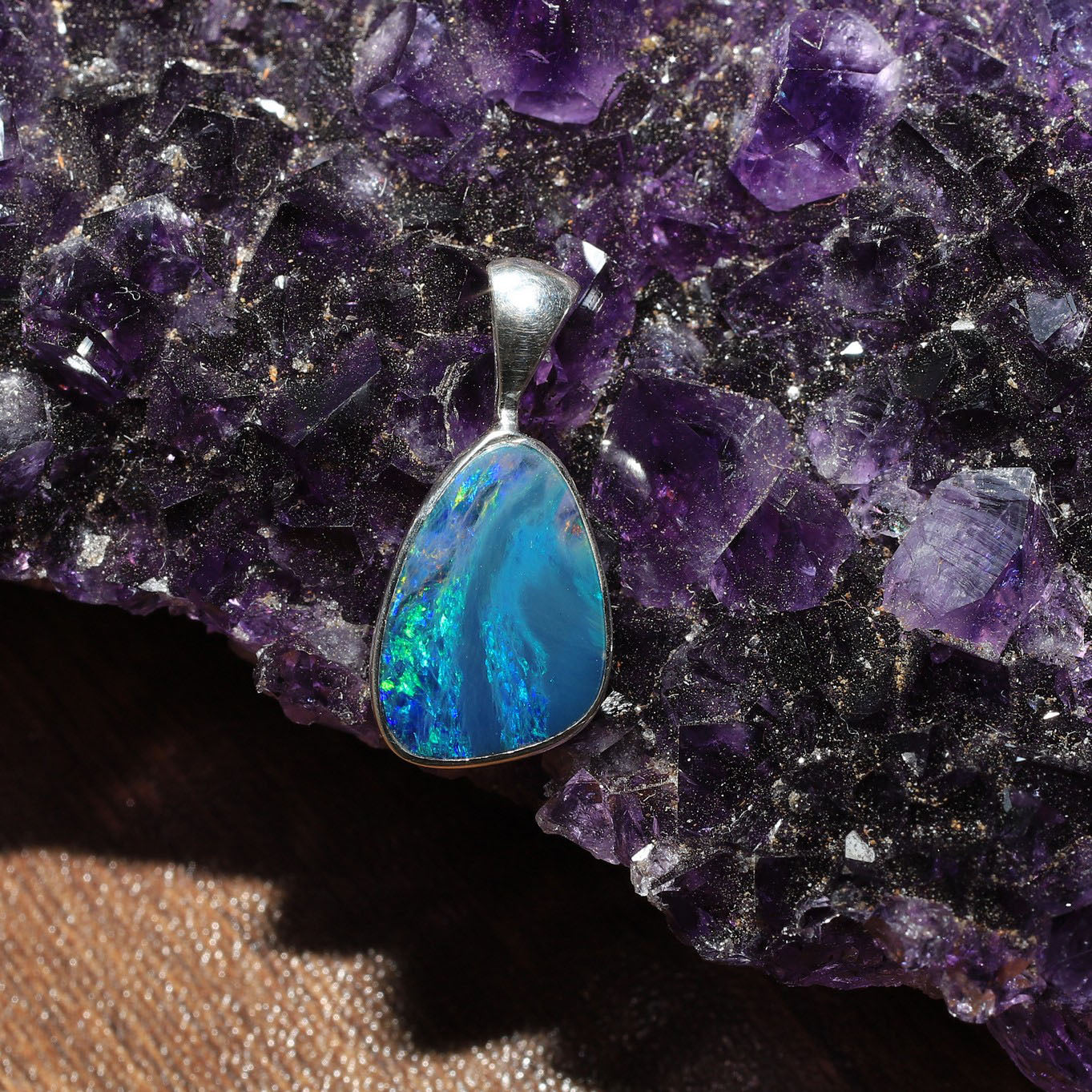
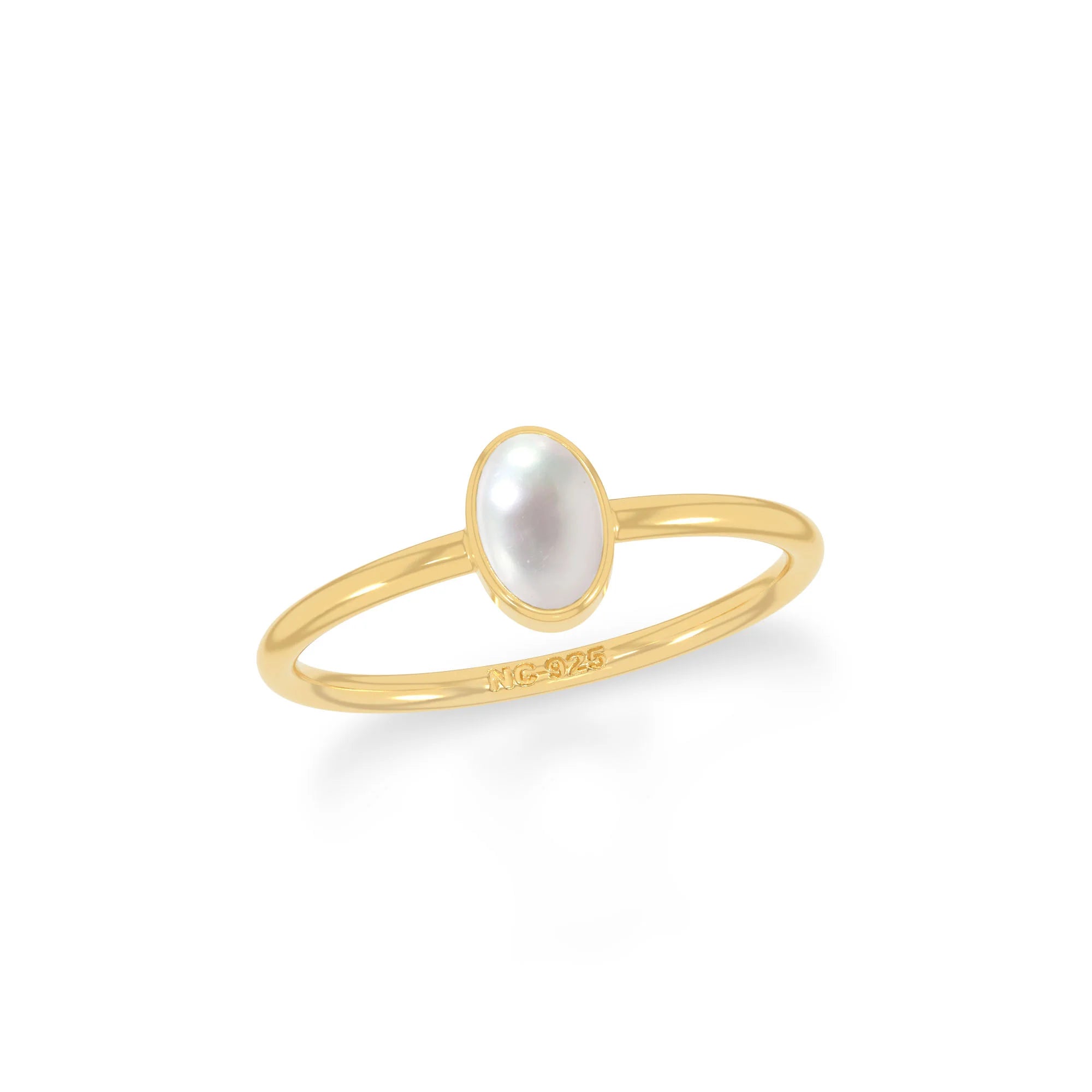
Ring 1 (middle position): Your anchor — a ring with a visible center stone. Rainbow moonstone oval cabochon in a silver bezel, labradorite round cab, amethyst cushion — something that reads from 3 feet away.
Ring 2 (above or below): A thin, plain sterling silver band — hammered texture or smooth. This rests against the anchor without competing.
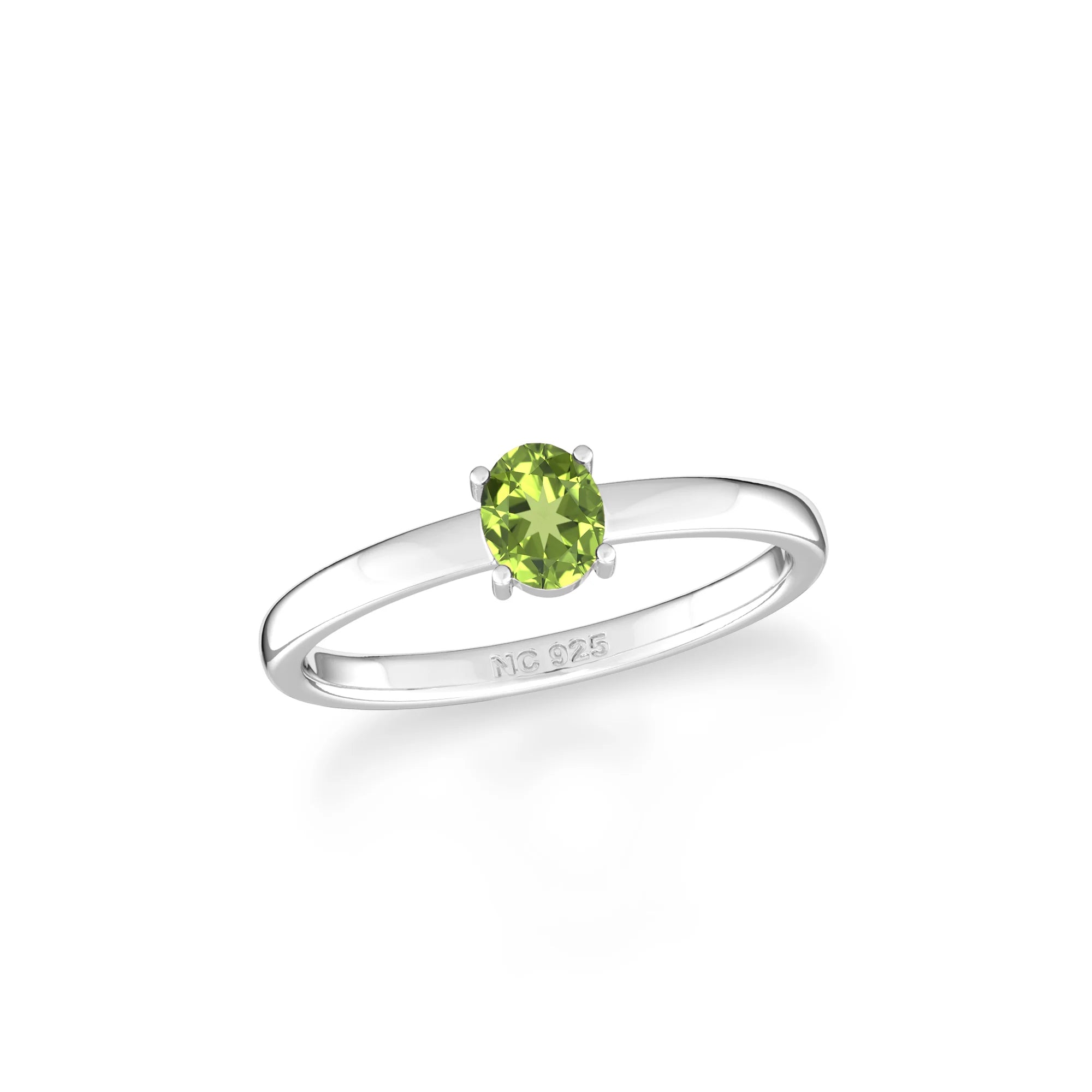
Ring 3 (opposite side of anchor): A delicate ring with a small accent stone — a tiny turquoise bezel, small garnet solitaire, or simple sterling band with twisted detail.
The result: Anchor stone leads, plain band provides rest, small accent adds detail on the other side. Balanced, complete, and wearing together correctly.
The Statement Stack: 5–7 Rings
For experienced stackers and live selling "stack sells":
Finger 1 (index): Bold anchor → Large labradorite cocktail ring or oversized amethyst dome — the visual lead
Finger 2 (middle): 3 rings → Anchor: medium moonstone oval ring → Above anchor: thin hammered silver band → Below anchor: small stone accent ring (turquoise stud bezel)
Finger 3 (ring): 2 rings → Thin twisted silver band → Small garnet or amethyst accent ring
Result: 6 rings across 3 fingers — a full, intentional, curated stack that reads as a complete look.
Mixing Gemstone Colors in a Stack
The easiest mistake: putting too many competing colors in one stack. The easiest solution: a color anchor.
Monochromatic stack: All rings in one color family — all purple (amethyst in varying sizes), all blue (moonstone + labradorite + blue topaz), all green (malachite + tourmaline + green aventurine). This creates sophisticated cohesion.
Complementary stack: Two colors that sit opposite on the color wheel — turquoise (blue-green) and carnelian (orange-red). The contrast is bold and intentional.
Natural and neutral: Mix different "natural" stones without strong color — moonstone + labradorite + clear quartz + silver bands. The neutral palette unifies disparate stones.
Specific rule: No more than two vivid, saturated colors in one stack. Three saturated colors = visual chaos.
Mixing Band Widths for Visual Rhythm
Width variation creates visual rhythm — the "beat" of a stack that makes it look composed rather than random:
Pattern: Thin → medium → thin → thick → thin
This alternation prevents the heavy-bottomed look that comes from stacking all thick rings together, or the insipid look of all thin rings.
Example width sequence (from index finger down):
- 1mm plain band
- Cocktail ring (8mm face)
- 1.5mm twisted band
- 4mm stone bezel ring
- 1mm smooth band
Ring Sizing Considerations for Stacks
When stacking multiple rings on one finger, size matters differently than for a single ring:
- Multiple rings reduce air circulation slightly, making the finger feel fuller
- Some stackers go half a size up on their stacking finger
- Mixing sizes (one ring fits slightly loose, one slightly snug) can cause shifting — order all rings for the same finger in the same size
- Adjustable rings are excellent for stackers who want to try different configurations
Selling Stacks: How to Increase Average Order Value
Present stacks pre-assembled: When a customer sees three rings worn together on a display hand, they think "that whole stack" rather than "those three individual rings." Show the story, not the inventory.
Name the stack: "The Moonlit Stack" (moonstone + silver bands), "The Earth Stack" (turquoise + carnelian + tiger's eye). Named concepts sell better than a collection of anonymous individual pieces.
Stack pricing: "Buy the complete stack of 5 for $X — or individual pieces from $Y each." The stack price should be 10–15% less than buying all five individually. This rewards the multi-purchase and trains the customer to think in stacks.
Stack-building content for live selling: "I'm going to show you how I'd build a stack from scratch tonight — you tell me when to stop adding." This creates a participatory, entertaining segment that often results in the entire stack being claimed piece by piece.
Natural Creations 925 Ring Categories Perfect for Stacking
Anchor rings: Large cabochon solitaires (labradorite, moonstone, Ethiopian opal, turquoise), cluster rings (multi-stone arrangements), bold oval or round feature rings
Accent rings: Medium bezel-set rounds (amethyst, garnet, blue topaz, moonstone), delicate band rings with small accent stones
Band rings: Hammered silver bands, twisted rope bands, thin polished bands, thin oxidized bands for texture contrast
With 500+ artisans producing across this full range, Natural Creations 925's ring catalog is purpose-built for the kind of depth a stacking-focused wholesale buyer needs.
How do you stack rings without them looking messy?
The key is length separation (visual space between different-sized rings), a single anchor piece, rhythm through width variation, and a controlled color palette (maximum two vivid colors). One plain band for every two stone rings keeps the stack from feeling overwhelmed.
Can you stack rings on different fingers?
Yes — wearing rings on multiple fingers simultaneously is one of the most popular contemporary ring-stacking approaches. The most common multi-finger approach: anchor statement ring on the index finger, 2–3 piece stack on the middle finger, 1–2 simple bands on the ring finger.
What rings look good stacked together?
A large anchor ring (one bold gemstone), 2–3 medium accent rings with smaller stones, and 1–2 plain or lightly textured bands make a complete, balanced stack. Mix band widths for visual rhythm and limit vivid gemstone colors to two complementary or one color family.
How many rings should you stack on one finger?
2–4 rings per finger is the functional range — 3 is the most popular. More than 4 on a single finger becomes uncomfortable and looks crowded. Distributing a larger stack across multiple fingers reads better both aesthetically and physically.
What is the best gemstone for a stacking anchor ring?
Large rainbow moonstone, labradorite, Ethiopian fire opal, and turquoise are the most powerful anchor stones for 925 sterling silver ring stacks. Their visual phenomenon (adularescence, labradorescence, play-of-color) or bold color creates the focal point that a great stack anchor requires.
Open Your Wholesale Account Today
500+ artisans. In-house lapidary. 100% solar-powered. Same-day shipping on orders before 2 PM PST. Just your business license to get started.