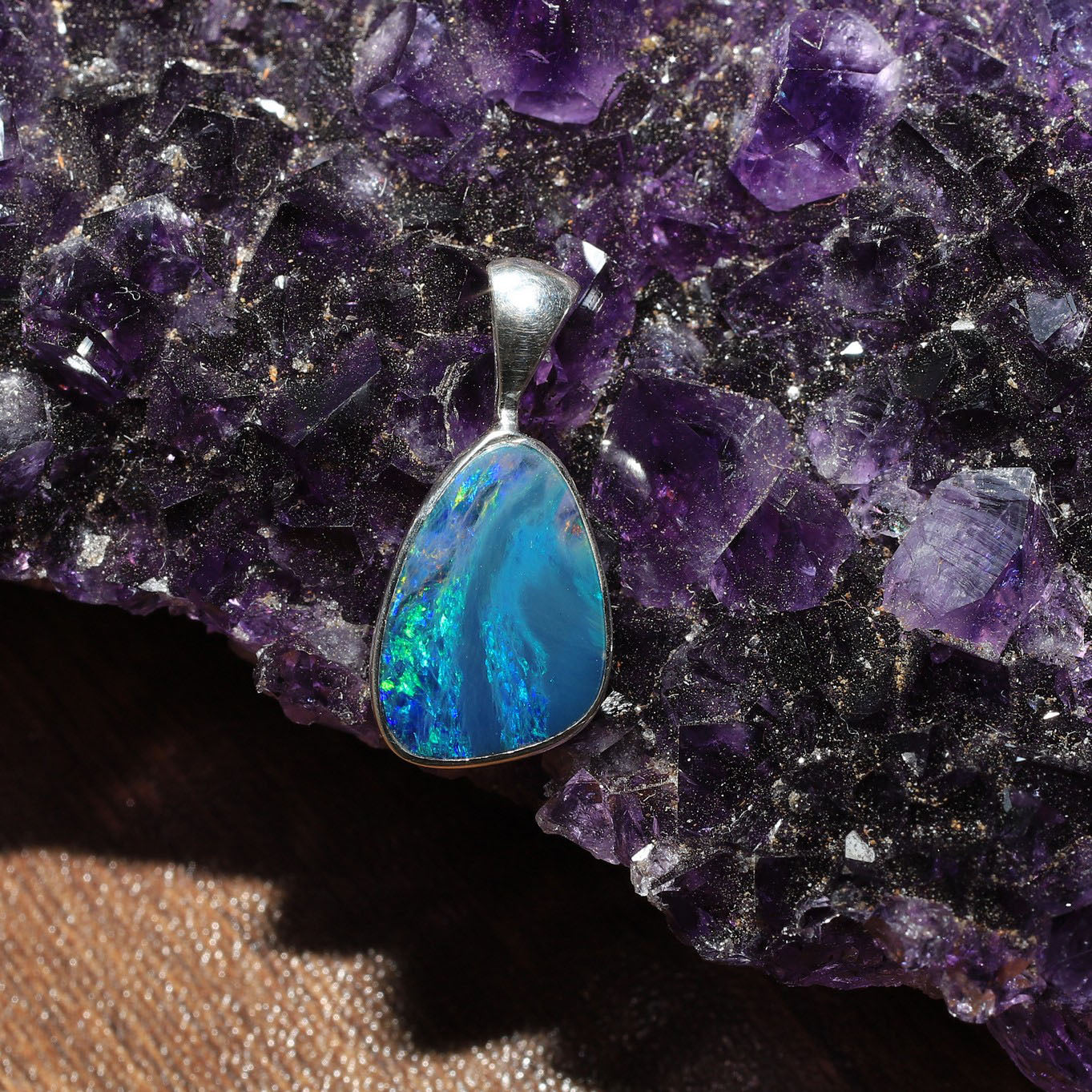

Pietersite Gemstone Wholesale Guide: The Tempest Stone of Vision
Pietersite Gemstone Wholesale Guide: The Tempest Stone of Vision
Wholesale pietersite gemstone jewelry — grading, sourcing, chatoyant swirls, healing properties, and why this rare brecciated gem commands collector pricing.
Pietersite is a rare, chatoyant brecciated gemstone known for its swirling storms of blue, gold, red, and brown — and wholesale pietersite jewelry has become one of the most sought-after categories in the collector and metaphysical markets because no other stone moves like this one does. Often called the "Tempest Stone" for its turbulent, weather-like patterns, pietersite is a brecciated form of tiger eye and hawk's eye (crocidolite-included quartz) in which the original fibrous structure has been broken apart and naturally re-cemented in chaotic, swirling arrangements. The result is a stone with a chatoyancy (silky light effect) that shifts and flows across the surface as the stone is moved — producing an almost liquid, storm-like visual that stops every viewer mid-glance.


What Is Pietersite, and How Does It Form?
Pietersite was discovered in 1962 by Sid Pieters in Namibia and formally described in 1964. It is classified as a brecciated aggregate — meaning it formed when existing tiger eye and hawk's eye deposits were fractured by geological stress (tectonic activity), and the broken fragments were naturally re-cemented by quartz and chalcedony.
Key facts for wholesale buyers:
- Chemical composition: Silicon dioxide (SiO₂) with embedded crocidolite (riebeckite asbestos) fibers
- Mohs hardness: 6.5–7 (excellent jewelry durability)
- Crystal system: Trigonal (microcrystalline quartz)
- Specific gravity: 2.59–2.67
- Luster: Vitreous to silky
- Optical effect: Chatoyancy — a moving silky sheen caused by light reflecting off aligned fibrous inclusions. In pietersite, the chatoyancy is chaotic rather than linear because the fibers have been jumbled by brecciation
- Key visual feature: Swirling, storm-like patterns of blue, gold, red, and brown that shift with movement
Why Does Pietersite Look Like a Thunderstorm?
The unique visual effect of pietersite comes from the brecciation process. In standard tiger eye, the crocidolite fibers are aligned in parallel, producing a single straight band of chatoyant light (the classic "cat's eye" effect). In pietersite, those fibers have been broken and re-cemented at random angles. When light hits the stone, it reflects off these randomly oriented fiber bundles in different directions simultaneously — creating the swirling, turbulent appearance that gave pietersite its "Tempest Stone" nickname.
The colors depend on the original mineral composition of each fiber bundle:
- Blue areas: Unaltered crocidolite fibers (hawk's eye)
- Gold areas: Oxidized crocidolite replaced by iron oxide (tiger eye)
- Red/brown areas: Heavily oxidized crocidolite (red tiger eye)
The rarest and most valuable pietersite specimens display all three colors in vivid, high-contrast swirling patterns — a quality combination that drives the premium end of the wholesale market.
Where Is Pietersite Sourced?
Pietersite is found in only two locations on Earth, making it one of the rarest commercially available gemstones:
Pietersite Sources — Wholesale Comparison
| Source | Discovery | Color Characteristics | Quality Reputation | Supply Status | Wholesale Price Impact |
|---|---|---|---|---|---|
| Namibia | 1962 (original discovery) | Rich blue, gold, and brown swirls; classic pietersite appearance | Premium — the original and most recognized source | The original deposit is reportedly exhausted; limited remaining stock | Highest prices; genuine Namibian pietersite commands significant premiums |
| China (Hunan Province) | 1993 | Broader color range including red and more varied tones; can be very vivid | Good to excellent; has gained strong market acceptance | More available than Namibian; currently the primary commercial source | More accessible pricing; still commands strong collector interest |
Sourcing realities for wholesale buyers:
The Namibian pietersite deposit is widely reported as exhausted or nearly so, which has driven Namibian-origin pietersite to collector-level pricing. Chinese pietersite from Hunan Province has filled the supply gap and is now the primary source for commercial jewelry. The Chinese material can be equally beautiful — some specimens display more vivid reds and broader color ranges than typical Namibian stones — but the "original Namibian" designation still carries a price premium in the collector market.
This supply scarcity is a genuine wholesale advantage. Unlike common gemstones with abundant global deposits, pietersite's limited sourcing creates authentic scarcity that supports premium retail pricing and urgency-based selling.
How Do You Grade Wholesale Pietersite Quality?
Pietersite grading centers on color variety, chatoyancy intensity, pattern drama, and clarity of the swirling effect:
| Grade | Color | Chatoyancy | Pattern | Clarity | Wholesale Price (set in 925 silver) |
|---|---|---|---|---|---|
| AAA (Premium/Collector) | Vivid blue, gold, AND red all present in high contrast | Dramatic, flowing chatoyancy that moves fluidly across the entire surface | Bold swirling patterns with distinct color zones | Translucent to semi-translucent; minimal dull or muddy areas | $45–$95+ per piece |
| AA (Fine) | Strong two-color combination (typically blue-gold) with good contrast | Good chatoyancy with visible movement | Clear swirling patterns; well-defined color areas | Semi-translucent; minor muddy areas acceptable | $28–$55 per piece |
| A (Standard) | Moderate color with less contrast; one dominant color | Visible chatoyancy but less dramatic movement | Recognizable swirling pattern; some indistinct areas | Semi-translucent to opaque; some muddy zones | $18–$35 per piece |
| B (Commercial) | Muted or limited color range; mostly brown/dark tones | Weak or localized chatoyancy | Less defined patterns; may appear muddy or flat | Opaque; significant dull areas | $12–$22 per piece |
Critical grading factors:
- Blue is king. Vivid blue chatoyancy is the most valued color in pietersite. Stones with dominant, saturated blue command the highest prices, especially when contrasted with gold or red.
- Multi-color specimens are rare. True three-color pietersite (blue + gold + red in a single stone) is uncommon and commands significant premiums — these are collector-grade pieces.
- The "storm" effect matters. The best pietersite displays a visible flowing, swirling motion when the stone is rotated under light. This storm-like movement is the defining visual quality that separates pietersite from all other chatoyant stones.
- Avoid dead spots. Dark, non-chatoyant areas where the fiber structure has been replaced by solid quartz reduce the visual impact. Small dead spots are acceptable in commercial grades; premium grade should show chatoyancy across the entire surface.
What Are the Healing Properties and Metaphysical Meanings of Pietersite?
Pietersite's dramatic visual energy and rarity have made it a high-demand stone in the metaphysical market, particularly among serious crystal practitioners who work with rare or advanced-level stones.
Chakra Association
- Third Eye Chakra (Ajna): Pietersite is primarily associated with the Third Eye Chakra — the center of intuition, inner vision, and psychic awareness. The swirling, storm-like energy of the stone is believed to clear mental fog, dissolve illusions, and stimulate visionary insight. Practitioners describe pietersite as a stone that "blows open the Third Eye."
- Solar Plexus Chakra (Manipura): The golden chatoyancy connects pietersite to the Solar Plexus — the center of personal power, willpower, and decisive action. This dual-chakra association makes pietersite a stone of "seeing clearly and acting powerfully."
Zodiac Connection
Pietersite is associated with Leo — the zodiac sign of courage, leadership, and self-expression. The storm-like energy of the stone reflects Leo's bold, dramatic nature, and the golden chatoyancy aligns with Leo's solar energy. Some practitioners also connect pietersite with Sagittarius for its visionary and truth-seeking qualities.
Healing Properties (as understood in crystal healing traditions)
- Vision and willpower: Pietersite is used to clarify goals, dissolve confusion, and strengthen the will to act on inner knowing. It is considered one of the most powerful stones for cutting through indecision.
- Transformation through turbulence: Called the "Tempest Stone" because it is believed to help the wearer navigate chaotic or turbulent life periods — not by calming the storm, but by giving the strength and clarity to move through it.
- Truth and authenticity: Practitioners use pietersite to recognize and release belief systems, habits, and relationships that are no longer authentic — making it popular during major life transitions.
- Spiritual activation: Pietersite is considered an advanced-level stone that accelerates spiritual growth, enhances meditation, and opens access to higher states of consciousness.
- Physical associations: Crystal healers associate pietersite with the endocrine system, pituitary gland, eye health, and the nervous system (traditional beliefs, not medical claims).
The metaphysical market's demand for pietersite is amplified by its genuine rarity. Crystal collectors and practitioners who work with rare stones are often willing to pay premium prices for authenticated pietersite — and the stone's dramatic visual energy makes it a standout in any collection or retail display.
What Jewelry Styles Work Best for Wholesale Pietersite?
Pietersite's Mohs 6.5–7 hardness makes it durable enough for all jewelry types, and its dramatic visual character rewards settings that maximize the visible stone surface:
-
Large cabochon pendants. Pietersite's swirling patterns are best appreciated in larger format. Oval and round cabochons in the 15–30mm range, set in sterling silver bezels, showcase the full storm effect and are the highest-performing retail format.
-
Statement rings. Oval, round, and freeform cabochons in bold sterling silver settings create statement rings that draw constant attention. Pietersite's 6.5–7 hardness makes it durable enough for ring wear.
-
Drop earrings. Matched pairs of pietersite cabochons in sterling silver drop settings are highly sought after — matching two pietersite stones for consistent color and pattern quality is labor-intensive, which makes matched earring sets inherently valuable.
-
Collector sets. Multi-stone sets (pendant + earrings + ring) in coordinated pietersite are premium products for the collector market. The challenge of sourcing matching stones from such a limited-supply material adds genuine value.
The in-house lapidary at Natural Creations 925's factory evaluates each piece of rough pietersite individually — the chaotic fiber orientation means every stone must be studied for optimal cutting angle to maximize the chatoyant effect. The 500+ artisans (75% women) working in the 60,000-square-foot solar-powered factory then hand-set each cabochon in 925 sterling silver, ensuring the bezel height and angle are calibrated to let light enter the stone at the ideal angle for full chatoyancy display. This attention to cutting and setting is what separates a dramatic pietersite piece from a flat, lifeless one.
How Does Pietersite Compare to Other Chatoyant Gemstones?
| Feature | Pietersite | Tiger Eye | Hawk's Eye | Labradorite | Cat's Eye Chrysoberyl |
|---|---|---|---|---|---|
| Visual effect | Multi-directional swirling chatoyancy | Single-direction linear chatoyancy | Single-direction linear chatoyancy | Labradorescence (broad flash) | Sharp single-line chatoyancy |
| Colors | Blue, gold, red, brown — often multiple in one stone | Gold-brown | Blue-grey | Blue, green, gold, orange | Greenish-yellow with white light band |
| Mohs hardness | 6.5–7 | 6.5–7 | 6.5–7 | 6–6.5 | 8.5 |
| Rarity | Rare (two known sources, one reportedly exhausted) | Common (abundant global supply) | Uncommon | Moderate | Rare to very rare (fine quality) |
| Wholesale price (in 925 silver) | $18–$95+ | $6–$18 | $10–$25 | $12–$55 | $100–$500+ |
| Market position | Collector/premium | Everyday/commercial | Mid-range | Mid to premium | Ultra-premium |
| Pattern uniqueness | Very high — chaotic brecciation makes each stone unique | Moderate — linear pattern is consistent | Moderate | Moderate to high | Low — single light band |
Pietersite's competitive advantage is clear: it offers a visual effect found in no other gemstone (multi-directional chaotic chatoyancy), genuine rarity, and a dramatic appearance that photographs and videos exceptionally well for the e-commerce and social media sales channels that drive today's retail market.
What Should Wholesale Buyers Know About Pietersite Care?
Pietersite's 6.5–7 Mohs hardness makes it reasonably durable for jewelry wear, but proper care extends its life and maintains the chatoyant effect:
- Avoid harsh chemicals. Household cleaners, chlorine, and acidic substances can damage the surface polish that maximizes chatoyancy
- Clean with warm soapy water. A soft brush and mild soap are sufficient. Rinse thoroughly and pat dry
- No ultrasonic cleaners. The brecciated structure of pietersite means internal fracture planes may exist. Ultrasonic vibration can stress these planes and cause cracking
- Store separately. While pietersite is moderately hard, it can be scratched by harder gemstones like sapphire or diamond. Soft pouches or individual compartments are recommended
- Protect from sharp impacts. The brecciated (naturally fractured and re-cemented) structure makes pietersite more vulnerable to sharp impacts than solid quartz varieties
Natural Creations 925 ships pietersite jewelry with care documentation to wholesale buyers across 40+ countries, with same-day shipping on orders placed before 2 PM PST.


Is pietersite a rare gemstone?
Yes — pietersite is genuinely rare. It has been found in only two locations on Earth: Namibia (the original 1962 discovery, reportedly exhausted) and Hunan Province, China (discovered 1993, now the primary commercial source). This limited sourcing makes pietersite one of the rarest gemstones commercially available for jewelry, and it is considerably scarcer than popular stones like amethyst, labradorite, or standard tiger eye. The supply constraints support premium retail pricing.
What is the difference between pietersite and tiger eye?
Pietersite is a brecciated form of tiger eye (and hawk's eye). Standard tiger eye has parallel fiber alignment producing a single straight band of chatoyant light. Pietersite's fibers were broken apart and re-cemented at random angles by geological forces, creating the swirling, multi-directional chatoyancy that gives pietersite its storm-like appearance. Think of tiger eye as calm water and pietersite as a churning ocean.
Why is pietersite called the Tempest Stone?
The name reflects pietersite's visual character — the chaotic, swirling chatoyancy patterns resemble a turbulent storm or tempest. As the stone is rotated under light, bands of blue, gold, and red flow and shift across the surface in a way that evokes thunderclouds, lightning, and atmospheric turbulence. The metaphysical community also uses the name because pietersite is believed to help the wearer navigate turbulent life transitions.
Can pietersite be used in engagement rings or daily-wear rings?
Yes. Pietersite's Mohs 6.5–7 hardness makes it durable enough for ring wear, including daily wear with reasonable care. It is harder than opal, moonstone, and many other popular ring stones. Protective settings like bezels are recommended over prongs for maximum durability, and the wearer should remove the ring during heavy manual work or activities involving impact.
How should I price pietersite jewelry at retail?
Pietersite's genuine rarity, collector appeal, and dramatic visual impact support retail pricing of 3x–5x wholesale cost. Premium pieces (vivid blue, multi-color, strong chatoyancy) can command even higher multiples in the collector and metaphysical markets. The key is communicating the stone's rarity and unique origin — customers who understand that pietersite comes from only two deposits on Earth (one reportedly exhausted) are willing to pay accordingly.


Open Your Wholesale Account Today
500+ artisans. In-house lapidary. 100% solar-powered. Same-day shipping on orders before 2 PM PST. Just your business license to get started.