
Peruvian Opal Wholesale Guide: The Andean Blue-Green Opal
Peruvian Opal Wholesale Guide: The Andean Blue-Green Opal
Source Peruvian opal jewelry wholesale — covering common opal properties, translucent blue-green and pink varieties, healing properties, chakra connections, and
Peruvian opal jewelry wholesale offers one of the most distinctive and sought-after gemstones in the sterling silver market — a translucent, pastel-toned common opal found exclusively in the Andes Mountains of Peru, prized for its calming blue-green and soft pink hues, and carrying powerful metaphysical associations with emotional healing, creativity, and tranquility. This guide covers the mineralogy, color varieties, quality grading, healing properties, wholesale strategy, and care requirements every buyer needs to build a profitable Peruvian opal collection.


What Is Peruvian Opal?
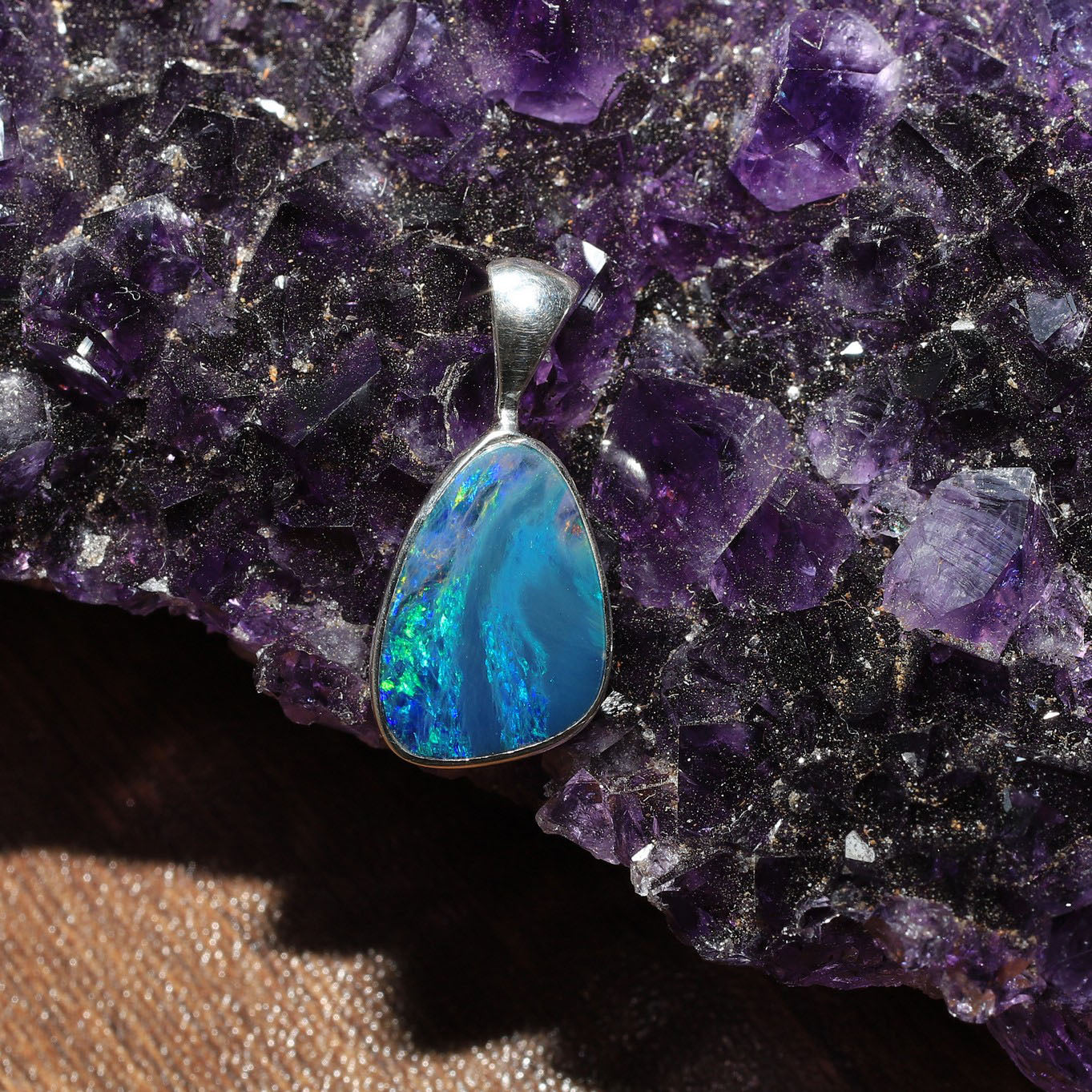
Peruvian opal is a variety of common opal — meaning it does not display the play-of-color (spectral flashes) associated with precious opals like Ethiopian or Australian opal. Instead, Peruvian opal captivates through its translucent body color: soft, dreamy shades of blue-green, teal, aqua, and pink that glow from within the stone like light passing through sea glass.
Mineralogically, Peruvian opal is hydrated silicon dioxide, the same base composition as all opals. It forms in volcanic rock cavities in the Andes Mountains when silica-rich water seeps into fissures and deposits microscopic silica spheres. Unlike precious opal, the silica spheres in Peruvian opal are irregularly arranged, which prevents diffraction of light (no play-of-color) but allows the stone's natural body color to dominate the visual experience.
Key Mineral Profile
| Property | Detail |
|---|---|
| Mineral Family | Opal (common opal, no play-of-color) |
| Chemical Composition | SiO₂·nH₂O (hydrated silicon dioxide) |
| Color | Blue-green, teal, aqua, pink, cream-white |
| Mohs Hardness | 5.5–6 |
| Crystal System | Amorphous (non-crystalline) |
| Luster | Vitreous to waxy |
| Transparency | Translucent to semi-translucent |
| Specific Gravity | 1.98–2.20 |
| Optical Effect | None (common opal) — beauty is in body color and translucency |
The 5.5–6 Mohs hardness places Peruvian opal in the moderate-care category. It is suitable for pendants, earrings, and brooches without concern, and can be worn in rings with protective bezel settings. For wholesale buyers, this means Peruvian opal performs best in designs that showcase the stone prominently while offering structural protection.
What Makes Peruvian Opal Different from Other Opals?
This is one of the most important distinctions for wholesale buyers and their customers. Peruvian opal occupies a completely separate visual and geological niche from the precious opals most people picture when they hear the word "opal."
Opal Comparison Table
| Feature | Peruvian Opal | Ethiopian Opal | Australian Opal | Mexican Fire Opal |
|---|---|---|---|---|
| Type | Common opal (no play-of-color) | Precious opal (play-of-color) | Precious opal (play-of-color) | Common to precious (body color dominant) |
| Visual Effect | Translucent pastel body color — blue-green or pink | Spectral color flashes across body | Spectral color flashes, often on dark body | Transparent orange-red body color |
| Color Range | Blue-green, teal, pink, cream | White to dark body with rainbow flashes | White, black, boulder — with rainbow flashes | Orange, yellow, red |
| Hardness (Mohs) | 5.5–6 | 5–6.5 | 5.5–6.5 | 5.5–6 |
| Water Sensitivity | Moderate — stable with basic care | High — can craze or crack with dehydration | Moderate | Moderate |
| Source | Peru (Andes Mountains) exclusively | Ethiopia (Wollo Province) | Australia (Lightning Ridge, Coober Pedy) | Mexico (Queretaro, Jalisco) |
| Price Point | Moderate | Low to very high (quality dependent) | Moderate to extremely high | Low to moderate |
| Market Positioning | Calming, feminine, spiritual | Dramatic, collector-driven | Premium, traditional | Warm, bold, niche |
The key selling point: Peruvian opal does not compete with precious opals on flash and fire. It competes on tranquility, color purity, and emotional resonance. Buyers who love Peruvian opal are drawn to its serene, watercolor-like appearance — not looking for rainbow flashes.
Where Does Peruvian Opal Come From?
Peruvian opal is sourced exclusively from the Andes Mountains of Peru, making it one of the most geographically specific gemstones in the wholesale market. The primary mining regions are in the departments of Ica, Arequipa, and Ayacucho, where volcanic formations created the conditions necessary for opal deposition millions of years ago.
Source Profile
| Detail | Information |
|---|---|
| Country | Peru — the only commercial source worldwide |
| Region | Central and southern Andes Mountains |
| Primary Departments | Ica, Arequipa, Ayacucho |
| Formation | Volcanic rock cavities (vesicles) in andesite |
| Mining Method | Small-scale artisanal and semi-mechanized mining |
| National Significance | Declared Peru's national stone in 2012 |
| Supply Stability | Moderate — limited large-scale operations; supply fluctuates |
The exclusive Peruvian origin is a powerful marketing asset. Customers respond strongly to single-source gemstones — the story of "found only in the Andes Mountains of Peru" creates perceived rarity and geographic romance that supports premium pricing.
How Is Peruvian Opal Quality Graded?
Peruvian opal grading centers on three factors: color saturation, translucency, and uniformity. The most valuable pieces display vivid, even color with strong translucency — light passing through the stone and illuminating the color from within.
Wholesale Grading Guide
| Grade | Color | Translucency | Uniformity | Inclusions | Best Use | Wholesale Tier |
|---|---|---|---|---|---|---|
| AAA (Premium) | Vivid, saturated blue-green or deep pink | Highly translucent — glows from within | Even color distribution, no dead zones | Clean — no visible inclusions | Statement rings, premium pendants, collector pieces | Top tier |
| AA (Fine) | Strong color, good saturation | Good translucency | Mostly even, minor color variation | Minor inclusions, not eye-distracting | Core collection pendants, earrings, rings | Mid-high tier |
| A (Commercial) | Moderate color, lighter saturation | Semi-translucent | Some color zoning or variation | Visible inclusions acceptable | Volume pieces, entry-price jewelry | Mid tier |
| B (Budget) | Pale, milky, or uneven color | Low translucency, approaching opaque | Significant zoning or cloudiness | Visible inclusions and matrix | Tumbled stones, craft supply, beaded designs | Budget tier |
Quality tip: The most prized Peruvian blue opal displays a color reminiscent of Caribbean seawater — vivid yet soft, with light seeming to emanate from inside the stone. Achieving this in finished jewelry requires skilled lapidary work: the cutter must orient the stone to maximize translucency and color depth while avoiding matrix or opaque zones. Natural Creations 925 processes Peruvian opal rough through their in-house lapidary department at their 60,000 sq ft factory, using German precision machinery to orient and cut each stone for maximum color presentation.
What Are the Healing Properties and Metaphysical Meanings of Peruvian Opal?
Peruvian opal is one of the most emotionally resonant gemstones in the metaphysical market — its associations with calming energy, emotional healing, and creative inspiration align perfectly with the growing wellness jewelry segment.
Chakra Connections
Peruvian opal resonates with two energy centers, depending on color:
- Heart Chakra (Anahata): Both blue-green and pink Peruvian opal are associated with the Heart Chakra — the energy center governing love, compassion, emotional balance, and the ability to give and receive love freely. Practitioners believe Peruvian opal gently opens the heart to healing after emotional trauma, grief, or relationship loss.
- Throat Chakra (Vishuddha): Blue-green Peruvian opal specifically connects to the Throat Chakra — the energy center governing communication, self-expression, and speaking one's truth. It is said to help the wearer articulate emotions that have been suppressed or difficult to express.
The dual-chakra connection makes Peruvian opal especially appealing to buyers navigating emotional transitions — heartbreak, grief, career changes, or personal growth periods.
Zodiac Alignment
Peruvian opal is associated with:
- Libra (September 23 – October 22): Said to enhance Libra's natural sense of harmony, balance, and aesthetic appreciation while supporting emotional decision-making and deeper self-awareness.
Core Healing Properties Summary
| Property | Description |
|---|---|
| Calming | Considered one of the most soothing stones in crystal healing — said to quiet anxiety, racing thoughts, and emotional turbulence |
| Emotional Healing | Believed to gently release old emotional wounds, grief, and trauma without forcing painful confrontation |
| Creativity | Associated with unlocking creative blocks, stimulating imagination, and supporting artistic self-expression |
| Communication | Said to improve the ability to express emotions clearly and authentically, particularly in difficult conversations |
| Love and Compassion | Thought to open the heart to love — both self-love and love for others — and increase empathy |
| Tranquility | Used in meditation practices for achieving deep states of inner peace and present-moment awareness |
Why Does Peruvian Opal Sell Well at Wholesale?
Peruvian opal occupies a unique commercial position: it offers a visual profile unlike any other stone, carries strong emotional and metaphysical associations, and benefits from exclusive geographic sourcing that supports premium pricing.
Commercial Advantages
- The color factor: Peruvian opal's translucent blue-green is virtually unmatched in the gemstone world. Larimar comes closest, but Peruvian opal is more translucent and pastel. Aquamarine is transparent rather than translucent. The color stops scrolling and starts conversations.
- Emotional purchase driver: More than almost any other stone, Peruvian opal is bought for emotional reasons — calming energy, healing after loss, creative inspiration. These are powerful, personal motivations that override price sensitivity.
- Single-source rarity story: "Found only in the Andes Mountains of Peru" is a compelling origin narrative that supports premium positioning and makes the stone feel special and rare.
- Strong feminine appeal: The soft, pastel color palette and associations with emotional healing, love, and creativity resonate powerfully with the female jewelry buyer — the largest segment of the gemstone market.
- Instagram and social media performance: Peruvian opal's translucent, watercolor-like appearance photographs beautifully and performs exceptionally well on visual platforms. The dreamy aesthetic aligns with popular social media aesthetics.
- Wellness market crossover: The calming and healing associations make Peruvian opal a natural fit for yoga, meditation, wellness, and holistic health retail channels — expanding the addressable market beyond traditional jewelry buyers.
How Should You Build a Wholesale Peruvian Opal Collection?
Peruvian opal supports a focused, premium-positioned collection strategy centered on feminine, spiritual, and artistic jewelry lines.
Collection Architecture
| Category | Piece Types | Color to Stock | Retail Price Range | Target Customer |
|---|---|---|---|---|
| Core Blue-Green | Pendants, drop earrings, solitaire rings | Blue-green, teal | $40–$120 | Primary market; feminine, calming aesthetic |
| Pink Collection | Heart-shaped pendants, stud earrings, delicate rings | Pink Peruvian opal | $45–$130 | Romantic, love-focused, gift market |
| Statement Pieces | Large cabochon rings, dramatic pendants, cuff bracelets | AAA blue-green | $80–$200 | Premium buyers, collectors, special occasions |
| Wellness/Spiritual | Intention pendants, meditation necklaces, healing-themed designs | Blue-green and pink | $30–$70 | Crystal shop buyers, yoga and wellness market |
| Everyday Elegance | Small stud earrings, simple pendants, thin stacking rings | All colors | $25–$55 | Daily wear buyers, gift shoppers |
Customization advantage: Peruvian opal's translucent body color varies naturally from stone to stone, meaning no two pieces are identical — a powerful selling point for retailers marketing handcrafted and artisan jewelry. Natural Creations 925 offers two custom programs: "Curated for You" (their team selects Peruvian opal pieces matched to your store profile and customer demographics) and "Designed by You" (you provide sketches or references and their 500+ artisans, 75% of whom are women, manufacture your exclusive designs at their factory). Custom Peruvian opal pieces with hand-selected color-matched stones become signature items no competitor can replicate.
What Care Does Peruvian Opal Jewelry Require?
Peruvian opal at Mohs 5.5–6 requires moderate care — more attention than quartz-family stones but entirely manageable with basic precautions.
Care Guide
| Do | Don't |
|---|---|
| Clean with lukewarm soapy water and a soft cloth | Avoid ultrasonic and steam cleaners |
| Store in a soft pouch away from harder stones | Do not expose to extreme heat or rapid temperature changes |
| Wear in protected settings (bezel preferred for rings) | Avoid harsh chemicals, bleach, and household cleaners |
| Remove before heavy physical activity | Do not soak for extended periods |
| Keep away from prolonged direct sunlight | Avoid storing in very dry environments (opal contains water) |
Retailer tip: Include a care card with every Peruvian opal purchase. The "this stone contains water and was formed in the Andes Mountains millions of years ago" narrative enhances perceived value while naturally communicating the care instructions. Customers who understand their stone's story treat it better and return for more purchases.


Does Peruvian opal have play-of-color like Australian opal?
No. Peruvian opal is a common opal, meaning it does not display the spectral rainbow flashes (play-of-color) that define precious opals from Australia or Ethiopia. Peruvian opal's beauty comes entirely from its translucent body color — soft blues, greens, teals, and pinks that glow from within. This makes it a fundamentally different visual and emotional experience from precious opal, and it appeals to a different buyer.
Is Peruvian blue opal the same as Peruvian pink opal?
Both are Peruvian opal — hydrated silica formed in the Andes Mountains of Peru — but they are different color varieties. Blue-green Peruvian opal gets its color from trace copper content, while pink Peruvian opal gets its color from included palygorskite (a pink mineral). Both share the same translucent quality and metaphysical associations with emotional healing, though blue-green varieties emphasize calming and communication, while pink emphasizes love and compassion.
Is Peruvian opal rare?
Yes, relatively. Peruvian opal is found exclusively in the Andes Mountains of Peru — nowhere else on Earth produces this material commercially. High-quality specimens with vivid color and strong translucency are particularly limited. Supply fluctuates because most mining operations are small-scale and artisanal. This geographic exclusivity and limited supply support premium pricing for quality material.
Can Peruvian opal be worn every day?
Peruvian opal at Mohs 5.5–6 can be worn daily in earrings, pendants, and brooches without concern. For rings and bracelets, a bezel setting that protects the stone's edges is strongly recommended. With basic care — avoiding impacts, chemicals, and extreme temperatures — Peruvian opal jewelry will maintain its beauty for years of regular wear.
How can I tell if Peruvian opal is genuine?
Genuine Peruvian opal has a distinctive translucent quality — light passes into the stone and seems to glow from within, rather than reflecting off the surface. Imitations (dyed glass, synthetic materials) typically lack this depth of translucency. The color in genuine Peruvian opal is also slightly uneven at close inspection, with natural variations and subtle zonation, whereas fakes tend to display perfectly uniform color. Working with a reputable wholesale supplier who can provide gemstone certification and origin documentation is the most reliable way to ensure authenticity.


Open Your Wholesale Account Today
500+ artisans. In-house lapidary. 100% solar-powered. Same-day shipping on orders before 2 PM PST. Just your business license to get started.