
Paraiba Apatite Wholesale Guide: The Electric Neon Blue Stone
Paraiba Apatite Wholesale Guide: The Electric Neon Blue Stone
Wholesale Paraiba apatite jewelry in 925 sterling silver — the affordable neon blue alternative to Paraiba tourmaline, with grading, care, and sourcing for rese
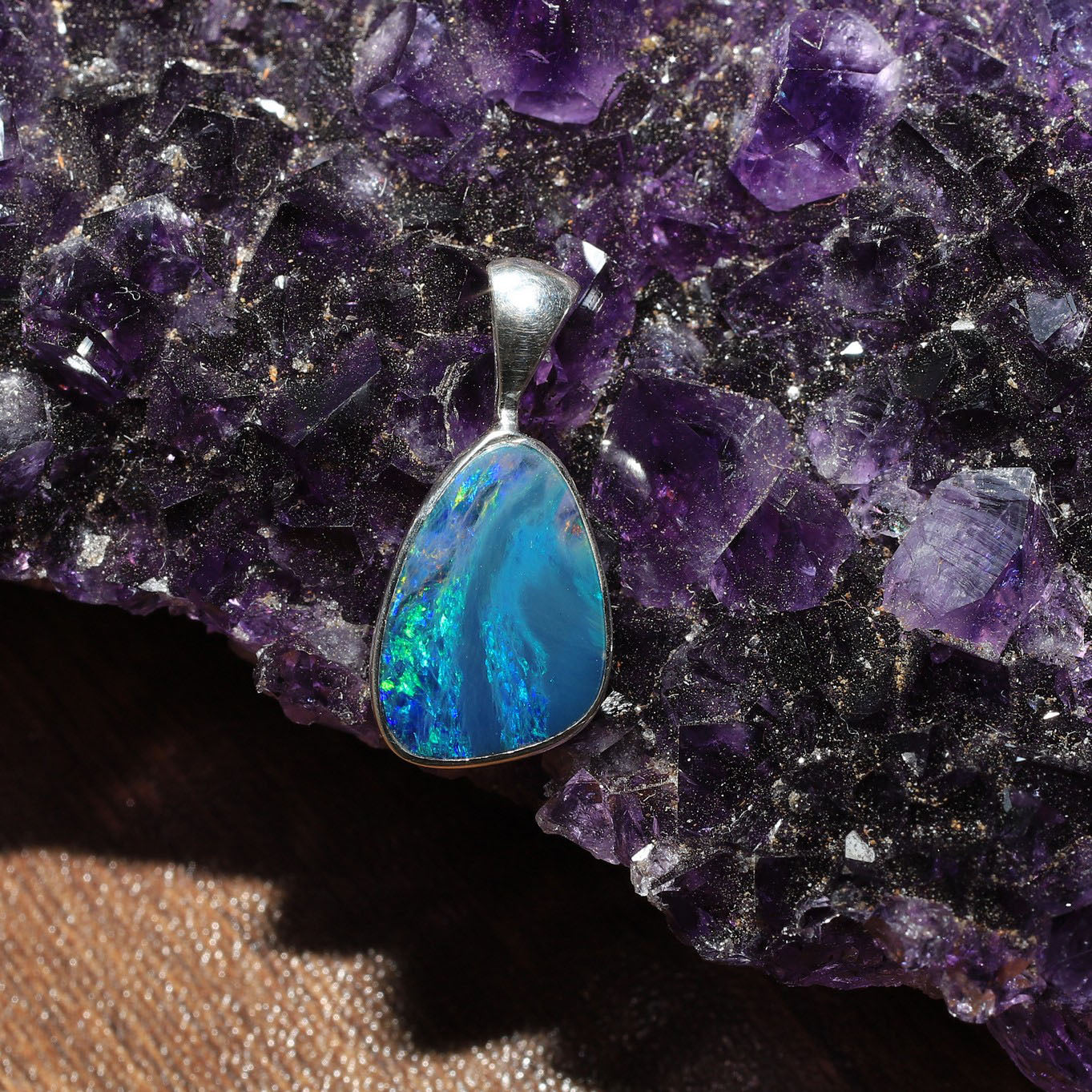
Paraiba apatite delivers the electric neon blue-green color that collectors associate with Paraiba tourmaline — at roughly 1/50th the cost — making it one of the most strategically valuable gemstones a wholesale buyer can stock in 925 sterling silver today. This calcium phosphate mineral produces a vivid, almost glowing blue-green hue that photographs beautifully, sells instantly on Instagram Live, and gives retail customers a genuine gemstone with genuine wow factor at an accessible price point. Wholesale pricing for Paraiba apatite in sterling silver settings typically ranges from $15 to $55 per piece, compared to $500 to $5,000+ for true Paraiba tourmaline — and from across the room, many customers cannot tell the difference.


What Is Paraiba Apatite, and Why Does It Look Like Paraiba Tourmaline?
Paraiba apatite is a variety of the mineral apatite — specifically a calcium phosphate with the chemical formula Ca₅(PO₄)₃(F,Cl,OH). The "Paraiba" prefix comes from its color similarity to the famous Paraiba tourmaline, not from its geographic origin (though both stones are found in Brazil). Apatite's neon blue-green color comes from trace amounts of manganese and rare earth elements within the calcium phosphate crystal structure.
Key facts for wholesale buyers:
- Chemical composition: Calcium phosphate — Ca₅(PO₄)₃(F,Cl,OH)
- Mohs hardness: 5 (moderate-soft — requires care education for retail customers)
- Specific gravity: 3.16–3.23
- Color: Neon blue, electric blue-green, vivid turquoise-blue (the most prized shades mimic Paraiba tourmaline's signature glow)
- Luster: Vitreous to sub-vitreous
- Crystal system: Hexagonal
- Transparency: Transparent to translucent
- Primary sources: Brazil, Madagascar, Mexico
The color connection to Paraiba tourmaline is Paraiba apatite's defining market advantage. Paraiba tourmaline — colored by copper and first discovered in Paraiba, Brazil in 1989 — is one of the most expensive gemstones in the world, routinely exceeding $10,000 per carat for fine specimens. Paraiba apatite produces a visually similar neon glow through entirely different chemistry at a fraction of the cost. For wholesale buyers, this creates a clear selling proposition: authentic gemstone, genuine beauty, responsible price point.
How Do You Grade Wholesale Paraiba Apatite Jewelry Quality?
Paraiba apatite is typically faceted rather than cabochon-cut, and grading focuses on color saturation, clarity, cut precision, and the intensity of the stone's characteristic neon glow.
Paraiba Apatite Quality Grading — Wholesale Buyer's Guide
| Grade | Color Quality | Clarity | Neon Glow Intensity | Wholesale Price Range (set in 925 silver) |
|---|---|---|---|---|
| AAA (Premium) | Intense neon blue-green, maximum saturation | Eye-clean or near eye-clean | Strong electric glow, visible in all lighting | $35–$55+ per piece |
| AA (Fine) | Vivid blue-green with good saturation | Slightly included, not distracting | Good neon effect, visible in natural light | $22–$40 per piece |
| A (Standard) | Medium blue-green, moderate saturation | Moderately included | Moderate glow | $15–$28 per piece |
| B (Commercial) | Pale blue or grayish blue-green | Noticeably included | Weak or absent neon effect | $8–$18 per piece |
The neon glow is everything. Paraiba apatite's market value is almost entirely derived from the intensity of its electric blue-green fluorescence-like glow. Stones that display a strong neon effect — where the color appears to radiate from within — command premiums over stones of equal size and clarity that lack that characteristic glow. When evaluating wholesale lots, always inspect stones under natural daylight, as artificial lighting can mask or exaggerate the neon effect.
Natural Creations 925 selects Paraiba apatite rough specifically for neon color intensity, processing each stone through the in-house lapidary at the factory. Faceting decisions are made to maximize the stone's glow rather than simply maximizing carat weight — a choice that sacrifices a small amount of size for a significant increase in visual impact and wholesale value.
What Are the Healing Properties and Metaphysical Meanings of Paraiba Apatite?
Paraiba apatite carries the metaphysical properties associated with the broader apatite family, amplified by the stone's intense blue-green energy. The vivid color makes it particularly appealing to the crystal healing market.
Chakra Association
Paraiba apatite is primarily connected to the Throat Chakra (Vishuddha), the fifth energy center associated with communication, self-expression, and truth. Practitioners believe Paraiba apatite's intense blue energy activates and clears the Throat Chakra, facilitating honest communication, creative expression, and the ability to articulate thoughts clearly. Some crystal workers also connect the stone's blue-green spectrum to the Third Eye Chakra for enhanced intuition.
Zodiac Connection
- Gemini (May 21 – June 20): Paraiba apatite is considered a supportive stone for Gemini, enhancing Gemini's natural communication gifts while providing focus and clarity to channel their dual-natured energy productively. Practitioners believe it helps Geminis express both sides of their personality with greater coherence.
Traditional Healing Beliefs
| Property | Traditional Belief |
|---|---|
| Communication | Believed to enhance all forms of communication — verbal, written, and creative expression |
| Inspiration | Called a stone of "future vision" — said to stimulate creativity and inspire new ideas |
| Creativity | Associated with unlocking artistic potential and overcoming creative blocks |
| Learning | Traditionally linked to improved concentration, information absorption, and academic performance |
| Motivation | Believed to reduce apathy and increase personal drive toward achieving goals |
Retail positioning tip: Paraiba apatite's neon color makes it an immediate attention-grabber, which is why it performs exceptionally well in Instagram Live selling environments. The combination of visual impact and the "Paraiba" name recognition (even though it is apatite, not tourmaline) gives sellers a natural talking point. Wholesale buyers should position it as "the electric blue gemstone with Paraiba fire" rather than as a tourmaline substitute — selling it on its own merits while acknowledging the color connection.
How Does Paraiba Apatite Compare to Similar Blue Gemstones for Wholesale?
Blue gemstones are perennial bestsellers. Here is how Paraiba apatite positions against alternatives in the wholesale sterling silver market:
Blue Gemstone Comparison — Wholesale Buyer's Reference
| Feature | Paraiba Apatite | Paraiba Tourmaline | Blue Topaz | Neon Apatite | Aquamarine | Larimar |
|---|---|---|---|---|---|---|
| Mohs Hardness | 5 | 7–7.5 | 8 | 5 | 7.5–8 | 4.5–5 |
| Color Intensity | Very high (neon) | Extremely high (neon) | Moderate | High (neon) | Moderate | Moderate |
| Wholesale Price (per piece in 925) | $15–$55 | $500–$5,000+ | $8–$25 | $15–$50 | $25–$80 | $20–$65 |
| Neon Glow Effect | Strong | Extremely strong | None | Strong | None | None |
| Metaphysical Demand | Moderate–strong | Moderate | Low | Moderate–strong | Moderate | Very strong |
| Customer Recognition | Growing | Very high | Very high | Growing | High | Moderate |
| Best Jewelry Type | Earrings, pendants, rings (protected) | All types | All types | Earrings, pendants, rings (protected) | All types | Pendants, earrings |
| Supply Stability | Moderate | Very low | Very high | Moderate | High | Low |
Paraiba apatite's primary competitive position is clear: it is the most affordable gemstone that delivers genuine neon blue-green color. No treated or synthetic stone replicates the specific glow that apatite produces naturally. For wholesale buyers looking to offer their customers a premium visual experience at accessible price points, Paraiba apatite fills a gap that no other stone at its price range can match.
Why Does Paraiba Apatite Require Special Care Attention?
At Mohs hardness 5, Paraiba apatite is softer than many popular jewelry gemstones. This does not disqualify it from jewelry use, but it does require proper setting design and customer education.
Paraiba Apatite Care Essentials
- Avoid ultrasonic and steam cleaners. Apatite's moderate hardness and occasional internal inclusions make it susceptible to damage from vibration and thermal shock.
- Clean with warm soapy water and a soft brush. Gentle cleaning preserves both the stone and its polish without risk.
- Avoid chemicals and acids. Apatite is a phosphate mineral and can react to acidic substances, including some household cleaners and citrus-based products.
- Store separately from harder gemstones. Quartz, topaz, sapphire, and other harder stones will scratch apatite if stored together.
- Remove during physical activity. Rings and bracelets are particularly vulnerable during exercise, housework, and gardening.
- Use protective settings. Bezel settings and deep-channel designs protect Paraiba apatite stones significantly more than exposed prong settings.
Natural Creations 925 designs Paraiba apatite settings with durability in mind — bezels and protective prong configurations that shield the stone from side impact while allowing maximum light entry to preserve the neon glow effect. That setting engineering comes from hands-on experience across the 60,000 square foot production facility, where the team works with gemstones across the full hardness spectrum daily.
What Are the Best Sources for Wholesale Paraiba Apatite Jewelry?
Paraiba apatite rough originates from several global sources, each producing material with slightly different characteristics:
- Brazil: The most recognized source, producing stones with the strongest "Paraiba" color association. Brazilian Paraiba apatite frequently displays the most intense neon blue-green hues, directly comparable to Paraiba tourmaline's signature color.
- Madagascar: An increasingly important source for high-quality apatite. Malagasy material can rival Brazilian stones in color intensity, often with excellent clarity and larger crystal sizes.
- Mexico: Produces apatite in a range of blue-green shades, sometimes with a slightly more green-leaning hue. Mexican material is generally more available and accessible at commercial grade levels.
For wholesale buyers, the source origin matters primarily for color consistency. Brazilian material carries the strongest market association with the "Paraiba" name, which can be a selling point for knowledgeable retail customers. However, the stone's visual quality should always take priority over origin claims.
Natural Creations 925 sources Paraiba apatite from multiple origins, selecting rough parcels based on neon color intensity and clarity potential. Every stone is faceted by the in-house lapidary team of 500+ artisans (75% women) using German precision machinery, then set in 925 sterling silver at the solar-powered factory. That start-to-finish control means wholesale buyers receive Paraiba apatite jewelry where each stone has been individually evaluated for its neon glow before reaching a setting. Orders placed before 2:00 PM PST ship same day to 40+ countries.


Is Paraiba apatite the same as Paraiba tourmaline?
No. Paraiba apatite and Paraiba tourmaline are completely different minerals. Paraiba tourmaline is a copper-bearing tourmaline (boron silicate) and one of the most expensive gemstones in the world. Paraiba apatite is a calcium phosphate mineral named for its visual color similarity to Paraiba tourmaline, not for chemical or mineralogical kinship. The distinction is important for ethical selling — always disclose that Paraiba apatite is apatite, not tourmaline.
Is Paraiba apatite durable enough for rings?
Paraiba apatite at Mohs 5 can be set in rings, but protective setting design is essential. Deep bezel settings that surround and shield the stone are strongly recommended over exposed prong settings. Rings should be positioned as occasional-wear or special-occasion jewelry rather than daily wear, and customers should be educated about removing rings during physical activity. Earrings and pendants are inherently safer options for this gemstone.
Why is Paraiba apatite so much cheaper than Paraiba tourmaline?
Three factors drive the price difference: apatite is more abundant than copper-bearing tourmaline, apatite has lower hardness (5 vs. 7–7.5), and Paraiba tourmaline carries decades of collector demand and prestige pricing. The color similarity is genuine, but the mineralogy, rarity, and market positioning are fundamentally different. Paraiba apatite's advantage is delivering authentic neon beauty at a price point that opens the market to a vastly wider customer base.
How should I market Paraiba apatite to my retail customers?
Lead with the color experience, not the comparison. Describe Paraiba apatite as "an electric neon blue-green gemstone with natural Paraiba fire" and let the stone's visual impact speak for itself. Acknowledge the color similarity to Paraiba tourmaline as a reference point, but always clearly identify the stone as apatite. Social media and live selling environments particularly favor Paraiba apatite because the neon glow photographs and videos exceptionally well.
Can Paraiba apatite color fade over time?
Apatite is generally color-stable under normal wearing conditions. However, prolonged exposure to intense direct sunlight or extreme heat can potentially affect some specimens over time. Standard jewelry wearing and storage practices — keeping the stone in a jewelry box or pouch when not worn and avoiding leaving it in direct sun for extended periods — will preserve the color throughout the stone's life. This concern is minimal compared to stones like kunzite or some topazes that are known to fade.


Open Your Wholesale Account Today
500+ artisans. In-house lapidary. 100% solar-powered. Same-day shipping on orders before 2 PM PST. Just your business license to get started.