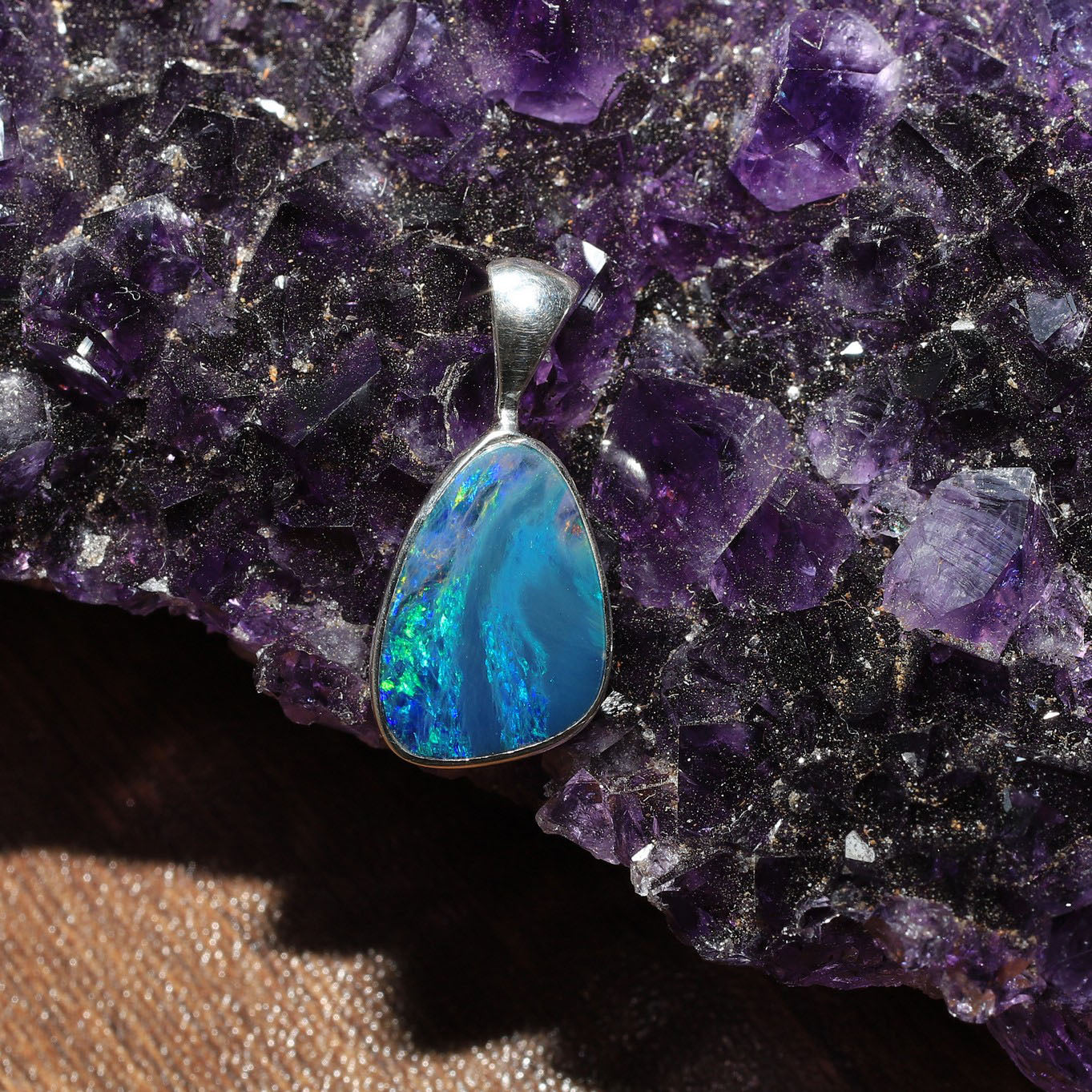

Moonstone Gemstone Guide: Adularescence, Quality Grading, and Wholesale Jewelry Appeal
Moonstone Gemstone Guide: Adularescence, Quality Grading, and Wholesale Jewelry Appeal
Complete moonstone gemstone guide — adularescence explained, types of moonstone, quality grading, care tips, and why moonstone is a top wholesale jewelry catego
Moonstone is a variety of orthoclase feldspar (KAlSi₃O₈) with a Mohs hardness of 6–6.5, distinguished by adularescence — a billowing, floating internal glow of blue or white light that moves beneath the stone's surface as it moves, named after the moon it seems to contain.
Among all gemstones, moonstone may produce the most emotional response. The adularescence — that otherworldly internal light that seems to float beneath the surface like light seen through moving water — is genuinely captivating. There is no other stone like it. For wholesale buyers, this is a category that sells itself with a single sentence of explanation and a single look.


What Is Adularescence?
Adularescence is the optical phenomenon that defines moonstone. It is caused by light scattering between microscopic alternating layers of two feldspar minerals (orthoclase and albite) within the stone.
When light enters moonstone and encounters these internal layer boundaries, it scatters and reflects in a specific way — creating a diffuse, moving glow that appears to be within the stone rather than on its surface. The glow rolls and shifts as the stone moves, giving the impression of a living light source inside the gem.
The color of adularescence depends on the thickness of the feldspar layers:
- Very thin layers (≤30 nanometers): Blue adularescence — the most prized; electric blue glow
- Thicker layers: White to silver adularescence — softer, moonlike glow
The most valued moonstone has a strong, centered blue adularescence that covers the entire dome of the stone — called "blue sheen" or "cat's eye" when the glow is focused into a line.
Chemical Properties and Formation
Moonstone forms in igneous and metamorphic rocks through the slow cooling of feldspar mineral solutions. As the temperature drops, the solution separates into two distinct feldspar phases (orthoclase-rich and albite-rich) that alternate in thin layers — the alternating layers that create adularescence.
Chemical formula: KAlSi₃O₈ (potassium aluminum silicate) Crystal system: Monoclinic Mohs hardness: 6–6.5 Specific gravity: 2.56–2.62 Refractive index: 1.518–1.526 Luster: Vitreous to pearly Transparency: Transparent to translucent (best quality) to opaque
Types of Moonstone
| Type | Color | Adularescence | Source | Market |
|---|---|---|---|---|
| Rainbow Moonstone | Colorless to milky white | Multicolor — blue, purple, orange | South Asia | Most popular commercial type |
| Blue Moonstone | Colorless to gray | Blue — centered, floating glow | Sri Lanka | Premium; finest quality |
| Peach/Champagne Moonstone | Warm peach to orange-pink | Orange to peach adularescence | South Asia | Growing trend; warm aesthetic |
| Gray Moonstone | Gray | White-blue glow | South Asia, USA | Fashion jewelry |
| White Moonstone | Milky white | White, diffuse glow | Worldwide | Most accessible |
| Cat's Eye Moonstone | Variable | Single band of light (chatoyancy) | Various | Specialty; collector interest |
Note on "Rainbow Moonstone": Technically, many stones sold as "rainbow moonstone" in the commercial market are actually a variety of labradorite (not true orthoclase moonstone) that shows blue adularescence. Both are beautiful and have commercial value — but they are different minerals. Natural Creations 925 sources both true moonstone and rainbow labradorite, categorized accurately.
Major Sources
| Origin | Characteristics |
|---|---|
| Sri Lanka | Produces the finest blue moonstone; transparent with strong blue adularescence; premium pricing |
| South Asia (Tamil Nadu) | Primary commercial source; rainbow moonstone and peach moonstone |
| Madagascar | High-quality large crystals; some very fine blue moonstone |
| Myanmar | Fine quality; less commercially available |
| USA (Virginia, North Carolina) | Small quantities; collector market |
Natural Creations 925's in-house lapidary sources moonstone rough from Sri Lanka and Madagascar, cutting and calibrating stones in their own workshop for consistent quality across their wholesale silver jewelry production.
Quality Grading
| Factor | Top Quality | Commercial Quality |
|---|---|---|
| Adularescence strength | Vivid, strong glow covering full stone | Moderate; visible but not dominant |
| Adularescence color | Electric blue | White to pale blue |
| Adularescence position | Centered on dome, moves with stone | Positioned to one side |
| Body color | Colorless to near-colorless | Milky white to gray |
| Clarity | Transparent to semi-transparent | Translucent |
| Surface quality | Clean, no visible inclusions | Minor whitish inclusions ("centipedes") |
| Cutting | High cabochon dome, well-oriented | Flat or shallow dome |
Critical cutting note: Moonstone must be cut with the c-axis perpendicular to the dome top for adularescence to be properly centered. A poorly oriented cut produces weak or off-center adularescence regardless of stone quality — this is where in-house lapidary expertise makes an enormous difference.
June Birthstone: Commercial Significance
Moonstone is one of three June birthstones (alongside pearl and alexandrite), and it is by far the dominant commercial choice for June birthstone jewelry in 925 sterling silver.
Why moonstone wins over pearl and alexandrite for silver jewelry:
- Pearl is traditionally associated with gold or classic fine jewelry
- Alexandrite is rare and expensive
- Moonstone — particularly rainbow moonstone — has become the defining June stone for contemporary, fashion-forward, and boho jewelry markets
June birthstone moonstone pieces in sterling silver consistently rank among the top-performing birthstone categories in wholesale jewelry.
Moonstone in 925 Sterling Silver: Setting Considerations
Bezel settings are ideal for moonstone — the stone's Mohs 6–6.5 hardness and tendency toward cleavage (splitting along certain crystal planes) makes bezel setting's protective metal wall appropriate for rings and bracelets.
High dome preservation: The cabochon dome height is critical for adularescence. Flat cuts or over-deep bezels that cover too much of the dome reduce the visible adularescence effect. Quality manufacturers cut moonstone with exactly the dome height that maximizes the phenomenon — another advantage of NC925's in-house lapidary approach.
Oxidized silver pairing: Rainbow moonstone's blue-white glow is dramatically enhanced against dark oxidized silver backgrounds — one of the most visually striking combinations in contemporary silver jewelry.
Moonstone Care
| Factor | Recommendation |
|---|---|
| Cleaning | Warm soapy water, soft brush; wipe gently |
| Ultrasonic | Avoid — vibration risk; moonstone has perfect cleavage |
| Steam | Avoid |
| Impact | Moderate care needed — cleavage vulnerability |
| Storage | Padded, separate storage to avoid scratching and impact |
| Chemical | Avoid household chemicals |
Why Moonstone Is One of the Strongest Wholesale Categories
-
The explanation sells it: "That blue glow moving inside the stone — it's called adularescence — it happens because light is bouncing between microscopic layers inside the crystal." Anyone who hears this sentence and looks at the stone immediately wants it.
-
Instagram and TikTok magnetism: Moonstone videos consistently go viral. The moving adularescence under a ring light is captivating on video — one of the most-viewed gemstone categories across social platforms.
-
The boho market cornerstone: Rainbow moonstone is the most emblematic stone of the boho jewelry aesthetic. It's the stone that defines the look.
-
June birthstone reliability: Monthly birthstone demand for June is consistent and predictable — moonstone captures it.
-
Range of price points: From affordable commercial rainbow moonstone to premium Sri Lankan blue moonstone, the category spans from impulse purchase ($25 retail) to considered investment ($150+ retail) within the same gemstone family.


What is adularescence in moonstone?
Adularescence is the optical phenomenon unique to moonstone — a billowing, floating glow of blue or white light that appears to move beneath the surface of the stone. It is caused by light scattering between microscopic alternating layers of two feldspar minerals (orthoclase and albite) within the stone.
What is rainbow moonstone?
Rainbow moonstone is a variety of feldspar (often technically a form of labradorite) that shows blue, purple, and occasionally orange adularescence — a colorful, multicolor version of the classic moonstone glow. It is the most popular commercial moonstone variety.
Is moonstone a June birthstone?
Yes — moonstone is one of three June birthstones alongside pearl and alexandrite. In the contemporary sterling silver jewelry market, moonstone is the dominant June birthstone category.
How hard is moonstone?
Moonstone has a Mohs hardness of 6–6.5. It is moderately durable but more vulnerable than harder gems like sapphire (9) or quartz (7). Bezel settings and careful handling are recommended, particularly for rings.
Why does moonstone glow?
Moonstone's internal glow (adularescence) is caused by microscopic alternating layers of two different feldspar minerals inside the stone. When light enters and bounces between these layers, it scatters in a way that creates the characteristic moving, billowing blue or white glow.
Open Your Wholesale Account Today
500+ artisans. In-house lapidary. 100% solar-powered. Same-day shipping on orders before 2 PM PST. Just your business license to get started.