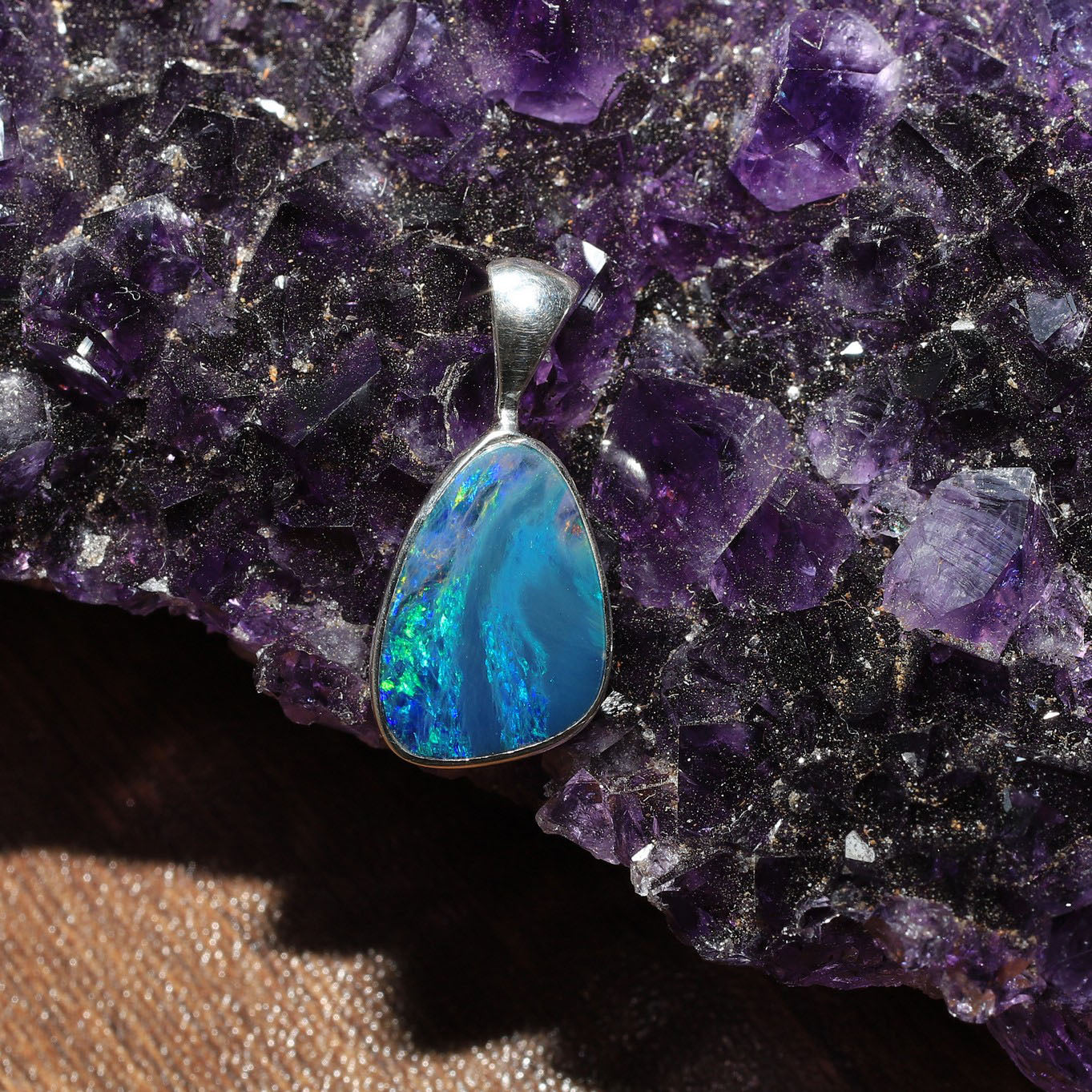

How to Tell If Moonstone Is Real: Buyer
How to Tell If Moonstone Is Real: Buyer's Guide to Authentic Moonstone Jewelry
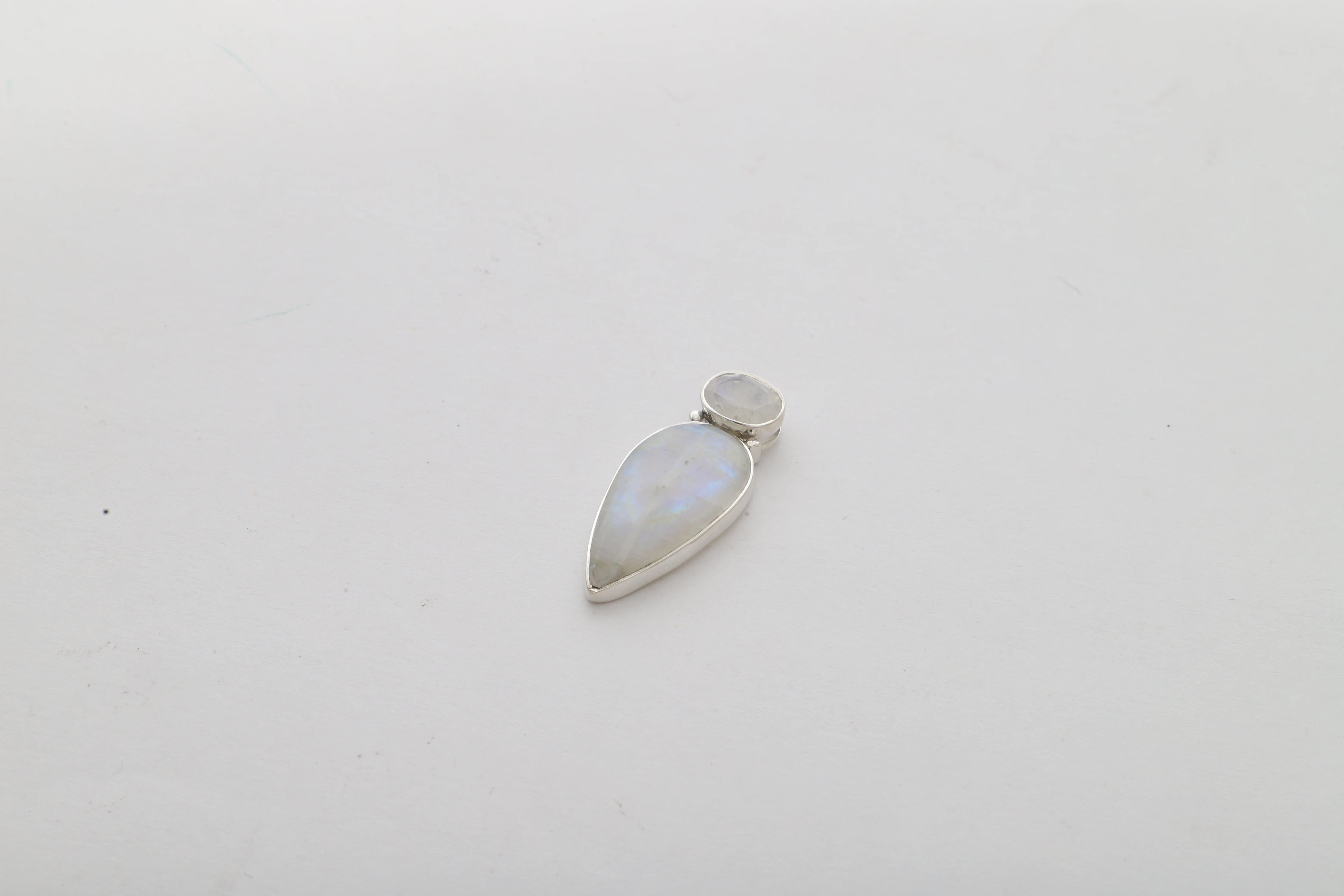
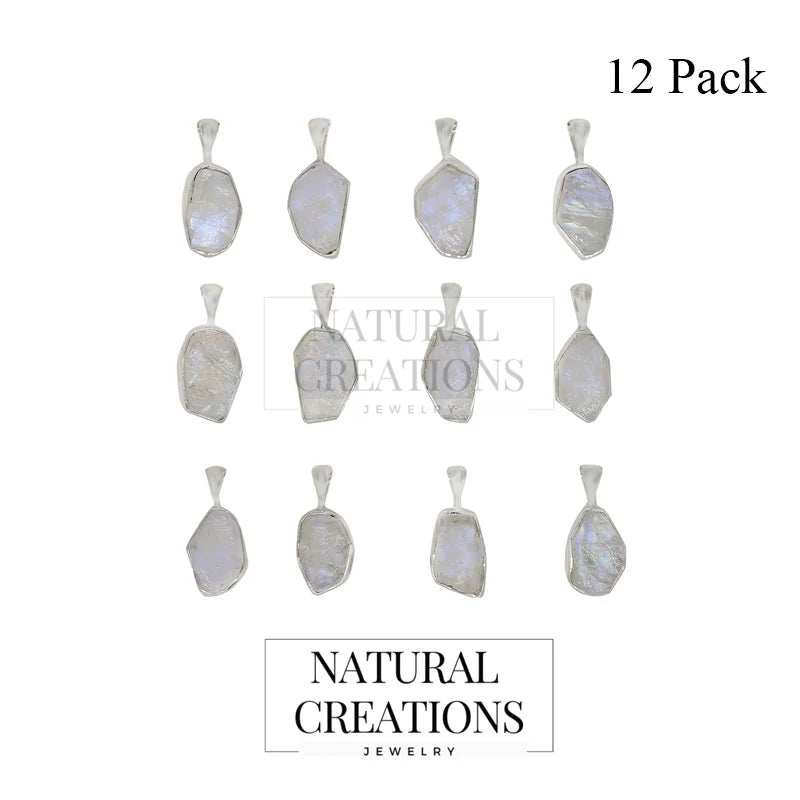
Real moonstone displays adularescence — a soft, billowing blue or white sheen that glides across the stone's surface as you move it under light — and this
Real moonstone displays adularescence — a soft, billowing blue or white sheen that glides across the stone's surface as you move it under light — and this optical effect is the single most reliable way to tell if moonstone is real. No glass imitation or synthetic alternative replicates adularescence convincingly, making it your first and most powerful authentication test.
At Natural Creations 925, moonstone is one of our most in-demand gemstones. Our 500+ artisans — 75% of whom are women — cut and set moonstone daily inside our 60,000-square-foot solar-powered factory, using German precision machinery and an in-house lapidary to process every stone from rough to finished piece. This guide walks you through the exact methods our gemologists use to authenticate moonstone before it ships to jewelry buyers in over 40 countries.
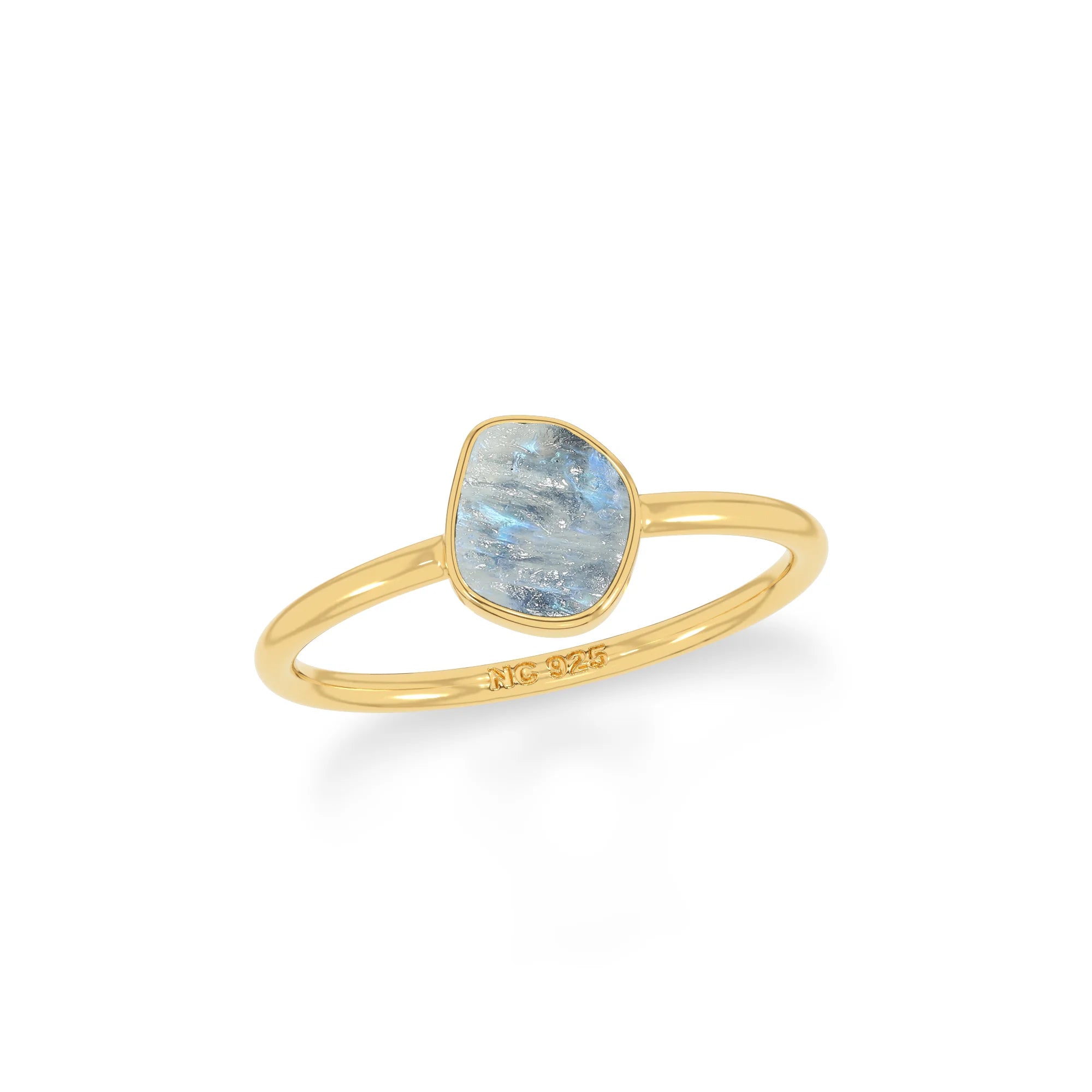
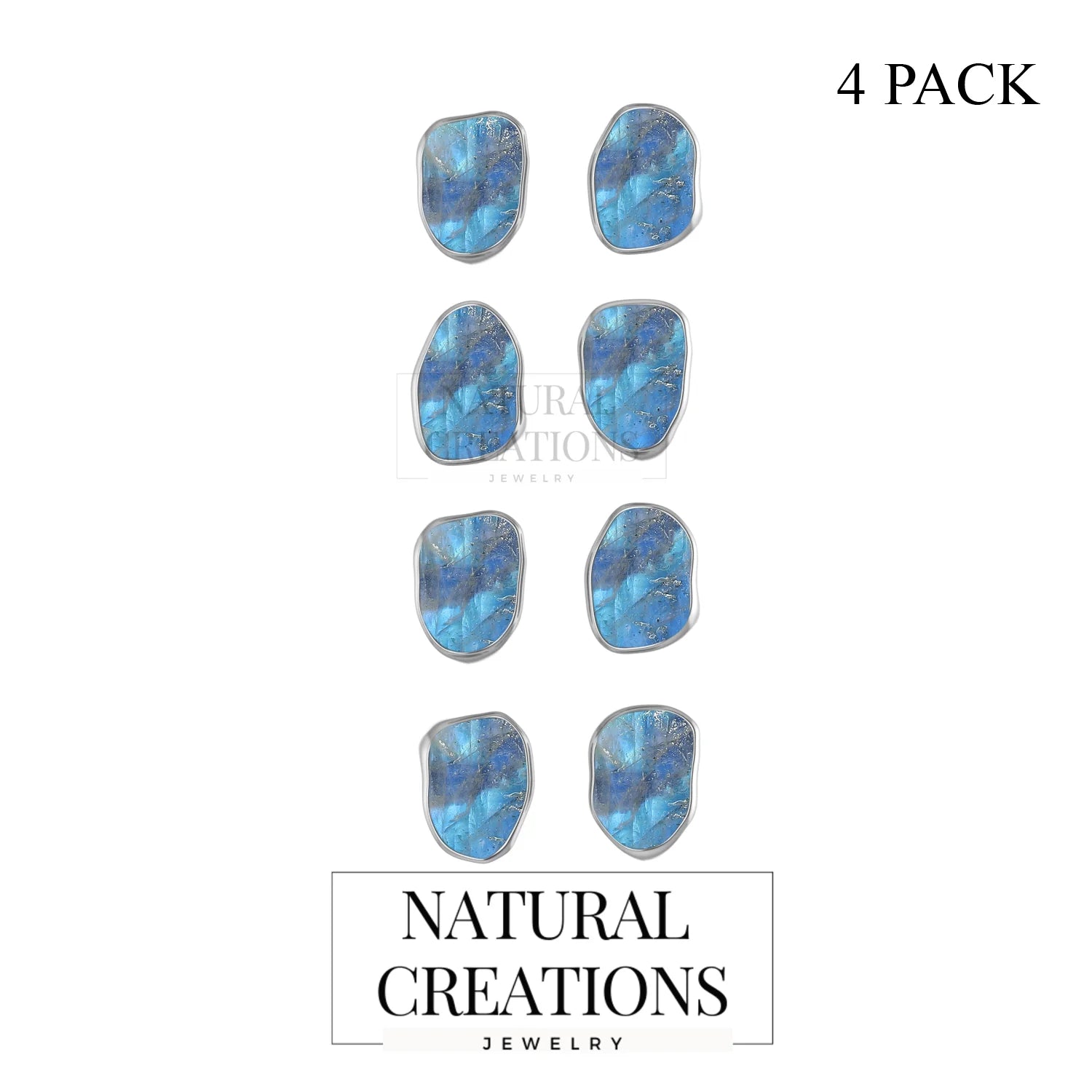
Why Is Moonstone So Commonly Faked?
Moonstone's ethereal glow and surging popularity in both fine and fashion jewelry have made it a prime target for imitation. The market is saturated with three main categories of fakes:
- Opalite (synthetic glass) — the most common imposter, often marketed misleadingly as "opalite moonstone" or "sea opal"
- Coated or frosted glass — cheap glass treated to produce a milky, moon-like appearance
- Lab-created or synthetic moonstone — manufactured feldspar that mimics some of moonstone's properties
Knowing how to tell if moonstone is real is critical for any buyer sourcing at wholesale volume. A batch of opalite mixed into your moonstone inventory can cost you returns, refunds, and customer trust.
How Does the Adularescence Test Work?
Adularescence is the optical phenomenon that defines genuine moonstone. It is caused by alternating microscopic layers of orthoclase and albite feldspar within the stone. When light enters and scatters between these layers, it produces a floating, cloud-like sheen — typically blue-white in higher quality stones and white or silver in commercial grades.
How to do it:
- Hold the moonstone under a single, direct light source (desk lamp, bright window, or phone flashlight).
- Slowly tilt and rotate the stone.
- Watch how the sheen behaves.
What you should see in real moonstone:
- A soft, glowing light that appears to float just beneath the surface
- The sheen moves fluidly across the stone as you change the angle — it billows and drifts like light through fog
- In high-quality specimens, the adularescence is blue and centered; in commercial grades, it may be white or silver and more diffuse
- The glow has visible depth — it looks like it comes from inside the stone, not from the surface
Red flags for fakes:
- A uniform, all-over glow with no movement (opalite)
- Color that looks the same from every angle without shifting (glass)
- A rainbow or prismatic effect rather than a soft, singular sheen (opalite often shows rainbow tints at edges)
- The glow appears to sit on the surface rather than floating beneath it
The critical distinction: adularescence moves. It responds to angle changes with a smooth, rolling motion. Opalite and glass produce a static, milky luminescence that does not travel across the stone.
How Do You Spot Opalite Disguised as Moonstone?
Opalite is the single most common moonstone fake. It is man-made glass — typically clear or milky glass infused with a fluorescent compound that gives it a blue-white glow. It is inexpensive to produce and visually appealing, which is why it appears everywhere from craft fairs to wholesale marketplaces.
Key differences between real moonstone and opalite:
| Feature | Real Moonstone | Opalite (Fake) |
|---|---|---|
| Glow behavior | Rolling, floating adularescence that moves with angle | Static, uniform milky glow from all angles |
| Transparency | Semi-transparent to opaque, often with visible layers | Very clear or uniformly milky, no internal structure |
| Edge coloring | Consistent with body color | Often shows orange, pink, or rainbow tints at thin edges |
| Internal features | Layered structure, possible centipede-like inclusions | Perfectly clean, no inclusions, possible round bubbles |
| Temperature | Cool to touch, slow to warm (3-5 seconds) | Warms almost instantly (glass) |
| Weight | SG 2.56 – 2.62 (feels substantial) | SG ~2.5 (slightly lighter) |
| Hardness | 6 – 6.5 Mohs | 5 – 5.5 Mohs (glass range) |
The fast field test: Hold the stone against a dark background under direct light. Real moonstone's adularescence appears as a distinct, floating patch of light that moves when you tilt the stone. Opalite glows uniformly from within, often with a bluish tint through the body and an orange or pink tint at the edges — real moonstone does not produce that edge color shift.
Does the Temperature Test Work for Moonstone?
Yes, and it is one of the quickest ways to separate genuine moonstone from glass and resin fakes.
How to do it:
- Let the stone rest at room temperature for 10 minutes minimum.
- Press it firmly against your inner wrist, lip, or cheek.
- Note how long the cool sensation lasts.
Expected result for real moonstone: A clear chill lasting 3 to 5 seconds as the mineral slowly absorbs your body heat. Moonstone is a feldspar mineral with moderate thermal conductivity — enough to feel distinctly cool on first contact.
Red flag: Opalite (glass) and plastic/resin fakes warm to skin temperature within 1 second or less. If the stone feels neutral or warm immediately upon contact, it is not genuine feldspar.
This test is especially useful when examining large batches at wholesale. You can quickly pass each stone across your wrist and flag any pieces that warm up too fast for closer inspection.
What Inclusions Appear in Natural Moonstone?
Natural moonstone forms deep within the earth under specific conditions that leave characteristic internal markers. These inclusions are not defects — they are proof of natural origin.
Common inclusions in genuine moonstone:
- Centipede inclusions — the signature moonstone inclusion, named for their multi-legged appearance. These are stress fractures along cleavage planes that resemble tiny centipedes under magnification. They are virtually unique to moonstone and are a strong indicator of authenticity.
- Layered internal structure — under magnification, you can often see the thin alternating feldspar layers that cause adularescence
- Tiny needle-like inclusions — fine mineral threads scattered through the stone
- Internal cleavage planes — thin, flat fractures along the stone's crystallographic directions
- Minor cloudiness or haze — diffuse areas that correspond to the adularescent layers
Red flags:
- Perfectly clean interior with zero features at 10x magnification (likely opalite or glass)
- Round spherical bubbles (glass)
- Uniform milky appearance with no visible layering (synthetic or glass)
At Natural Creations 925, our lapidary team inspects every moonstone under magnification in our factory. The layered structure that causes adularescence is also what creates centipede inclusions — so the very features that prove authenticity are directly tied to the optical beauty that makes moonstone valuable.
How Do Weight and Hardness Tests Help Authenticate Moonstone?
Combining weight and hardness testing gives you two objective data points that help separate moonstone from its most common imitators.
Weight and Specific Gravity
Moonstone has a specific gravity of 2.56 to 2.62. This means it feels solid and substantial for its size — noticeably heavier than plastic but roughly comparable to glass.
Practical approach: The weight test is most useful for eliminating resin and plastic fakes, which are dramatically lighter. For distinguishing moonstone from glass (similar weight), you will need to rely on the adularescence and inclusion tests.
Hardness (Mohs Scale)
Moonstone scores 6 to 6.5 on the Mohs hardness scale. This is harder than glass (5.5) but softer than quartz (7).
How to do it:
- Try scratching a glass plate with the stone. Moonstone should leave a faint scratch on glass.
- Try scratching the stone with a quartz crystal. Quartz should be able to scratch moonstone.
Expected results by material:
| Material | Mohs Hardness | Scratches Glass? | Scratched by Quartz? |
|---|---|---|---|
| Natural moonstone | 6 – 6.5 | Yes | Yes |
| Opalite (glass) | 5 – 5.5 | No | Yes |
| Plastic/resin | 2 – 3 | No | Yes |
| Quartz (misidentified) | 7 | Yes | No |
Key takeaway: If the stone cannot scratch glass, it is softer than moonstone and is likely opalite or another glass imitation. This is a quick and definitive test that requires only a glass plate and takes seconds to perform.
Real vs. Opalite vs. Synthetic Moonstone: Complete Comparison Table
| Test | Natural Moonstone | Opalite (Glass) | Synthetic Moonstone |
|---|---|---|---|
| Adularescence | Rolling, floating blue/white sheen with depth | Static milky glow, rainbow edge tints | May mimic softly but lacks natural movement |
| Temperature | Cool, 3-5 sec to warm | Warms in ~1 sec | Cool (if genuine feldspar composition) |
| Hardness (Mohs) | 6 – 6.5 | 5 – 5.5 | 6 – 6.5 (if true synthetic feldspar) |
| Specific Gravity | 2.56 – 2.62 | ~2.5 | ~2.58 |
| Inclusions (10x) | Centipede inclusions, layers, needles | Round bubbles or perfectly clean | Very few — "too clean" |
| Edge Color | Consistent with body | Orange/pink tints at thin edges | Consistent |
| Internal Structure | Visible layering | Uniform, no layers | May show some layering |
| Price | Moderate to high | Very low | Low to moderate |
| Under UV Light | Inert or weak fluorescence | May fluoresce strongly | Variable |
What Equipment Do You Need to Authenticate Moonstone?
Five affordable tools cover every test in this guide:
- Direct light source — a desk lamp or strong penlight for the adularescence tilt test
- Dark background — a piece of black velvet or dark cloth to view adularescence against
- Jeweler's loupe (10x) — for spotting centipede inclusions, layering, and bubbles. Under $15.
- Glass plate — for the hardness scratch test. Any flat piece of ordinary window glass works.
- Digital scale — for specific gravity testing on high-value lots. Accurate to 0.01g.
The adularescence and inclusion tests alone will catch the vast majority of fakes. The hardness and weight tests provide additional confirmation when you need extra certainty on borderline pieces.
How Does Sourcing from a Direct Manufacturer Eliminate Risk?
The authentication tests above protect you when buying from unknown sources. But the most efficient approach is to buy from a manufacturer that authenticates at the source — before stones ever reach your hands.
Natural Creations 925 operates its own in-house lapidary, where every moonstone is cut on German precision machinery, inspected for adularescence quality and natural characteristics, and set into sterling silver by our team of 500+ artisans. We ship to buyers in over 40 countries, and orders placed before 2 PM PST go out same day.
When you source directly from a manufacturer that controls the entire pipeline from rough stone to finished jewelry, fakes have no entry point.
Is opalite a real gemstone?
No. Opalite is man-made glass, sometimes called "sea opal" or "opalite moonstone." It has no mineralogical connection to moonstone, opal, or any natural gemstone. It is manufactured by adding fluorescent compounds to molten glass. While opalite can be attractive in its own right, it should never be sold as moonstone or at moonstone prices.
Can rainbow moonstone be fake too?
Yes. Rainbow moonstone (which is technically a transparent variety of labradorite, not orthoclase moonstone) is also commonly imitated with opalite and coated glass. The authentication tests are similar — look for adularescence that moves with angle, natural inclusions, and correct hardness. Rainbow moonstone typically shows blue flashes with occasional hints of other colors, while opalite shows a diffuse rainbow glow.
Why does my moonstone look different in different lighting?
This is normal and actually a sign of authenticity. Adularescence is caused by light scattering, so the quality and direction of your light source directly affects how the sheen appears. Moonstone looks best under a single, direct light source. Under diffuse lighting (overcast sky, fluorescent panels), the adularescence may appear muted or absent. This responsiveness to lighting conditions is something opalite does not replicate — opalite glows the same way in almost any light.
Does real moonstone crack easily?
Moonstone has two directions of perfect cleavage, which means it can split along flat planes if struck at the right angle. It is durable enough for jewelry wear — especially in pendants, earrings, and low-impact ring settings — but it should be treated with more care than harder stones like sapphire. Avoid ultrasonic and steam cleaners. Clean with warm soapy water and a soft cloth.
How can I tell high-quality moonstone from low-quality moonstone?
The best moonstone exhibits a strong blue adularescence that appears to float in the center of a transparent or semi-transparent body. As quality decreases, the adularescence becomes whiter and more diffuse, and the body becomes more opaque. The most valued specimens — sometimes called "blue sheen" moonstone — show vivid blue light that moves fluidly across a nearly transparent colorless body. Origin, size, and the skill of the cut also affect value.
Open Your Wholesale Account Today
500+ artisans. In-house lapidary. 100% solar-powered. Same-day shipping on orders before 2 PM PST. Just your business license to get started.