
How to Tell If Labradorite Is Real: Authentication Guide for Jewelry Buyers
How to Tell If Labradorite Is Real: Authentication Guide for Jewelry Buyers
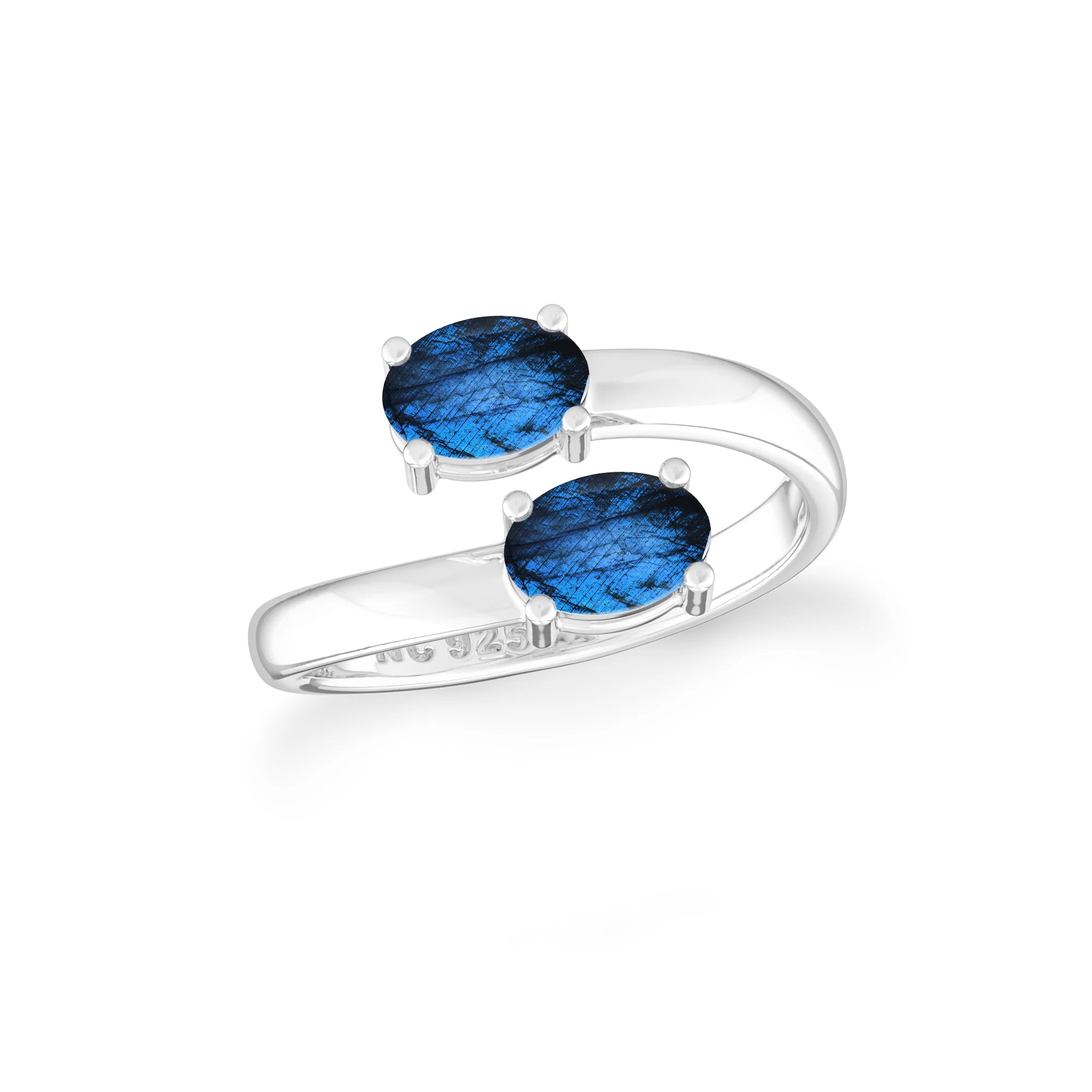
Real labradorite produces a vivid flash of iridescent color — blue, gold, green, or copper — that shifts and moves as you tilt the stone, a phenomenon call
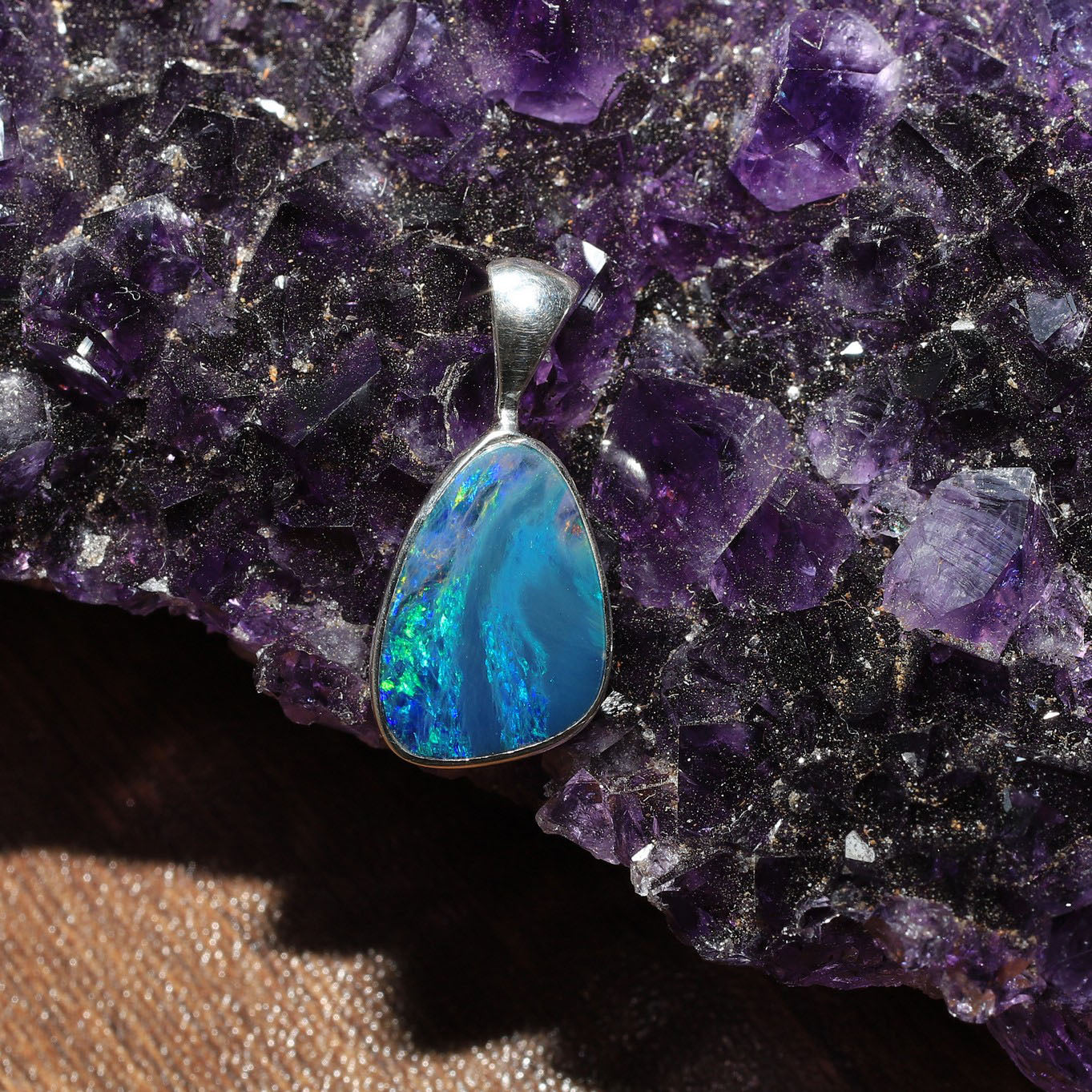
Real labradorite produces a vivid flash of iridescent color — blue, gold, green, or copper — that shifts and moves as you tilt the stone, a phenomenon called labradorescence that glass and synthetic imitations cannot replicate convincingly. If you buy or sell gemstone jewelry at any volume, learning how to tell if labradorite is real is essential for protecting both your investment and your customers' trust.
At Natural Creations 925, our artisans work with labradorite daily across our 60,000-square-foot solar-powered factory. With 500+ skilled craftspeople — 75% of whom are women — and German precision cutting machinery, we process labradorite from rough slab to finished jewelry in-house. This guide shares the authentication techniques our team uses before shipping to buyers in over 40 countries.
Why Is Labradorite Authentication Important for Buyers?
Labradorite's dramatic play of color has made it one of the most popular gemstones in the wholesale jewelry market. That popularity has also made it one of the most commonly faked. The most frequent imposters include:
- Coated glass — clear or gray glass with an iridescent film applied to one surface
- Synthetic opal or resin — lab-created materials engineered to mimic color play
- Dyed or coated quartz — cheaper minerals treated to resemble labradorite's flash
- Low-quality feldspar sold as high-grade spectrolite
A single batch of fake labradorite mixed into your inventory can trigger returns, damage your brand reputation, and cost far more than the original purchase price. Knowing how to tell if labradorite is real before you buy is the most cost-effective quality control step you can take.
How Does the Labradorescence Test Work?
Labradorescence is the defining optical property of genuine labradorite and the most important test in your authentication toolkit. It occurs because labradorite's internal structure contains thin, alternating layers of different feldspar compositions. When light enters the stone and hits these layers, it diffracts and produces broad flashes of spectral color.
How to do it:
- Hold the stone under a single, direct light source (a desk lamp or bright window works well).
- Slowly tilt and rotate the stone in all directions.
- Observe how the color flash behaves.
What you should see in real labradorite:
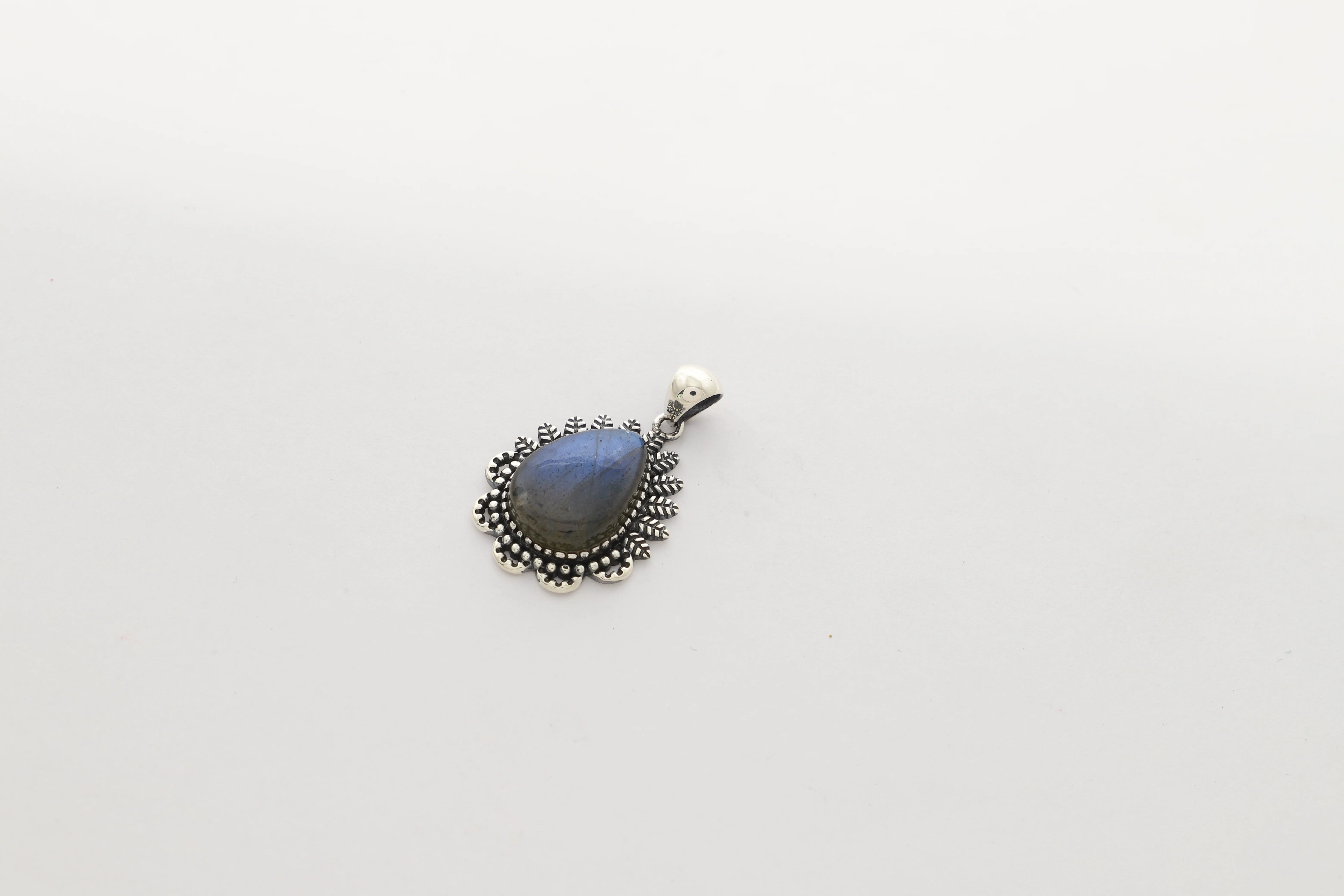
- Broad, sweeping flashes of color that appear to come from within the stone
- Color shifts as you change the viewing angle — blue may give way to gold or green
- The flash disappears at certain angles and reappears at others
- The iridescence has depth; it looks like it is inside the stone, not sitting on the surface
Red flags for fakes:
- Color that stays the same regardless of angle (coated glass)
- Iridescence visible only on one surface or only from one direction (surface coating)
- A thin, rainbow-like film that looks like an oil slick rather than a deep glow (applied coating)
- Uniform, pinpoint sparkle instead of broad color sweeps (glitter or metallic flake inclusions)
The key distinction is movement. Real labradorescence rolls across the stone's interior as you tilt it. Coated fakes produce a static, surface-level shimmer that does not travel.
Does the Temperature Test Work for Labradorite?
Yes. Like most genuine minerals, labradorite is a relatively good thermal conductor. It feels noticeably cool when first touched and takes several seconds to reach skin temperature.
How to do it:
- Let the stone sit untouched at room temperature for at least 10 minutes.
- Press it against your inner wrist, cheek, or lip.
- Note how long the cold sensation persists.
Expected result for real labradorite: A distinct chill lasting 3 to 5 seconds before the stone warms up.
Red flag: Glass and plastic imitations warm to skin temperature almost immediately — typically within 1 second. Resin-based fakes warm even faster. While the temperature test alone cannot confirm authenticity, it is an effective first-pass filter for eliminating the cheapest categories of fakes.
How Can You Use Weight and Density to Authenticate Labradorite?
Labradorite has a specific gravity of approximately 2.68 to 2.72 g/cm3. This gives it a satisfying, solid heft in the hand that distinguishes it from lighter materials commonly used in fakes.
How to do it (quick field test):
- Hold the suspected labradorite in one hand and a known-genuine piece of similar size in the other.
- Compare the weight. They should feel very similar if both are real.
How to do it (precise method):
- Weigh the stone on a digital scale (dry weight).
- Suspend the stone on a thin wire and weigh it submerged in water.
- Calculate: Specific Gravity = Dry Weight / (Dry Weight - Submerged Weight).
Expected results:
| Material | Specific Gravity |
|---|---|
| Natural labradorite | 2.68 – 2.72 |
| Glass (soda-lime) | 2.4 – 2.6 |
| Resin/plastic | 1.1 – 1.5 |
| Opal (natural) | 1.98 – 2.25 |
Red flag: If the stone feels noticeably lighter than expected for its size, or if the calculated specific gravity falls below 2.6, it is likely glass or resin rather than genuine feldspar.
What Should the Surface Texture Look Like on Real Labradorite?
Examining the surface under magnification reveals important clues about whether a stone is natural labradorite or a manufactured fake.
What to look for in real labradorite:
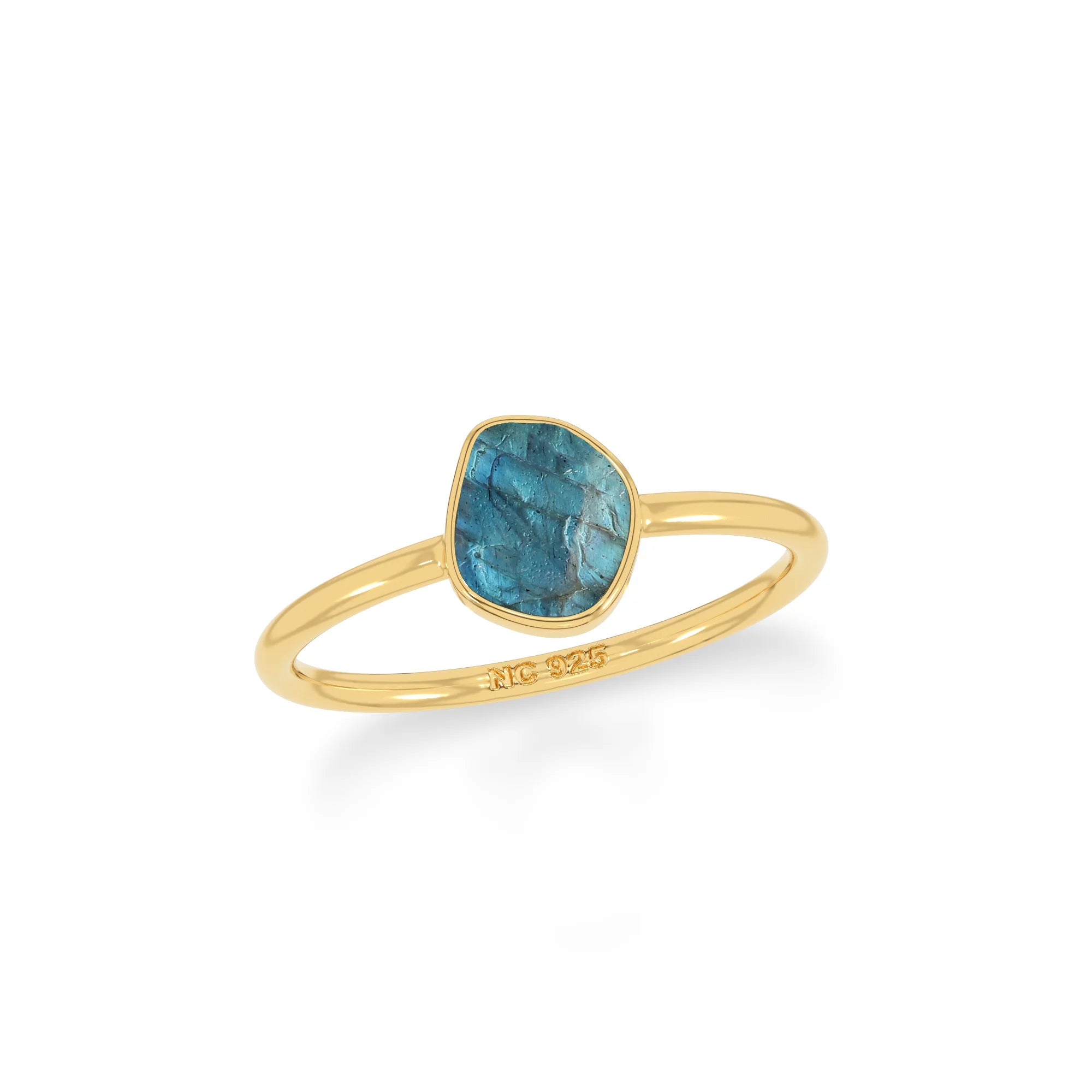
- Fine parallel striations — labradorite is a feldspar mineral with a layered crystal structure that often shows subtle parallel lines on polished surfaces
- Twinning planes — thin, straight lines visible within the stone where crystal layers meet (these are actually what cause labradorescence)
- Minor surface irregularities — natural polish on labradorite often shows tiny pits or subtle unevenness due to the stone's cleavage properties
- Natural inclusions — small dark spots, needle-like inclusions, or internal fractures are common and expected
Red flags for fakes:
- A perfectly smooth, glass-like surface with no internal features
- Visible brush strokes or uneven coating when examined at 10x magnification
- Tiny bubbles trapped beneath a surface layer (indicates coating over glass)
- A peeling or flaking iridescent layer at the edges (applied film)
Our lapidary team at Natural Creations 925 carefully examines every labradorite slab before cutting. The German precision machinery in our factory allows us to optimize cuts that maximize labradorescence while preserving the natural characteristics that confirm authenticity.
How Do You Identify Common Labradorite Fakes?
Understanding what the fakes look like is just as important as knowing the real thing. Here are the three most common labradorite imitations and how to spot each.
Coated Glass
The most common fake. A piece of gray or clear glass with a thin iridescent coating (often titanium dioxide or similar metallic oxide) applied to one surface.
How to spot it:
- The iridescence is visible from only one side or one angle
- Tilting reveals no change in the color — just an on/off shimmer
- Under magnification, you may see the coating layer peeling or bubbling at edges
- The temperature test fails — warms too quickly
- Round air bubbles visible inside the glass body
Synthetic or Resin-Based Imitations
Molded resin or plastic with embedded iridescent flakes or films designed to mimic labradorescence.
How to spot it:
- Very light in the hand compared to genuine labradorite
- Warms to skin temperature almost instantly
- Color play looks like glitter flecks rather than broad sweeps of light
- A heated needle pressed to an inconspicuous spot may produce a chemical smell (plastic/resin)
- Under magnification, you can sometimes see individual flakes or particles causing the shimmer
Dyed or Coated Quartz
Clear or smoky quartz that has been treated with metallic coatings (sometimes marketed as "mystic quartz" or "aurora quartz").
How to spot it:
- Hardness is 7 (higher than labradorite's 6 to 6.5) — it will scratch glass more aggressively
- Color is often more rainbow-like and uniform, not the broad blue/gold/green flashes of labradorite
- Lacks the twinning planes and parallel striations of genuine feldspar
- Specific gravity is lower (2.65 vs. 2.70)
Real vs. Fake Labradorite: Quick Comparison Table
| Test | Natural Labradorite | Coated Glass | Resin/Plastic | Coated Quartz |
|---|---|---|---|---|
| Labradorescence | Deep, shifting, multi-angle color | Surface-only shimmer, one angle | Glitter-like sparkle | Rainbow-like, too uniform |
| Temperature | Cool, 3-5 sec to warm | Warms in ~1 sec | Warms almost instantly | Cool (quartz is genuine mineral) |
| Weight (SG) | 2.68 – 2.72 | 2.4 – 2.6 | 1.1 – 1.5 | 2.65 |
| Hardness (Mohs) | 6 – 6.5 | 5.5 | 2 – 3 | 7 |
| Surface at 10x | Striations, twinning planes | Coating visible, bubbles | Flake particles | Clean, no twinning |
| Inclusions | Dark spots, needles, fractures | Round bubbles | None or synthetic flakes | Typical quartz inclusions |
| Price | Moderate | Very low | Very low | Low to moderate |
What Equipment Do You Need for Labradorite Authentication?
Labradorite authentication requires minimal equipment:
- A single direct light source — for the labradorescence tilt test. Even a phone flashlight works.
- Jeweler's loupe (10x) — for surface texture, coating detection, and inclusion inspection. Under $15.
- Digital scale — for specific gravity testing. Any jewelry scale accurate to 0.01g.
- A glass plate — for the scratch/hardness test. Labradorite (Mohs 6-6.5) will scratch glass (Mohs 5.5).
- A steel file or knife — steel (Mohs 6.5) should barely scratch labradorite and will not scratch quartz. Useful for distinguishing coated quartz fakes.
These five items let you perform every test in this guide and will pay for themselves the first time they help you reject a fake shipment.
How Does Buying Direct from a Manufacturer Protect You?
The most reliable way to ensure you receive genuine labradorite is to eliminate supply chain uncertainty. When you buy from Natural Creations 925, every stone passes through our in-house lapidary before our team of 500+ artisans sets it into sterling silver. We control the process from rough material selection to final quality inspection — no middlemen, no mystery sourcing.
Orders placed before 2 PM PST ship same day, with documentation confirming stone authenticity and origin. That direct-to-buyer model is why jewelry retailers across 40+ countries trust us as their labradorite source.
Can labradorite lose its flash over time?
No. Labradorescence is caused by the stone's internal crystal structure, not a surface treatment. Genuine labradorite will display the same color play indefinitely. If a stone's color flash fades, chips, or peels away, it was coated — not real labradorite.
Is spectrolite the same as labradorite?
Spectrolite is a trade name for high-quality labradorite originally sourced from Finland. It displays a broader and more vivid range of colors than standard labradorite. All spectrolite is labradorite, but not all labradorite qualifies as spectrolite. The same authentication tests apply to both.
Can labradorite be scratched easily?
Labradorite sits at 6 to 6.5 on the Mohs hardness scale, which means it is harder than glass and steel but softer than quartz. It is durable enough for everyday jewelry wear but can be scratched by harder gemstones like topaz or sapphire. This moderate hardness is actually useful for authentication — if a supposed labradorite piece cannot scratch glass, it is likely a softer fake.
Why does my labradorite only show color from one angle?
Some genuine labradorite specimens have a narrow flash angle due to the orientation of their internal twinning planes. However, real labradorescence always has visible depth and shifts color as you tilt. If the color is perfectly flat, visible only from exactly one direction, and looks like a surface coating rather than an internal glow, the piece may be coated glass.
How should I store labradorite jewelry to maintain quality?
Labradorite is moderately hard but has two directions of perfect cleavage, meaning it can chip if struck at the right angle. Store pieces individually in soft pouches, avoid stacking them with harder stones, and clean with warm soapy water and a soft cloth. Never use ultrasonic or steam cleaners on labradorite.
Open Your Wholesale Account Today
500+ artisans. In-house lapidary. 100% solar-powered. Same-day shipping on orders before 2 PM PST. Just your business license to get started.