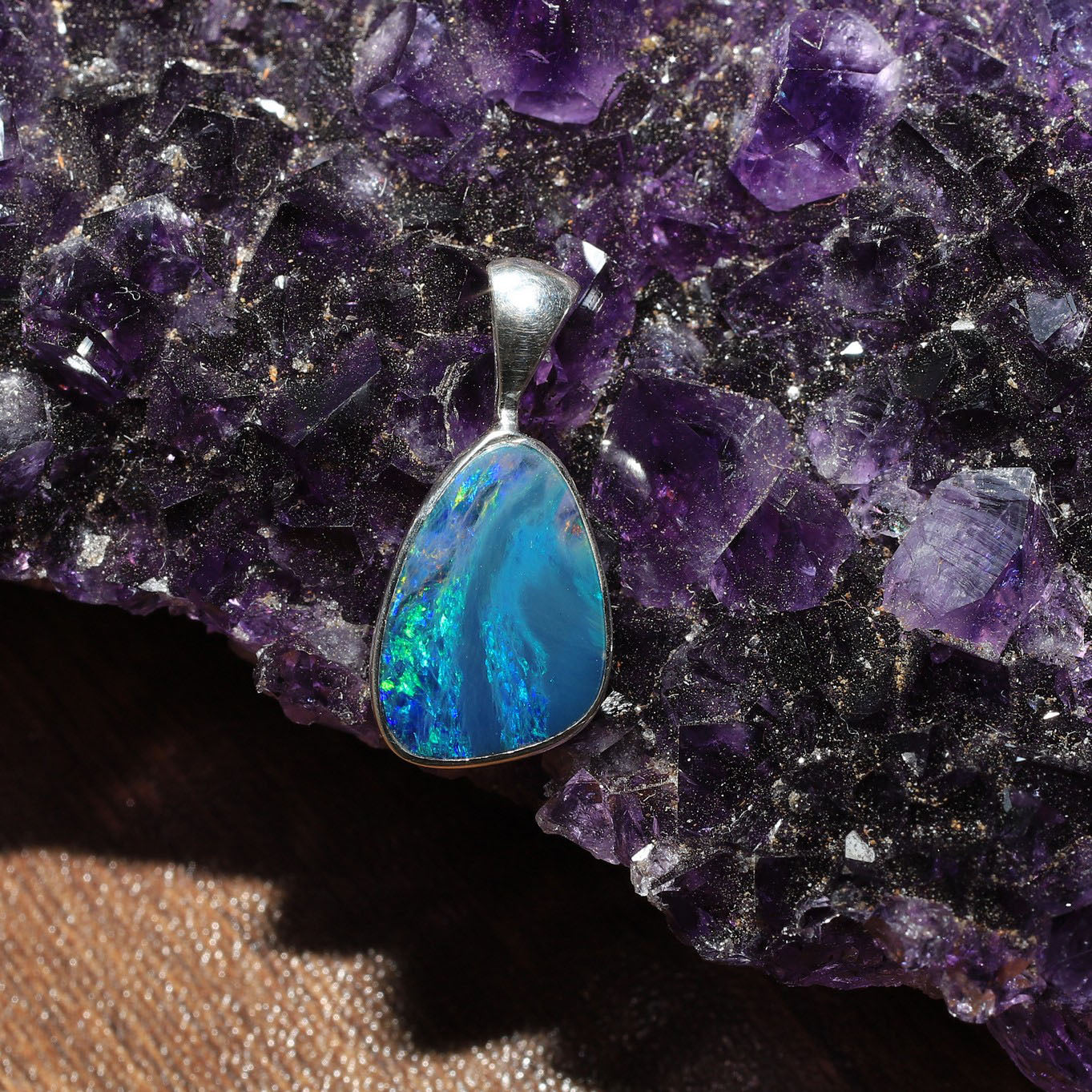

Emerald Gemstone Wholesale Guide: Quality, Treatments, and Sterling Silver Jewelry Value
Emerald Gemstone Wholesale Guide: Quality, Treatments, and Sterling Silver Jewelry Value
Complete emerald gemstone guide — quality grading, treatment disclosure, natural vs. lab-created, and why emerald in 925 sterling silver is a powerful wholesale
Emerald is the green variety of beryl (Be₃Al₂Si₆O₁₈) colored by chromium and/or vanadium, with a Mohs hardness of 7.5–8 — one of the four precious gemstones (alongside diamond, ruby, and sapphire) and the most commercially significant green gemstone in the world.
Emerald carries more cultural and historical weight than almost any other colored gemstone. Cleopatra's obsession. The Crown Jewels. The Mughal emperors. Spanish conquistadors. Colombian cartels. Emerald has been at the center of human desire and conflict for 4,000 years — and that weight of history translates directly into commercial value for wholesale buyers who sell it well.


Chemical Properties and Formation
Emerald forms in beryl crystal structures where chromium and/or vanadium substitute for aluminum, creating the intense green color. The geological rarity of this combination — chromium and beryllium (beryl's key element) rarely occur together — is why fine emeralds are precious gemstones and why their supply remains genuinely constrained.
Chemical formula: Be₃Al₂Si₆O₁₈ (beryllium aluminum silicate) Crystal system: Hexagonal Mohs hardness: 7.5–8 Specific gravity: 2.67–2.78 Refractive index: 1.565–1.602 Luster: Vitreous Color: Caused by trace chromium (Cr³⁺) and/or vanadium (V³⁺)
The Major Emerald Sources
| Source | Color | Characteristics | Market Recognition |
|---|---|---|---|
| Colombia (Muzo, Chivor, Coscuez) | Vivid pure green | Warm green hue; finest quality in the world; "velvet" transparency | Highest prestige; origin premium |
| Zambia (Kagem mine) | Deep bluish-green | Very fine quality; excellent clarity relative to Colombian | Growing prestige; now rivals Colombia |
| Brazil (Bahia, Minas Gerais) | Yellow-green to pure green | Large stones; wide quality range | Large commercial supply |
| Ethiopia | Vivid green; high clarity | Newer source; excellent quality | Rising market position |
| Zimbabwe (Sandawana) | Intense deep green | Small stones; vivid color | Collector category |
| Madagascar | Variable | Recent source; growing importance | Commercial |
Natural Creations 925's in-house lapidary sources emerald rough from Colombia and Zambia — the two origins that deliver the color quality their wholesale buyers demand for high-performing retail inventory.
The Treatment Reality: What Every Wholesale Buyer Must Know
Over 95% of natural emeralds on the commercial market are treated with oil or resin to improve their apparent clarity. This is the accepted industry standard — but it must be disclosed.
Emerald is unique among major gemstones for the near-universal acceptance of treatment. Here's why this happens:
Jardin: Almost all natural emeralds contain inclusions — internal growth features, fractures, and growth patterns that gemologists call "jardin" (French for garden). These are so expected in emeralds that their complete absence may actually raise questions about authenticity (very clean emeralds may be lab-created or synthetic).
The treatment: Cedar oil, synthetic resins, or optically similar oils are introduced into surface-reaching fractures in the emerald, filling them and making them nearly invisible. This dramatically improves the apparent clarity of the stone without fundamentally altering its character.
The disclosure requirement: Any natural emerald that has been treated must be disclosed as such. Grading terminology:
- None/Insignificant: No detectable treatment (rare; commands premium)
- Minor/Faint: Minimal treatment (small amount of filler in minor fractures)
- Moderate: Some treatment (mid-range commercial emeralds)
- Significant/Severe: Heavy treatment (affordable commercial tier)
Understanding this spectrum helps wholesale buyers make purchasing decisions and properly advise their wholesale customers.
Natural vs. Lab-Created Emerald
Lab-created (synthetic) emeralds are chemically identical to natural emeralds (same beryl formula, same chromium coloring) but grown in laboratory environments.
| Factor | Natural Emerald | Lab-Created Emerald |
|---|---|---|
| Chemical composition | Identical (Be₃Al₂Si₆O₁₈ + Cr) | Identical |
| Color | Varies; vivid natural greens | Very consistent vivid green |
| Inclusions | Characteristic natural jardin | Minimal; often very clean |
| Treatment | Usually oil-filled | Typically untreated |
| Rarity | Finite, increasingly scarce | Unlimited production |
| Price | Higher | 70–90% less than natural |
| Disclosure | Not required | Required ("lab-created emerald") |
For wholesale jewelry: Lab-created emerald in 925 sterling silver offers extraordinary green color at accessible wholesale pricing. For buyers serving price-conscious markets, this is a compelling option — provided it's accurately described.
Emerald Quality Grading
Color (most important factor): The most desirable emerald color is vivid, pure green with slight blue modifier — called "Colombian green" in the trade even when it doesn't come from Colombia.
| Color Grade | Description | Retail Position |
|---|---|---|
| Vivid/Intense | Saturated, pure green; glows | Premium jewelry, statement pieces |
| Strong | Good saturation; clearly green | Commercial premium |
| Medium | Moderate saturation | Standard wholesale |
| Light | Pale green | Entry tier |
| Yellowish/Bluish | Color modifier reduces value | Lower tier |
Clarity: Remember the jardin context — inclusion-free emeralds are rare and may be lab-created. "Eye-clean" (no visible inclusions to the naked eye) is an excellent standard for commercial-quality natural emeralds.
Cut: Emeralds are most commonly cut in the "emerald cut" (rectangular step cut with clipped corners) — a cut developed specifically for this stone's crystal form. Oval and cushion cuts are also common. The emerald cut has become so associated with the stone that the cut style carries the stone's name worldwide.
May Birthstone: Commercial Significance
Emerald is the May birthstone — one of the most desirable birthstone designations because:
- Emerald is a precious gemstone (diamond/ruby/sapphire company)
- The vivid green color is unmistakable and highly desirable
- Mother's Day falls in May — amplifying birthstone gift demand
- May babies wear their birthstone as a status symbol
May birthstone emerald jewelry in 925 sterling silver is one of the strongest-performing birthstone categories in wholesale jewelry, particularly in the Mother's Day gift season.
Emerald in 925 Sterling Silver
Sterling silver provides a unique setting advantage for emerald: the cool white-gray of silver is complementary to emerald's green in a way that warm yellow gold is not for some buyers. Modern jewelry aesthetics favor silver + emerald for a fresh, contemporary look.
Setting recommendations:
- Bezel setting: Protects emerald's inclusions from internal fracture expansion; the protective wall supports the stone structure
- Prong setting: Classic for solitaires; shows maximum stone
- Pavé accents: Small emeralds as accent stones alongside larger center pieces


What is emerald?
Emerald is the green variety of beryl — a beryllium aluminum silicate — colored by trace chromium and/or vanadium. It is one of the four precious gemstones alongside diamond, ruby, and sapphire.
Are most emeralds treated?
Yes — over 95% of commercial natural emeralds are treated with oil or resin to improve clarity. This is the accepted industry standard and must be disclosed to buyers.
What is the May birthstone?
Emerald is the May birthstone — one of the most prestigious birthstone designations, given emerald's status as a precious gemstone.
Is Colombian emerald the best quality?
Colombian emeralds from the Muzo and Chivor mines are traditionally considered the world's finest, characterized by a warm pure green often called "Colombian green." Zambian emeralds from the Kagem mine are now considered comparable in quality and sometimes preferred for their bluish-green hue.
What is the difference between a natural emerald and a lab-created emerald?
Natural emeralds are mined from the earth over millions of years; lab-created emeralds are grown in laboratories in weeks or months using the same chemical process. Both are real emerald (same beryl formula, same chromium coloring). Lab-created emeralds are typically cleaner and significantly less expensive; they must be disclosed as lab-created.
Open Your Wholesale Account Today
500+ artisans. In-house lapidary. 100% solar-powered. Same-day shipping on orders before 2 PM PST. Just your business license to get started.