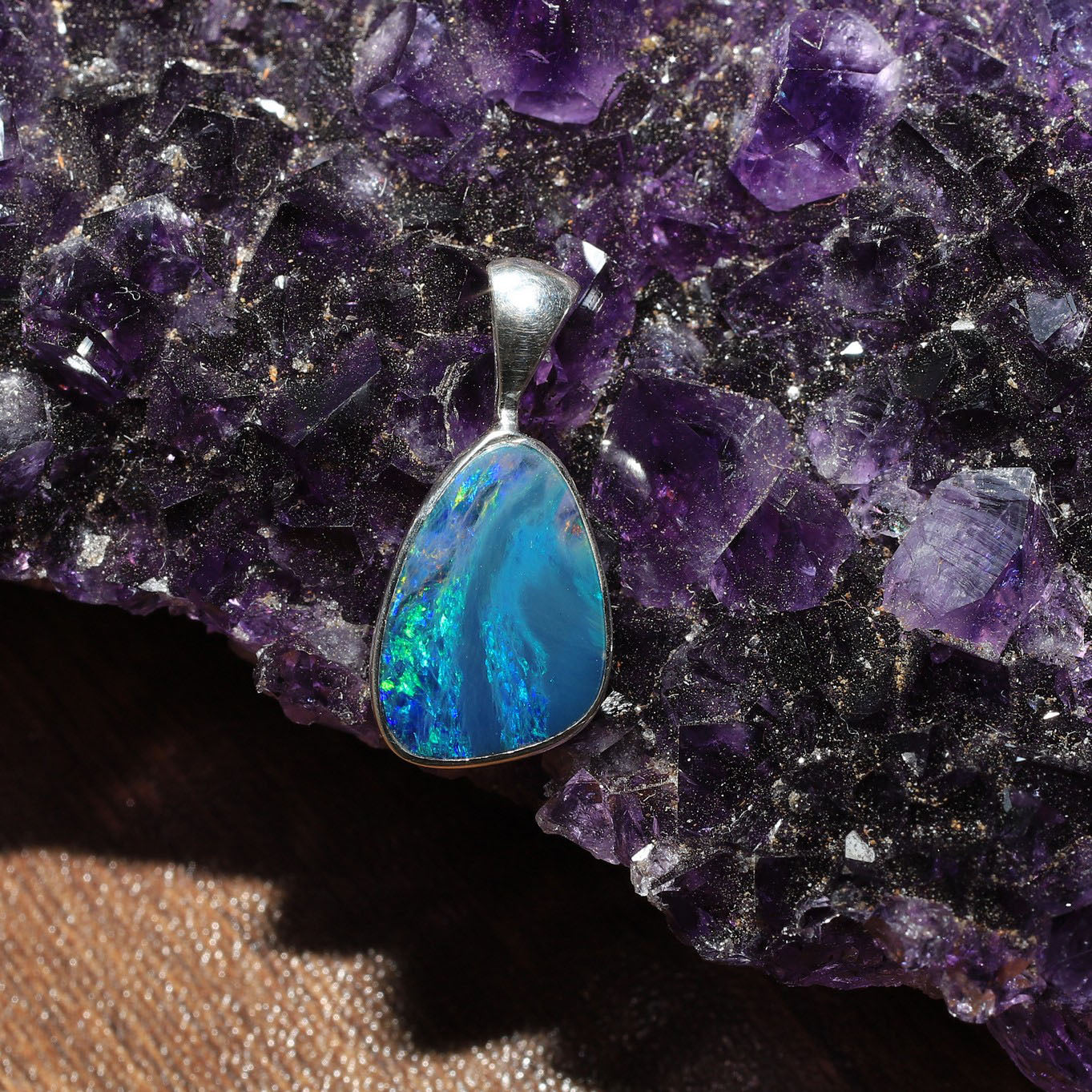

Dendritic Opal Wholesale Guide: The Landscape Stone of Nature
Dendritic Opal Wholesale Guide: The Landscape Stone of Nature
Wholesale dendritic opal jewelry in 925 sterling silver — grading, healing properties, care essentials, and sourcing guide for resellers and retailers.
Dendritic opal is nature's own landscape painting trapped inside a gemstone — each cabochon displays unique tree, fern, or moss-like patterns formed by manganese and iron oxide inclusions, making every single piece of wholesale jewelry a one-of-a-kind work of natural art. This common opal variety typically wholesales at $12 to $55 per piece in 925 sterling silver settings, occupying a price point that delivers strong margins while giving retail customers something they cannot find duplicated anywhere else. In a wholesale market increasingly driven by uniqueness and story, dendritic opal delivers both in abundance.


What Is Dendritic Opal, and How Do Those Patterns Form?
Dendritic opal is a variety of common opal (hydrated silicon dioxide — SiO₂·nH₂O) that contains dendritic inclusions of manganese oxide and/or iron oxide. Unlike precious opal, dendritic opal does not display play of color (the rainbow flash effect). Instead, its value comes entirely from the stunning tree-like, fern-like, or landscape-like patterns created by mineral dendrites growing through the opal matrix.
Key facts for wholesale buyers:
- Chemical composition: Hydrated silicon dioxide with manganese/iron oxide dendrites — SiO₂·nH₂O + MnO₂/Fe₂O₃
- Mohs hardness: 5.5–6 (moderate — suitable for most jewelry with care)
- Specific gravity: 1.98–2.20
- Color: Translucent to opaque white, cream, or milky base with black, brown, or dark gray dendritic patterns
- Luster: Vitreous to waxy
- Crystal system: Amorphous (like all opal)
- Pattern type: Dendrites — branching, tree-like mineral formations
- Primary sources: Australia, Brazil, Turkey
The word "dendrite" comes from the Greek "dendron" meaning tree, and the resemblance is immediately obvious when you see the stone. These patterns form when mineral-rich fluids percolate through cracks and pores in the opal material over geological time. As the dissolved manganese and iron oxides precipitate out, they crystallize in branching fractal patterns that follow the fluid's path through the stone. The result looks exactly like miniature trees, fern fronds, moss gardens, or aerial photographs of river deltas — all occurring naturally inside the gemstone.
No two dendritic opal specimens are alike. The specific pattern in each stone depends on the exact mineral concentration, fluid path, crystallization speed, and opal matrix characteristics at that precise location. This guaranteed uniqueness is dendritic opal's most powerful selling point for wholesale buyers.
How Do You Grade Wholesale Dendritic Opal Jewelry Quality?
Dendritic opal grading is distinct from other gemstones because pattern quality matters more than color saturation or clarity. The beauty of the dendrite formation is the primary value driver.
Dendritic Opal Quality Grading — Wholesale Buyer's Guide
| Grade | Pattern Quality | Base Opal Quality | Contrast | Wholesale Price Range (set in 925 silver) |
|---|---|---|---|---|
| AAA (Premium) | Detailed, intricate dendrites forming recognizable landscape or tree scenes | Clear to translucent white/cream base, good polish | Strong contrast — dark dendrites against light base | $35–$55+ per piece |
| AA (Fine) | Well-formed dendrite branches, attractive natural pattern | Clean base with good translucency | Good contrast, clear pattern definition | $22–$40 per piece |
| A (Standard) | Visible dendrite patterns, moderately detailed | Acceptable base quality, minor cloudiness | Moderate contrast | $14–$25 per piece |
| B (Commercial) | Sparse or indistinct dendrites | Cloudy or heavily included base | Low contrast, patterns difficult to distinguish | $8–$16 per piece |
What makes a premium dendritic opal? The most valuable specimens display intricate, highly detailed dendrite formations that create recognizable "scenes" — a single stone might appear to contain a winter forest, a tropical fern grove, or an aerial river landscape. When the dendrite pattern tells a visual story, the stone moves from gemstone to miniature art piece, and pricing reflects that shift.
The base opal quality matters because it functions as the canvas for the dendrite painting. A clear, translucent white base provides maximum contrast against the dark dendrites, making the pattern pop visually. Cloudy, opaque, or discolored bases reduce the visual impact regardless of dendrite quality.
Natural Creations 925 selects dendritic opal rough specifically for pattern interest and base clarity. Each stone is evaluated individually in the in-house lapidary at the factory, where cutters orient the cabochon shape to capture the most visually compelling section of the dendrite pattern. That cutting decision transforms raw rough into finished art — a skilled cutter can frame a stunning landscape scene from a rough stone where the dendrites are only visible from one specific angle.
What Are the Healing Properties and Metaphysical Meanings of Dendritic Opal?
Dendritic opal combines the metaphysical properties of opal with the earth-connection energy associated with dendritic minerals. Its visual connection to trees and nature amplifies its appeal in the crystal healing market.
Chakra Association
Dendritic opal is primarily connected to the Heart Chakra (Anahata), the fourth energy center associated with love, compassion, and connection. Practitioners believe dendritic opal's tree-like patterns symbolize growth, branching possibilities, and deep roots — all Heart Chakra themes. The stone is said to help the wearer connect to the natural world, foster emotional growth, and develop patience with life's gradual unfolding processes.
Zodiac Connection
Dendritic opal is broadly associated with earth-connected zodiac energies rather than a single specific sign. Practitioners most commonly connect it to:
- Virgo (August 23 – September 22): Virgo's earth element and attention to natural detail resonate with dendritic opal's intricate patterns.
- Taurus (April 20 – May 20): Taurus's deep connection to nature, patience, and steady growth aligns with the stone's symbolism.
Traditional Healing Beliefs
| Property | Traditional Belief |
|---|---|
| Growth | Called the "stone of growth" — believed to support personal development, spiritual evolution, and the patience to allow natural timing |
| Nature connection | Said to deepen the wearer's bond with the natural world, making it popular with herbalists, gardeners, and outdoor enthusiasts |
| Patience | Associated with understanding that meaningful growth takes time — like the trees the dendrites resemble |
| Abundance | Traditionally linked to agricultural abundance and the fertility of the earth |
| Grounding | Believed to ground scattered energy and promote a calm, centered state of mind |
Retail positioning tip: Dendritic opal appeals to a specific and growing customer segment: nature lovers, plant enthusiasts, cottagecore aesthetics, and the broader "slow living" movement. Wholesale buyers targeting these markets — through crystal shops, botanical-themed boutiques, Etsy stores, or nature-inspired Instagram accounts — will find dendritic opal a strong fit. Each piece's uniqueness is the selling story: "No two are alike — nature painted this one just for you."
How Does Dendritic Opal Compare to Other Patterned Gemstones for Wholesale?
Patterned gemstones that feature natural inclusions or formations occupy a distinct niche. Here is how dendritic opal positions against alternatives:
Patterned Gemstone Comparison — Wholesale Buyer's Reference
| Feature | Dendritic Opal | Dendritic Agate | Moss Agate | Picture Jasper | Landscape Jasper | Tree Agate |
|---|---|---|---|---|---|---|
| Mohs Hardness | 5.5–6 | 6.5–7 | 6.5–7 | 6.5–7 | 6.5–7 | 6.5–7 |
| Pattern Type | Tree/fern dendrites in opal | Tree dendrites in chalcedony | Moss-like inclusions | Landscape scenes in jasper | Desert/mountain scenes | Tree-like inclusions |
| Base Material | Opal (amorphous silica) | Agate (microcrystalline quartz) | Agate | Jasper (microcrystalline quartz) | Jasper | Agate |
| Wholesale Price (per piece in 925) | $12–$55 | $10–$35 | $10–$30 | $8–$25 | $8–$25 | $8–$25 |
| Visual Uniqueness | Very high | High | High | Moderate–high | Moderate–high | Moderate |
| Metaphysical Demand | Moderate–strong | Moderate | Strong | Moderate | Moderate | Moderate |
| Translucency | Yes (often) | Possible | Yes (often) | No (opaque) | No (opaque) | Sometimes |
| Best Jewelry Type | Pendants, earrings, rings | Pendants, earrings, rings | All types | Pendants, earrings | Pendants, earrings | Pendants, earrings |
Dendritic opal's primary advantage over dendritic agate and other patterned stones is its translucent opal base, which gives the dendrite patterns a three-dimensional depth that opaque stones cannot match. Light passes through the opal matrix and illuminates the dendrites from within, creating the impression of looking into a miniature world rather than at a flat surface pattern. This depth effect translates particularly well in pendant designs, where the stone catches light from behind.
What Should Wholesale Buyers Know About Dendritic Opal Care?
Dendritic opal shares the care requirements of the broader opal family. Its amorphous silica structure and water content make it more sensitive than crystalline gemstones.
Dendritic Opal Care Essentials
- Avoid ultrasonic and steam cleaners. Opal's amorphous structure and water content make it vulnerable to vibration damage and thermal shock.
- Clean with warm soapy water and a soft cloth. This is the safest approach for all opal varieties.
- Avoid sudden temperature changes. Rapid heating or cooling can cause thermal stress in opal, potentially leading to crazing (fine surface cracks).
- Do not soak in water for extended periods. While opal contains water naturally, prolonged immersion can cause absorption and subsequent drying-related damage.
- Avoid chemicals. Household cleaners, perfumes, and acidic substances can damage opal's surface.
- Store in moderate humidity. Extremely dry environments (like heated indoor spaces in winter) can dehydrate opal over time. Storing opal jewelry in a sealed bag with a slightly damp cotton ball during dry seasons helps maintain the stone's internal moisture balance.
- Store separately. Harder gemstones will scratch opal. Individual soft pouches are recommended.
Natural Creations 925 designs dendritic opal settings to protect the stone while showcasing its pattern. Bezel settings that frame the cabochon without obscuring the dendrite scene are the standard approach — the setting becomes a picture frame for nature's art. The design engineering draws on the manufacturing team's daily experience with opal across the 60,000 square foot factory, where opal varieties are among the most frequently requested wholesale stones.
What Are the Best Sources for Wholesale Dendritic Opal Jewelry?
Dendritic opal rough comes from several global sources, each with distinct characteristics:
- Australia: The world's dominant opal-producing region also yields dendritic opal material. Australian dendritic opal often features excellent base clarity and well-defined dendrite patterns, though availability of specifically dendritic specimens varies.
- Brazil: A significant source of dendritic opal with a range of quality levels. Brazilian material can produce stunning landscape patterns, particularly in the translucent white base varieties most valued by the wholesale market.
- Turkey: An emerging source for dendritic opal and dendritic agate material. Turkish specimens often display particularly intricate, highly detailed dendrite formations that create remarkably landscape-like scenes.
For wholesale buyers, the critical factor is not origin but pattern quality. A well-patterned Turkish dendritic opal with strong dendrite definition and clear base will outsell a mediocre Australian specimen every time. Pattern is king with this stone.
Natural Creations 925 sources dendritic opal rough from multiple origins, with selection driven entirely by pattern quality, base clarity, and dendrite contrast. Each stone is individually evaluated and cut by the 500+ artisan team (75% women) in the factory, using German precision machinery to shape cabochons that frame each stone's best pattern view. That individual attention — possible because cutting and setting happen under one solar-powered roof — means wholesale buyers receive dendritic opal pieces where every cabochon has been oriented for maximum visual impact. Same-day shipping on orders before 2:00 PM PST to 40+ countries worldwide.


Does dendritic opal have play of color like precious opal?
No. Dendritic opal is a common opal variety, which means it does not display the rainbow play of color (fire) that characterizes precious opal. Dendritic opal's beauty comes entirely from its dendrite patterns — the tree-like, fern-like, or landscape-like mineral formations within the opal matrix. Its appeal is artistic rather than optical, and many collectors and customers prefer the story-telling quality of dendrite patterns over the flash of precious opal.
Are the patterns in dendritic opal natural or created?
The dendritic patterns are entirely natural. They form over geological time as manganese oxide and iron oxide minerals precipitate from mineral-rich fluids percolating through the opal material. The branching, tree-like shapes follow natural fractal growth patterns. No human treatment or enhancement is involved in creating the dendrites. This natural origin is a strong selling point — customers are purchasing millions of years of geological artistry in a single stone.
What jewelry styles sell best for dendritic opal?
Larger cabochon pendants are the top seller because they showcase the dendrite pattern most effectively — the bigger the window into the stone's landscape, the more dramatic the visual impact. Oval and freeform shapes that follow the natural pattern distribution outperform standard rounds. Earrings in matched pairs (where both stones show complementary dendrite patterns) also sell very well. Rings work for protected bezel settings. The key across all styles: let the stone be the centerpiece — simple, clean silver settings that frame rather than compete with the pattern.
How do I photograph dendritic opal for online sales?
Lighting is critical for dendritic opal photography. Use diffused natural daylight or a softbox positioned to the side or slightly behind the stone. This backlighting or side-lighting approach illuminates the opal's translucency, giving the dendrites their characteristic three-dimensional depth. Avoid direct flash, which flattens the pattern and eliminates the depth effect that makes dendritic opal special. Macro photography that captures dendrite detail helps online customers appreciate each stone's unique pattern.
Can dendritic opal crack or craze over time?
Like all common opal, dendritic opal contains water within its amorphous silica structure. If the stone dehydrates — due to prolonged storage in extremely dry conditions, exposure to heat, or chemical exposure — it can develop crazing (fine network of surface cracks). Proper storage in moderate humidity and avoidance of temperature extremes virtually eliminates this risk. Well-maintained dendritic opal jewelry remains stable and beautiful for decades. Including a care card with every sale protects both your customer and your reputation.


Open Your Wholesale Account Today
500+ artisans. In-house lapidary. 100% solar-powered. Same-day shipping on orders before 2 PM PST. Just your business license to get started.