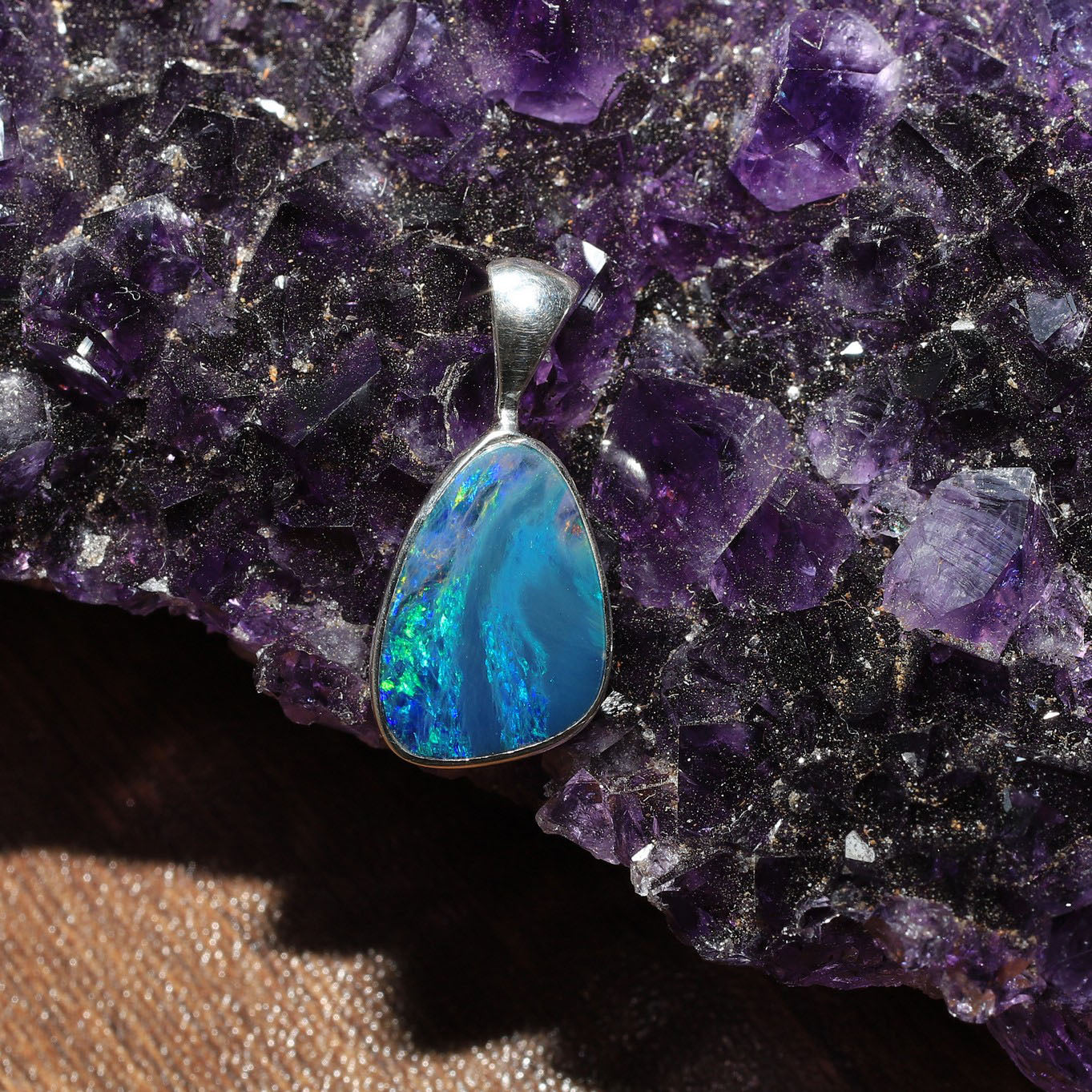

Azurite Gemstone Wholesale Guide: The Deep Blue Stone of Insight
Azurite Gemstone Wholesale Guide: The Deep Blue Stone of Insight
Azurite gemstone jewelry wholesale guide covering copper carbonate properties, azurite-malachite combinations, quality grading, healing significance, and wholes
Azurite is a soft copper carbonate mineral prized for its intense, unmistakable deep blue color — a blue so vivid and saturated that it served as the primary source of blue pigment in European Renaissance painting before synthetic alternatives existed. For wholesale buyers and jewelry retailers, azurite offers an extraordinary color that photographs beautifully, a rich historical pedigree, powerful metaphysical associations with intuition and vision, and a natural combination with malachite that creates one of the most visually distinctive gemstone pairings in the market.


What Is Azurite and How Does It Form?
Azurite is a copper carbonate hydroxide mineral with the chemical formula Cu₃(CO₃)₂(OH)₂. It forms in the oxidation zone of copper ore deposits where carbon dioxide-rich water reacts with copper minerals, creating the intense blue crystals and massive formations that gem cutters and jewelry designers value.
Key geological facts about azurite:
- Color source — Azurite's deep blue derives from its copper content and specific molecular structure. The copper carbonate chemistry produces a blue that is distinct from any other blue gemstone
- Formation environment — Found in the oxidized zones of copper deposits, typically in arid and semi-arid climates where weathering processes concentrate copper minerals near the surface
- Crystal habit — Azurite forms monoclinic crystals that can be prismatic, tabular, or massive. Gem-quality crystals are relatively rare; most jewelry-grade azurite comes from massive or nodular material
- Association with malachite — Azurite frequently occurs alongside malachite (copper carbonate hydroxide, Cu₂(CO₃)(OH)₂) because both minerals form in the same geological environment. Over time, azurite naturally weathers into malachite, and many specimens show both minerals intermingled — creating the prized "azurite-malachite" combination
Major Azurite Sources
| Location | Characteristics | Status |
|---|---|---|
| Morocco (Touissit, Kerrouchen) | Fine crystal specimens, vivid blue massive material | Active, major source for gem-grade |
| Arizona, USA (Bisbee, Morenci) | Historic source, famous "Bisbee Blue" specimens | Largely depleted, collector premium |
| Mexico (Sonora, Durango) | Quality massive material, azurite-malachite combinations | Active |
| Democratic Republic of Congo (Katanga) | Large crystals, deep color, significant production | Active, major source |
| Australia (Broken Hill, Queensland) | Fine specimens, some gem-quality | Limited production |
| China (Guangdong, Anhui) | Increasing production, variable quality | Active, growing source |
Natural Creations 925 sources azurite and azurite-malachite material through established procurement relationships across multiple producing regions. The company's in-house lapidary department — operating within a 60,000-square-foot solar-powered factory — cuts each azurite cabochon on German precision machinery to maximize the deep blue color saturation and, in combination pieces, to showcase the most dramatic blue-green contrast patterns.
What Does Azurite Look Like and What Are Its Varieties?
Azurite's color is its defining feature — an intense, deep azure blue that is deeper and more saturated than lapis lazuli and distinctly different from the blue of sapphire or tanzanite.
Azurite Varieties for Jewelry
| Variety | Description | Visual Character | Market Demand |
|---|---|---|---|
| Pure Azurite | Solid deep blue with no malachite | Intense monochromatic blue | Strong — blue gemstone collectors |
| Azurite-Malachite | Blue azurite intergrown with green malachite | Dramatic blue-green swirls and patterns | Very strong — unique visual identity |
| Azurite Druzy | Tiny azurite crystals on matrix | Sparkling deep blue crystal surface | Moderate — specialty/artisan market |
| Azurite with Chrysocolla | Blue azurite with blue-green chrysocolla | Complex blue-teal patterns | Growing — unique specimens |
| K2 Azurite (K2 Granite) | Azurite dots in white granite matrix | Blue orbs in white/gray stone | Strong — metaphysical market |
Azurite-Malachite: The Signature Combination
Azurite-malachite deserves special attention because it is one of the most commercially significant forms of azurite in the wholesale jewelry market. The natural combination of deep blue azurite and vivid green malachite creates patterns that are:
- Entirely unique per specimen — No two azurite-malachite cabochons display the same pattern, making every piece one-of-a-kind
- Visually dramatic — The blue-green color contrast photographs exceptionally well, performing strongly on social media and live selling platforms
- Metaphysically significant — Combines the properties of both minerals, appealing to crystal healing buyers seeking stones that address multiple chakras simultaneously
- Historically resonant — Both minerals were used as pigments and talismans across ancient Egyptian, Greek, and Chinese civilizations
How Hard Is Azurite and What Care Does It Need?
Azurite rates 3.5 to 4 on the Mohs hardness scale, placing it among the softer gemstones used in jewelry — comparable to malachite, coral, and ammolite. This is the most important durability consideration for wholesale buyers.
Azurite Durability Comparison
| Property | Azurite | Lapis Lazuli | Sodalite | Malachite |
|---|---|---|---|---|
| Mohs Hardness | 3.5–4 | 5–5.5 | 5.5–6 | 3.5–4 |
| Toughness | Fair | Fair to good | Fair | Fair (fibrous structure helps) |
| Best Jewelry Types | Pendants, earrings, brooches | Any with care | Any with care | Pendants, earrings, brooches |
| Cleaning Method | Dry soft cloth or barely damp cloth | Damp cloth | Warm soapy water | Dry or barely damp cloth |
| Avoid | Water immersion, acids, ultrasonic, steam | Chemicals, ultrasonic | Ultrasonic | Acids, water, ultrasonic, steam |
| Special Concerns | Can lighten in prolonged sunlight | Pyrite tarnish possible | Relatively stable | Toxic dust (cutting only) |
Critical Care Considerations
Azurite requires specific handling that retailers and their customers must understand:
- Light sensitivity — Azurite can lighten over prolonged exposure to bright light or direct sunlight. This is a gradual process but is worth communicating to customers
- Moisture sensitivity — Azurite is a carbonate mineral that can be affected by acidic substances, including skin oils over extended contact. Protective settings that minimize direct skin contact extend the stone's life
- Chemical vulnerability — Never expose azurite to household chemicals, ammonia, vinegar, or acidic cleaners. Even mild acids can damage the surface
- Cleaning protocol — Wipe with a dry or barely damp soft cloth only. No soaking, no ultrasonic, no steam
At Natural Creations 925, the lapidary team applies protective finishing techniques to azurite cabochons before setting them in sterling silver. Bezel settings that shield the stone's edges and reduce direct skin contact are prioritized for azurite designs, extending the jewelry's functional lifespan while showcasing the stone's deep blue beauty.
What Are Azurite's Healing Properties and Metaphysical Significance?
Azurite holds a revered position in metaphysical traditions as one of the premier stones of insight, intuition, and inner vision. Its connection to the "third eye" is among the oldest and most consistent associations in crystal healing.
Chakra Association
Azurite is primarily associated with the Third Eye Chakra (Ajna):
- Third Eye Chakra — Connected to intuition, psychic perception, inner vision, and mental clarity. Azurite is considered one of the most powerful Third Eye activators in the crystal healing tradition. Practitioners believe it enhances clairvoyance, stimulates lucid dreaming, and sharpens intellectual insight
When azurite occurs in combination with malachite, practitioners associate the pair with both the Third Eye (azurite/blue) and the Heart Chakra (Anahata) (malachite/green), creating a bridge between intuitive wisdom and emotional compassion. This dual-chakra combination is a significant selling point for the metaphysical market.
Zodiac Connection
Azurite is traditionally linked to Sagittarius (November 22 – December 21). The Sagittarius connection aligns with the sign's association with higher learning, philosophical exploration, and the search for truth — themes that mirror azurite's reputation as a stone of insight and expanded awareness.
Healing Properties
In metaphysical traditions, azurite is attributed with:
- Enhanced intuition and psychic development — Considered the premier stone for developing psychic abilities, clairvoyance, and intuitive perception. Known historically as the "Stone of Heaven" in some traditions
- Mental clarity and focus — Believed to sharpen intellectual capacity, improve memory, and enhance analytical thinking. Students and scholars in various traditions have carried azurite for this purpose
- Inner vision and insight — Said to reveal unconscious thought patterns, hidden motivations, and deeper truths. Used in meditation to access insights that rational thinking alone cannot reach
- Creative inspiration — Associated with stimulating artistic vision and creative problem-solving, connecting to its historical use by Renaissance artists
- Emotional release — Believed to help identify and release fear, grief, and deeply held emotional patterns that obstruct spiritual growth
- Physical healing traditions — Some practices link azurite with supporting brain function, skeletal alignment, and cellular repair (traditional beliefs, not medical claims)
The "Stone of Insight" positioning gives azurite a clear, marketable metaphysical identity. Retailers can target students, creative professionals, meditation practitioners, and anyone seeking clearer thinking and deeper intuition.
What Does Azurite Cost at Wholesale and How Is It Priced?
Azurite pricing varies significantly based on form, quality, and source — with pure azurite typically commanding higher prices than azurite-malachite combinations, though exceptional combination specimens can rival pure azurite values.
Wholesale Pricing Factors
- Color depth and saturation — Deep, vivid, saturated blue is premium. Pale, powdery, or gray-tinged blue is significantly discounted
- Form — Pure azurite vs. azurite-malachite vs. azurite in matrix. Each has its market and pricing tier
- Pattern quality (azurite-malachite) — Dramatic, well-defined blue-green patterns with good contrast command the highest combination-stone prices
- Size — Large cabochons with consistent color and pattern are disproportionately rare
- Source — Arizona "Bisbee Blue" specimens carry collector premiums. Moroccan and Congolese material is typically more accessible
Why Azurite Delivers Strong Retail Margins
- Unmistakable color — Azurite's deep blue is immediately recognizable and different from any other blue gemstone on the market
- Blue-green combination appeal — Azurite-malachite creates a two-for-one visual impact that customers find irresistible
- Historical resonance — The Renaissance pigment connection adds cultural depth to the selling narrative
- Metaphysical demand — Strong Third Eye chakra associations drive dedicated crystal healing buyer traffic
- Photography performance — Azurite's saturated blue photographs exceptionally well for e-commerce and social media marketing
- One-of-a-kind appeal — Especially in azurite-malachite combinations, every piece is genuinely unique
Natural Creations 925 ships azurite jewelry from its factory with same-day dispatch on orders placed before 2 PM PST. With sourcing across multiple global azurite deposits and exports to over 40 countries, the company provides consistent supply for wholesale buyers building their blue gemstone inventory.
Why Should Retailers Stock Azurite Jewelry?
Azurite occupies a unique position in the blue gemstone category — offering a color depth and historical significance that more common blue stones cannot match, at price points accessible for silver jewelry retail.
Azurite vs. Other Blue Gemstones for Wholesale
| Factor | Azurite | Lapis Lazuli | Sodalite | Blue Topaz | Sapphire |
|---|---|---|---|---|---|
| Color Character | Deep azure, saturated | Deep blue with pyrite flecks | Medium blue, sometimes veined | Light to London blue, transparent | Rich blue, transparent |
| Rarity | Moderate to high (gem-quality) | Moderate | Low to moderate | Low (abundant, treated) | High |
| Price Point (silver jewelry) | Low to mid | Low to mid | Low | Low | High |
| Unique Selling Point | Deepest natural blue, Renaissance history | Pyrite gold flecks, ancient Egypt | Affordable blue, vein patterns | Clarity and size | Prestige, hardness |
| Combination Stone | Yes (azurite-malachite) | Sometimes (with calcite) | Rarely | No | No |
| Metaphysical Demand | Very strong (Third Eye, insight) | Strong (truth, wisdom) | Moderate (communication) | Moderate | Moderate |
| Durability (Mohs) | 3.5–4 (low) | 5–5.5 | 5.5–6 | 8 | 9 |
Stocking Recommendations
- Entry point: Azurite-malachite cabochon pendants — the blue-green combination creates instant visual impact at accessible price points
- Mid-range: Pure azurite statement earrings and large pendant pieces — showcase the deep blue that no other gemstone can match
- Premium: Collector-grade azurite specimens from notable sources in bezel-set sterling silver — appeals to serious gem collectors
- Marketing angle: Lead with the "Stone of Insight" metaphysical narrative and the Renaissance historical connection. Position azurite-malachite as a two-energy stone for customers seeking both intuition and heart healing


### What is the difference between azurite and azurite-malachite?
Pure azurite is solid deep blue copper carbonate. Azurite-malachite is a natural combination stone where blue azurite and green malachite have grown together in the same specimen, creating blue-green swirled patterns. Both are genuine natural minerals — the combination is not assembled or manufactured. Each variety has its own market: pure azurite for deep blue enthusiasts, azurite-malachite for customers who love the dramatic blue-green contrast.
Does azurite change color or fade over time?
Azurite can gradually lighten if exposed to prolonged bright light or direct sunlight over extended periods. It can also develop a greenish surface patina as the outer layer slowly converts to malachite through natural weathering. Proper storage away from direct sunlight and protective jewelry settings significantly slow these processes. Many collectors and practitioners consider the gradual greening a feature rather than a flaw, as it demonstrates the stone's living geological character.
Is azurite safe to wear as jewelry?
Yes, azurite is safe to wear in finished jewelry settings. While azurite dust can contain copper compounds that should not be inhaled (a concern only during cutting and polishing, handled professionally in the lapidary), polished and set azurite poses no safety concern for the wearer. Natural Creations 925's professional lapidary team handles all cutting in controlled conditions using proper safety equipment.
Can azurite get wet?
Brief, incidental water contact will not damage azurite, but prolonged soaking or immersion should be avoided. Azurite is a carbonate mineral sensitive to acidic solutions — even mildly acidic water can etch the surface over time. Remove azurite jewelry before swimming, bathing, or washing dishes. Wipe dry immediately if the stone gets wet. This sensitivity is the primary reason bezel settings that protect the stone are preferred over prong settings.
What makes K2 azurite (K2 granite) different from regular azurite?
K2 azurite — named after the K2 mountain in Pakistan near where it was first discovered — is white granite (primarily orthoclase feldspar and quartz) containing spherical blue azurite inclusions. The visual effect is striking: bright blue dots against a white/gray stone background. K2 azurite is significantly harder than pure azurite (the granite matrix is 6–7 Mohs) and more durable for jewelry use. It has become popular in the metaphysical market as a stone that combines grounding energy (granite) with Third Eye activation (azurite). --- ## Source Deep Blue Azurite From a Manufacturer You Can Trust Azurite's combination of the deepest natural blue in the gemstone world, dramatic azurite-malachite pairings, Renaissance historical significance, and powerful Third Eye metaphysical associations makes it a compelling addition to any retail gemstone inventory. The key is sourcing from a manufacturer with the lapidary expertise to handle this softer stone properly and the design sensibility to set it in protective, wearable configurations. Natural Creations 925 processes azurite in-house at the company's factory — a 60,000-square-foot solar-powered operation equipped with German precision machinery and staffed by over 500 skilled artisans, 75% of whom are women. From cutting azurite and azurite-malachite cabochons in the lapidary to setting them in protective sterling silver bezels, every step stays under one roof. Same-day shipping on orders placed before 2 PM PST and exports to over 40 countries ensure reliable access for wholesale buyers worldwide. Ready to add azurite to your retail collection? Visit [naturalcreations925.com](https://naturalcreations925.com) to explore the wholesale azurite and azurite-malachite jewelry catalog, open a wholesale account, or connect with the team about custom designs through the "Curated for You" or "Designed by You" programs.


Open Your Wholesale Account Today
500+ artisans. In-house lapidary. 100% solar-powered. Same-day shipping on orders before 2 PM PST. Just your business license to get started.