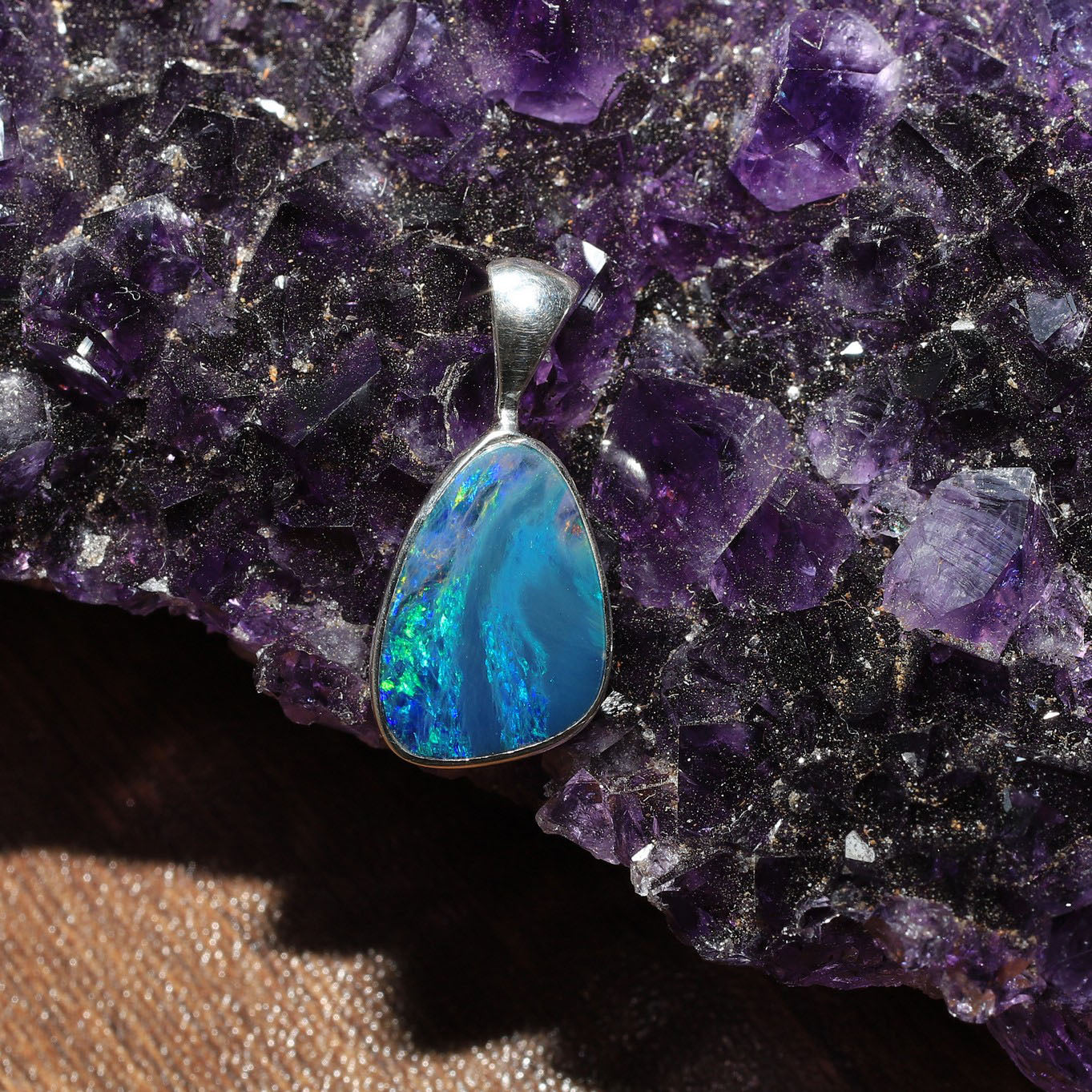

Amethyst Gemstone and Jewelry Guide: Properties, Quality, and Wholesale Value
Amethyst Gemstone and Jewelry Guide: Properties, Quality, and Wholesale Value
Complete amethyst gemstone guide — geological properties, quality grading, color varieties, jewelry care, and why amethyst is a top wholesale jewelry performer.
Amethyst is a violet to purple variety of quartz (SiO₂) with a Mohs hardness of 7, formed when trace amounts of iron impurities interact with natural radiation within quartz crystal structures — making it the most commercially significant purple gemstone in the world.
From ancient Greek symposium culture (where vessels carved from amethyst were believed to prevent intoxication) to contemporary jewelry collections, amethyst has maintained its status as one of the most beloved gemstones across millennia. For wholesale buyers, it's not just historically significant — it's one of the most consistently profitable gemstone categories in the silver jewelry market.
Geological Origins and Formation
Amethyst forms within silica-rich hydrothermal veins, volcanic rock cavities (called geodes), and alluvial deposits. The purple color results from iron (Fe³⁺) substituting for silicon in the quartz lattice, enhanced by natural irradiation during the stone's formation.
Chemical formula: SiO₂ (silicon dioxide) Crystal system: Trigonal (hexagonal) Mohs hardness: 7 (excellent for jewelry) Specific gravity: 2.65 Refractive index: 1.544–1.553 Luster: Vitreous (glassy)
The same iron-and-irradiation combination that creates purple amethyst produces citrine (yellow/orange quartz) at different temperatures. Ametrine — a bicolor stone with both purple and yellow/orange zones — occurs when temperature gradients exist within a single crystal.
Major Sources and Their Characteristics
| Origin | Characteristics |
|---|---|
| Zambia (Africa) | Deep, saturated purple with excellent clarity; considered among the finest quality globally |
| Brazil | World's largest producer; wide range from pale to deep; Bahia state produces very deep "Bahian" amethyst |
| Uruguay | Very dark, almost "blackberry" purple; smaller crystals; highly prized by collectors |
| Bolivia | Source of ametrine (amethyst + citrine bicolor); also produces purple amethyst |
| USA (Arizona) | "Four Peaks" Arizona amethyst — rare, highly saturated, collector-grade |
| South Asia | Variable quality; some fine commercial material |
| Sri Lanka | Lighter lavender tones; typically less saturated than African or Brazilian |
Natural Creations 925 sources amethyst rough primarily from Zambia and Brazil — the two sources that consistently deliver the depth of color and clarity that their wholesale buyers depend on for strong sell-through.
Color Quality and Grading
Amethyst quality is primarily determined by color — specifically:
| Grade | Color Description | Market Position |
|---|---|---|
| AAA | Deep, vivid purple/violet; "Siberian" grade (named for historically prized Russian stones) | Premium — fine jewelry |
| AA | Good depth; medium-strong purple; minor color zoning | Commercial quality — strong retail |
| A | Medium purple; noticeable color zoning | Entry wholesale |
| AB | Pale lavender to light purple | Budget tier |
Key color factors:
- Hue: Pure purple is most valued; slightly reddish-purple ("raspberry") is highly regarded; bluish-purple is less common but prized
- Saturation: Deeper is generally better — though extremely dark amethyst appears almost black in certain light and loses its purple character
- Tone: Medium to dark tone is ideal; very light amethyst has limited visual impact
- Color zoning: Most natural amethyst has some visible zones of color concentration and color absence. Minimal zoning commands premium pricing.
Common Cuts and Settings in Sterling Silver Jewelry
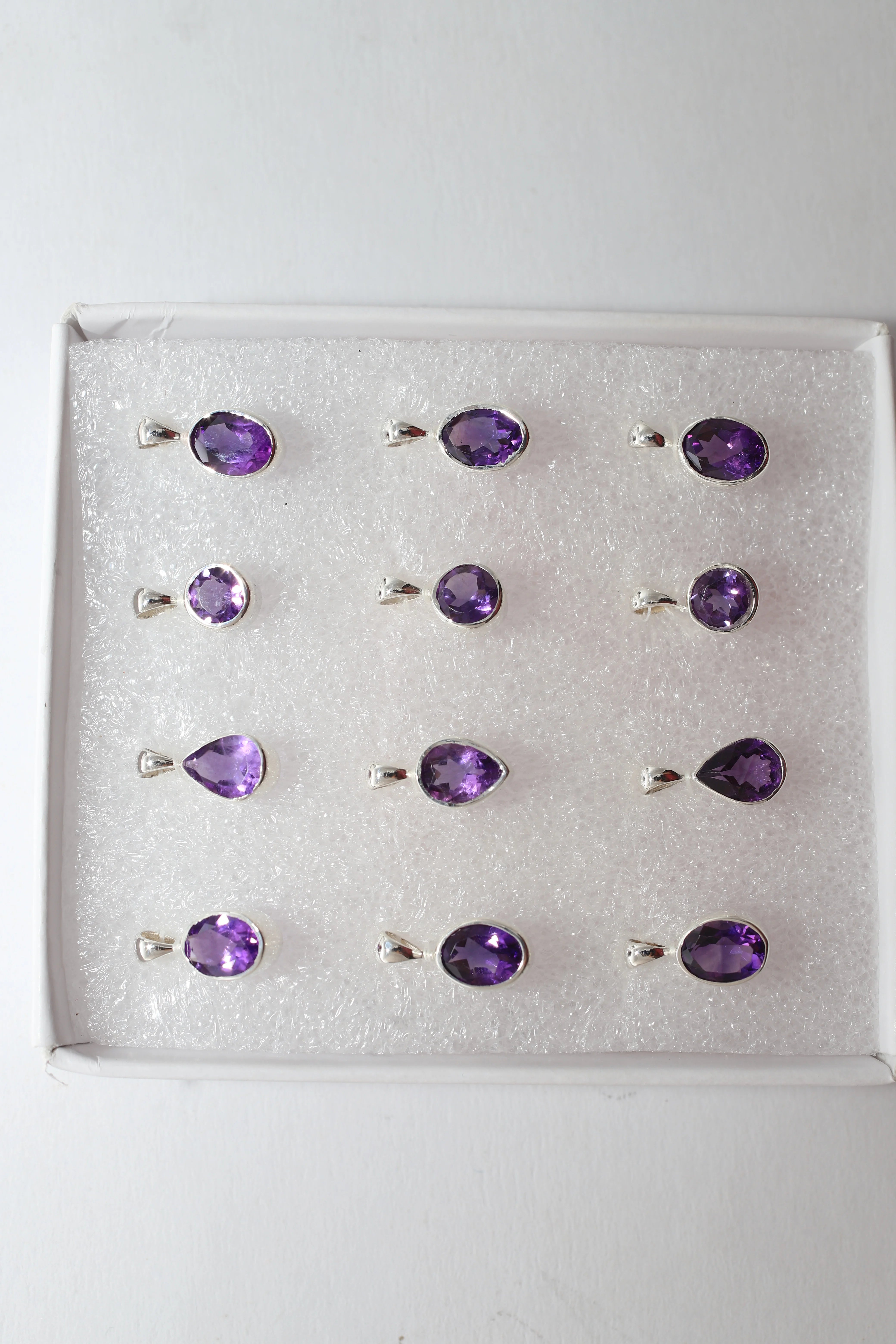
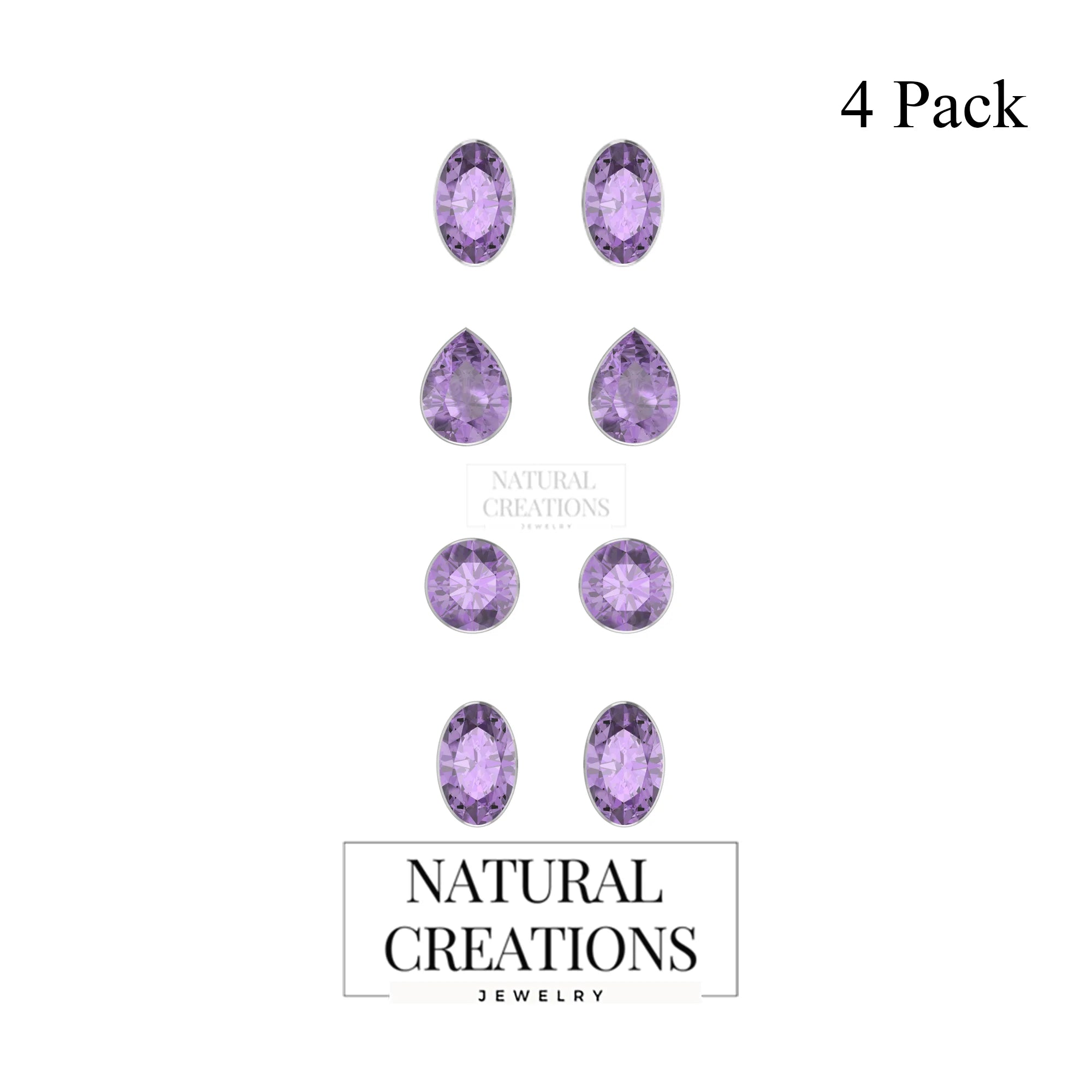
Faceted cuts: Round brilliant, oval, cushion, emerald cut, pear, and heart are all commercially strong. Amethyst's hardness (7 Mohs) makes it suitable for all standard faceted cuts.
Cabochon: Less common for amethyst than faceted cuts, but increasingly popular in organic, boho-styled pieces where a smooth, domed surface adds tactile appeal.
Best setting types:
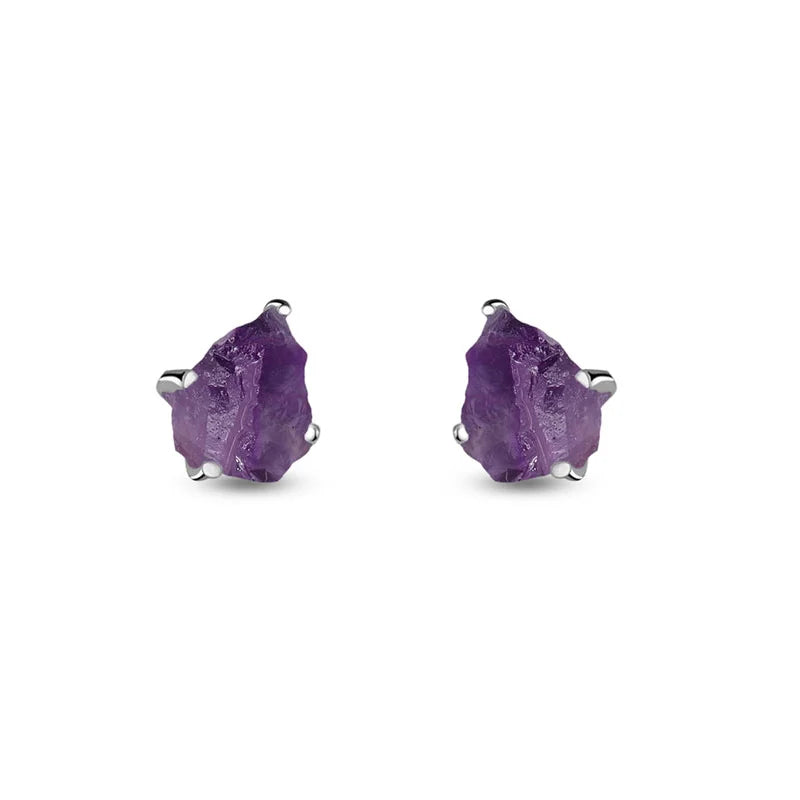
- Prong setting — maximizes light entry and visual impact for faceted stones
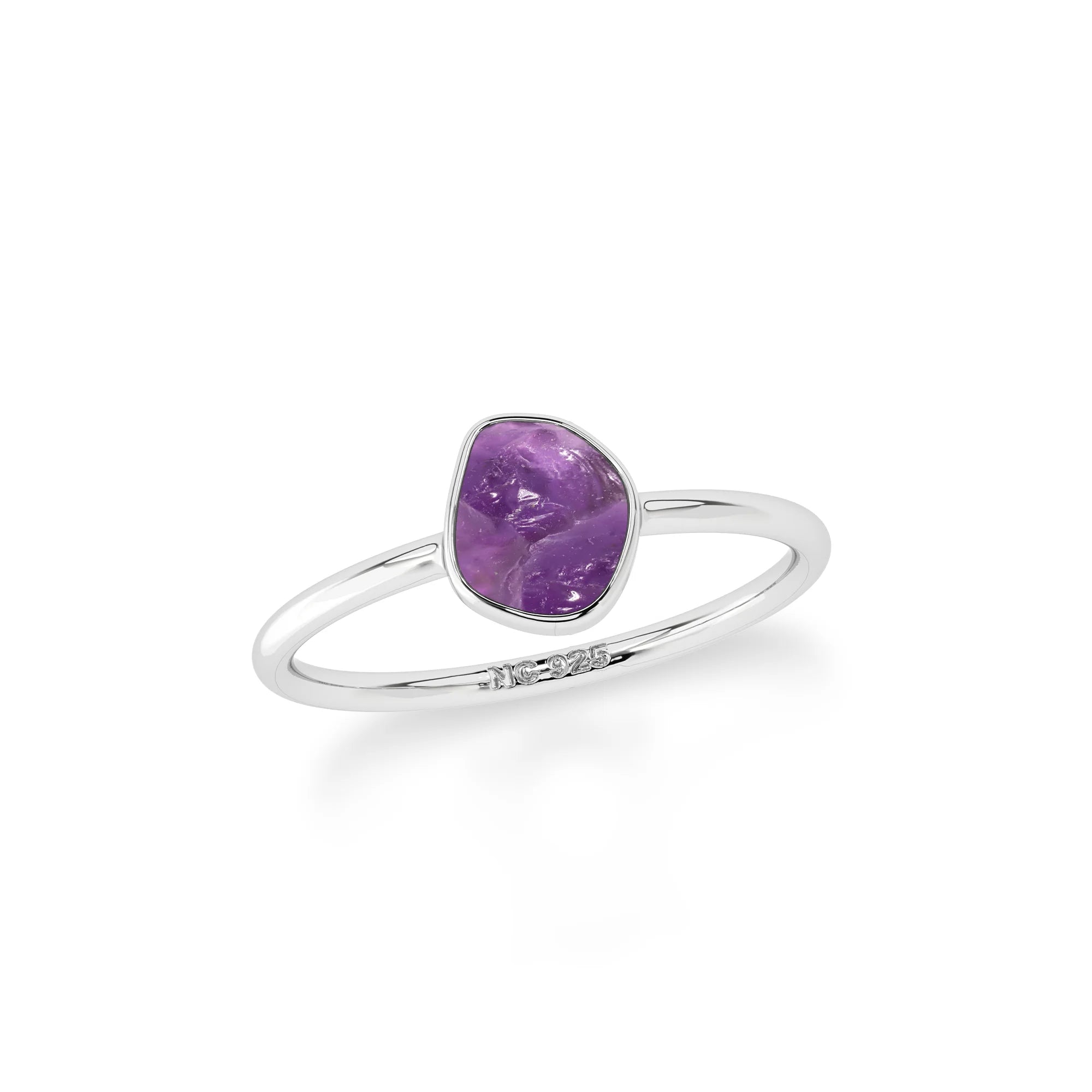
- Bezel setting — protects edges; contemporary minimalist aesthetic
- Pavé accent — smaller amethyst stones used as accent elements around larger focal stones
In 925 sterling silver: Amethyst's cool purple tones are naturally complementary to silver's cool white-gray luster. The pairing is considered a classic combination in both contemporary and vintage-inspired designs.
February Birthstone: The Commercial Significance
Amethyst is February's birthstone — arguably the most commercially significant birthstone designation outside of diamond. February sits in the middle of the high-gift-buying season (Valentine's Day), which amplifies birthstone purchasing in a way that few other months can match.
Strategic implication for wholesale buyers: Amethyst birthstone pieces — rings, pendants, earrings — should be stocked by the end of January to capture Valentine's Day birthday gift buyers. This is one of the most predictable seasonal demand peaks in the silver gemstone jewelry market.
Amethyst Care Guide
- Hardness: Mohs 7 — suitable for daily wear; won't scratch easily by common materials, but can be scratched by quartz sand and harder stones
- Cleaning: Warm soapy water and a soft brush; ultrasonic cleaning is generally safe unless there are significant inclusions
- Heat sensitivity: Amethyst can fade with prolonged exposure to strong sunlight or heat. Store away from direct sun; avoid steam cleaners.
- Chemical resistance: Resistant to most household chemicals; avoid prolonged exposure to strong acids
Why Amethyst Is a Strong Wholesale Inventory Category
- Price accessibility — Fine amethyst in 925 sterling silver sits in the $25–$95 retail range — perfect for impulse buying and gift giving
- Universal appeal — Purple is among the most universally liked colors across demographic groups and global markets
- Birthstone demand — February birthstone status drives consistent, predictable demand spikes
- Visual impact — Deep purple stones in silver settings photograph and video beautifully — excellent for Instagram Live selling
- Gemstone education potential — Amethyst has rich historical lore (Greek mythology, medieval European healing traditions, royalty associations) that provides compelling retail storytelling material
What is amethyst?
Amethyst is a purple variety of quartz (SiO₂) — one of the most abundant minerals on Earth — colored by trace iron impurities and natural irradiation. It is the most commercially significant purple gemstone.
What is the best quality amethyst?
The highest quality amethyst has deep, vivid purple/violet color with minimal color zoning, excellent clarity, and precision cutting. Zambian and deep Brazilian amethyst are considered the finest sources for jewelry-quality material.
Is amethyst the February birthstone?
Yes — amethyst is the traditional and modern birthstone for February.
Does amethyst fade?
Yes — prolonged exposure to strong direct sunlight or high heat can cause amethyst's color to fade over time. Store amethyst jewelry away from direct sunlight and avoid leaving pieces in hot environments (car dashboards in summer, etc.).
How hard is amethyst?
Amethyst has a Mohs hardness of 7, meaning it's durable enough for all jewelry types including rings. It will scratch glass and most common materials, but can be scratched by quartz-bearing materials like sand.
Open Your Wholesale Account Today
500+ artisans. In-house lapidary. 100% solar-powered. Same-day shipping on orders before 2 PM PST. Just your business license to get started.